
Cryptocoryne
Cryptocoryne Retrospiralis
Cryptocoryne retrospiralisAraceaeCrypts
Price: $24.99 USD
Add from My tanks →1 photos
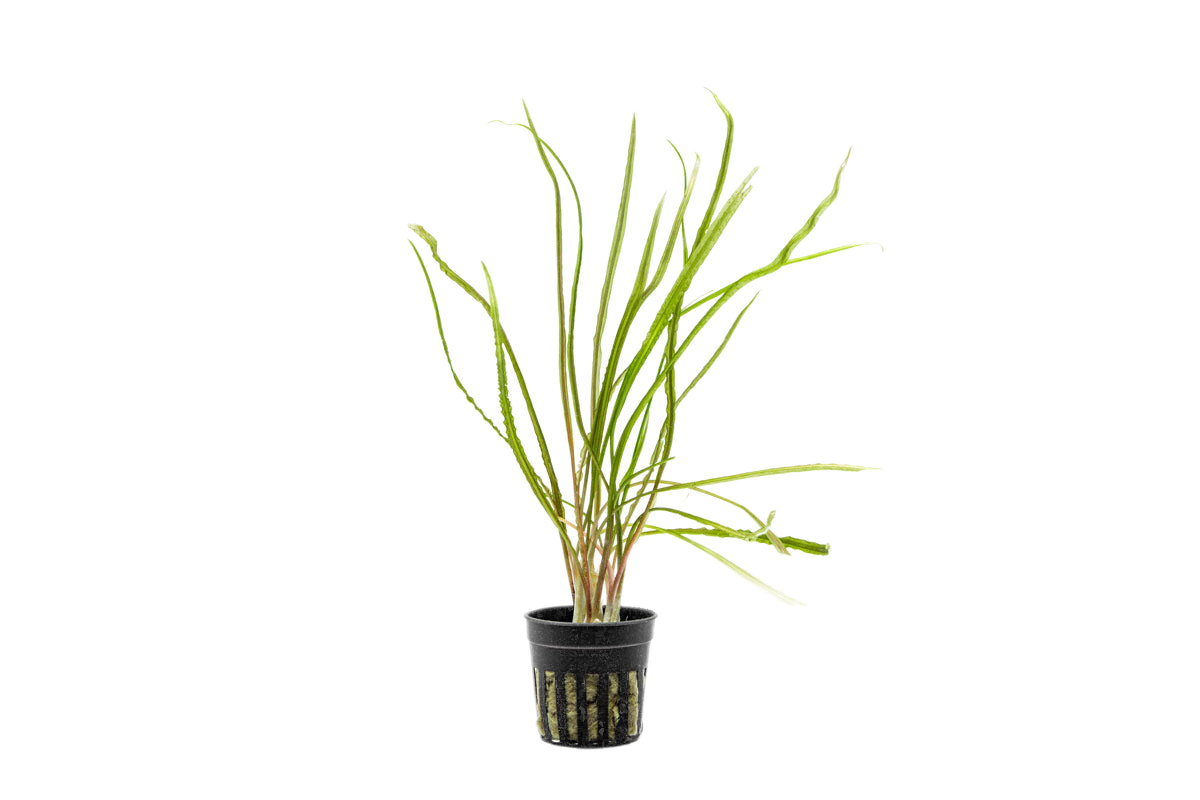
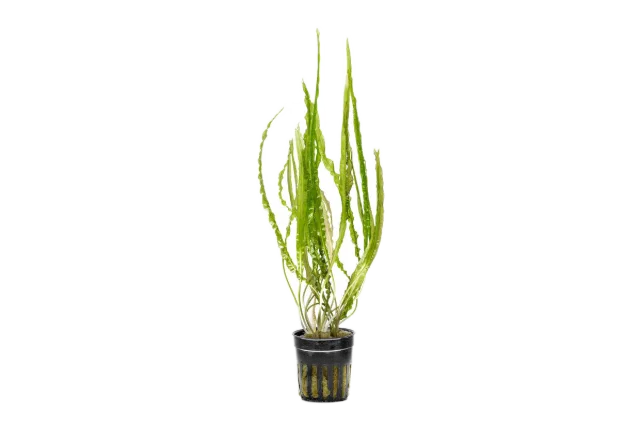
Cryptocoryne retrospiralis, native to India and Southeast Asia, is a legendary century-old classic with long, narrow, reed-like leaves with hammered texture and a winding corkscrew twist, 10-24 inches tall. Foliage shifts from emerald green to olive and bronze; low-maintenance background curtain, sensitive to sudden parameter shifts.
Quick facts
Identity
- Also known as
- Crypt Spiralis; Spiral Crypt
- Synonyms
- Cryptocoryne spiralis var. retrospiralis
- Environment
- Freshwater
- Native to
- India, Myanmar, Thailand
- Habitat
- Streams and slow rivers in lowland forest, seasonally inundated pools, and riverbanks submerged only at high water; moves between submersed and emersed growth through the year
- Sourcing
- Aquacultured
- Conservation
- Not Evaluated
Care
- Care level
- Easy
- Growth form
- Rosette
- Max height
- 6 – 24 in (15 – 61 cm)
- Spread
- 6 in (15 cm)
- Growth rate
- Slow
- Placement
- Background, Midground
Water
- Temperature
- 68 – 82 °F (20 – 28 °C)
- pH
- 6.0 – 7.5
- GH
- 2 – 18 dGH
- PAR
- 40 – 70 PAR
- Flow
- Low-Moderate
- Light
- Low
- CO₂
- Beneficial
Planting
- Substrate
- Nutrient-rich preferred
- Feeds from
- Roots
- Fertilizer needs
- Medium
- Colors
- Green, Brown
Feeding & breeding
- Propagation
- Runners
Something wrong or missing? Submit a correction
Care guide
Overview
Long, narrow leaves twist into a loose corkscrew and develop a hammered texture as they mature, shifting from emerald green toward olive and bronze under stronger light. This background rosette grows slowly to 10-24 inches and spreads by runners, tolerating low light without CO2. Melt is common after planting or disturbance but resolves once roots and crown settle.
Care
A tall, narrow-leaved crypt that gives a vertical accent at the back of the tank, with leaves that twist into a loose corkscrew and develop a hammered texture as they mature. It tolerates low to medium light and does not need CO2, though both light and CO2 supplementation speed up growth and deepen leaf color from green toward olive and bronze. Once planted with the root crown at the substrate surface, it should be left undisturbed, since uprooting triggers another round of melt.
Planting & trimming
Plant the root crown just at the substrate surface rather than burying it, since a buried crown will push itself back up over several days. Space individual plants or small clusters a few inches apart along the back wall of the tank to let the reed-like leaves fan out and catch light and flow. It can also be grown emersed in a paludarium riverbank setup, where it may flower above the waterline.
Fertilizing
Feeds mainly through its roots, so a nutrient-rich substrate such as aqua soil or a couple of inches of root tabs pushed near the base is more important than water column dosing. A weekly all-in-one liquid fertilizer helps fill in trace elements, particularly iron, if the substrate alone is not enough. Yellowing leaves, holes, or stalled growth are usually signs of a nutrient shortfall rather than disease.
Propagation
Propagates vegetatively by sending up plantlets from runners off the parent rhizome. Once a daughter plant has developed its own root system, it can be gently separated with a sharp trim and replanted elsewhere in the substrate. Flowering and seed propagation are essentially unknown in cultivated stock, so runner division is the only practical method.
Problems
New specimens commonly melt within days to weeks of introduction as they shed emersed-grown leaves and switch to a submersed form; this is a normal transition and not a sign of disease as long as the roots and crown remain intact. Melt can recur if the plant is moved or subjected to a sudden swing in temperature, hardness, or pH, so stability matters more than any single parameter. Excess light without matching nutrients tends to cause algae fouling on the older, slower-growing leaves rather than harming the plant directly.
Sources
More Crypts
Something wrong or missing? Submit a correction
In the community
Popular tanks using Cryptocoryne Retrospiralis
No public tanks are showcasing Cryptocoryne Retrospiralis yet.