
Cryptocoryne
Cryptocoryne Lutea
Cryptocoryne luteaAraceaeCrypts
Price: $24.99 USD
Add from My tanks →1 photos
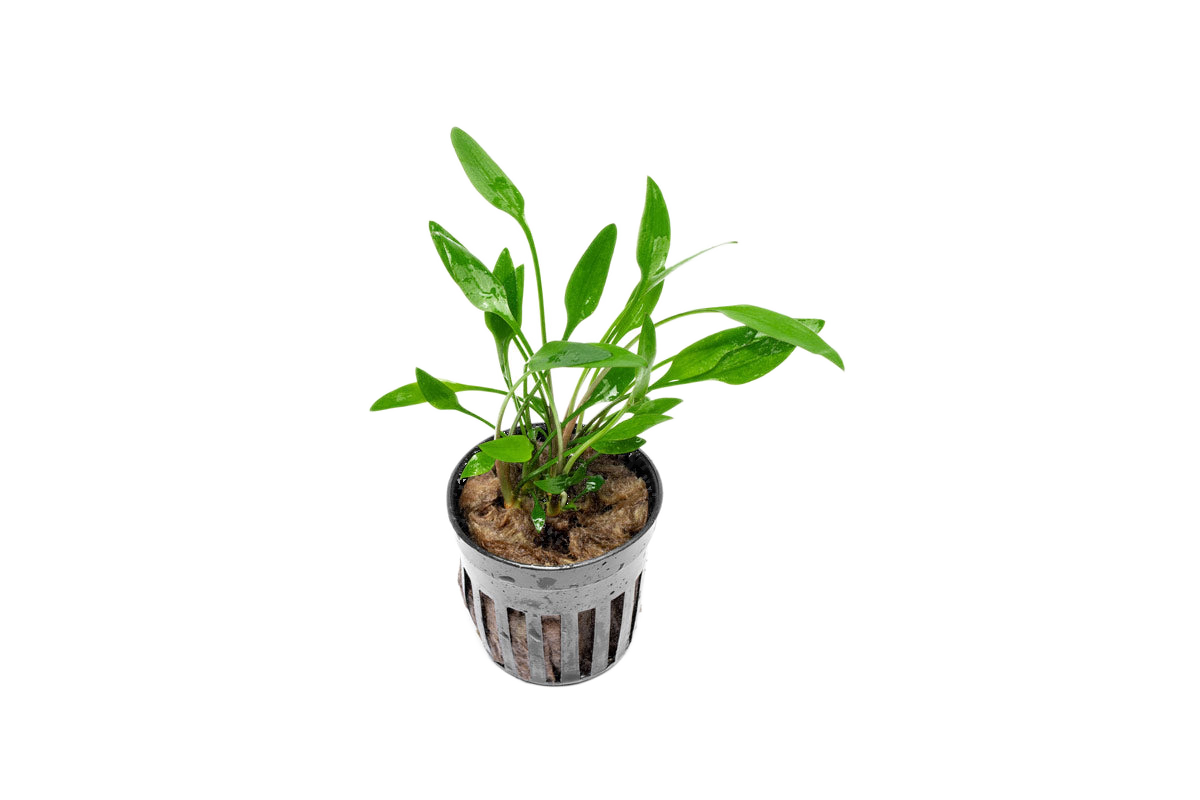
Cryptocoryne lutea, native to the limestone-rich streams of Sri Lanka, showcases vibrant green to bronze-tinted oblong leaves with gracefully wavy margins. A classic favorite filling midground gaps with thick, naturalistic texture; adaptable and hardy, sensitive to water parameter changes and should not be moved.
Quick facts
Identity
- Also known as
- Crypt lutea; Cryptocoryne walkeri Lutea
- Synonyms
- Cryptocoryne walkeri var. lutea
- Environment
- Freshwater
- Native to
- Sri Lanka
- Habitat
- Shaded, slow-moving limestone streams and river margins, submersed in the wet season and exposed on muddy banks as water levels fall.
- Sourcing
- Captive-bred
- Conservation
- Not Evaluated
Care
- Care level
- Easy
- Growth form
- Rosette
- Max height
- 4 – 8 in (10 – 20 cm)
- Spread
- 6 in (15 cm)
- Growth rate
- Slow
- Placement
- Midground, Foreground
Water
- Temperature
- 68 – 82 °F (20 – 28 °C)
- pH
- 6.0 – 7.5
- GH
- 2 – 15 dGH
- PAR
- 20 – 50 PAR
- Flow
- Low-Moderate
- Light
- Low
- CO₂
- Beneficial
Planting
- Substrate
- Nutrient-rich preferred
- Feeds from
- Roots
- Fertilizer needs
- Medium
- Colors
- Green, Brown
Feeding & breeding
- Propagation
- Runners, Rhizome division
Something wrong or missing? Submit a correction
Care guide
Overview
Suited to beginner planted tanks needing a low-light midground grower, this compact rosette plant produces narrow, wavy-margined leaves in yellow-green to olive tones with occasional reddish undersides. It spreads slowly via runners into a naturalistic clump once established. Best planted once and left undisturbed, as moves or parameter swings often trigger melt.
Care
This is one of the easier Sri Lankan crypts for a beginner, tolerating a wide pH and hardness range and growing steadily under low to moderate light without added CO2. It forms a compact rosette of narrow, gently wavy leaves in yellow-green to olive tones, sometimes with reddish undersides, and slowly spreads into a clump via runners once settled. Like other crypts it resents being uprooted or moved and responds poorly to sudden shifts in water chemistry, so it does best planted once and left undisturbed.
Planting & trimming
Plant the rhizome shallowly with only the roots buried and the crown sitting at or just above the substrate line, since burying the crown can cause rot. Space plants a few inches apart to allow room for runners to fill in, and avoid disturbing established clumps since replanting often triggers another melt cycle. It can be grown submersed or emersed in a paludarium-style setup.
Fertilizing
Cryptocoryne lutea draws most of its nutrition through its roots rather than the water column, so root tabs pushed into the substrate near the base are more effective than liquid fertilizer alone. A nutrient-rich substrate or mineralized soil speeds up growth and clump formation considerably compared to plain gravel. Iron or micronutrient deficiency shows up as pale or yellowing new leaves, which usually resolves once root feeding is increased.
Propagation
Propagation is mainly by runners, which send up new plantlets a short distance from the parent that can be separated once they have their own roots. Mature clumps can also be divided by cutting the rhizome between rosettes, replanting each section separately.
Problems
New plantings frequently experience crypt melt, where leaves turn translucent and collapse within days of introduction or after a parameter swing. This is rarely fatal since the rhizome and root system typically survive, and a melted plant left undisturbed usually sends up a fresh set of submersed leaves within a few weeks. Keeping detritus and algae off the slow-growing leaves helps the plant recover faster and maintain its color.
Sources
More Crypts
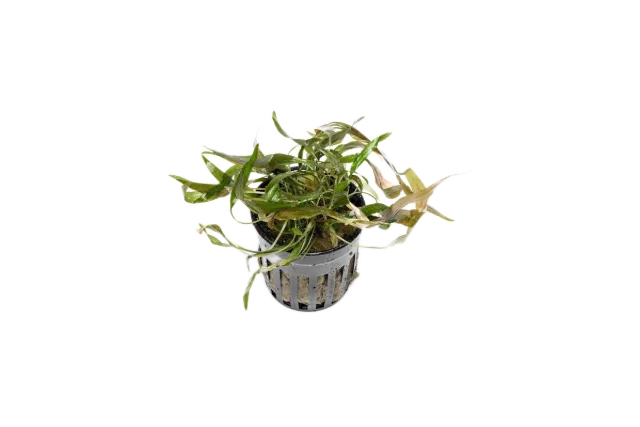
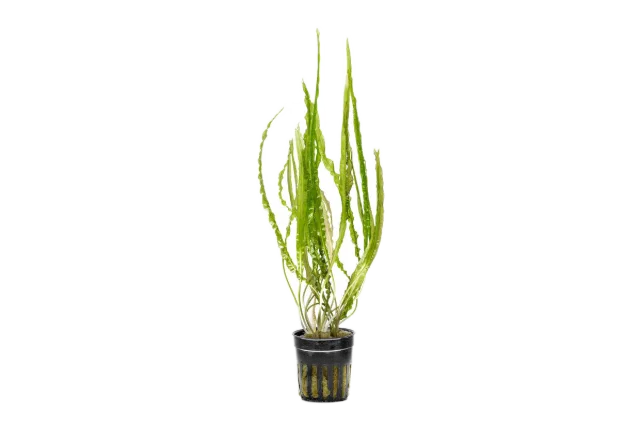
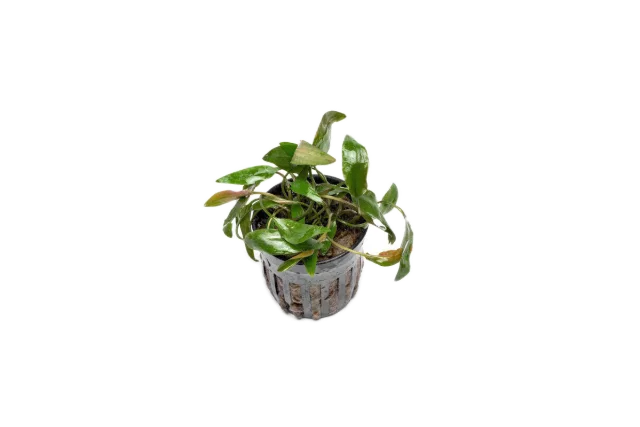
Something wrong or missing? Submit a correction
In the community
Popular tanks using Cryptocoryne Lutea
No public tanks are showcasing Cryptocoryne Lutea yet.