
Bucephalandra
Bucephalandra Giant Motleyana
Bucephalandra motleyanaAraceaeBucephalandra
Price: $24.99 USD
Add from My tanks →1 photos
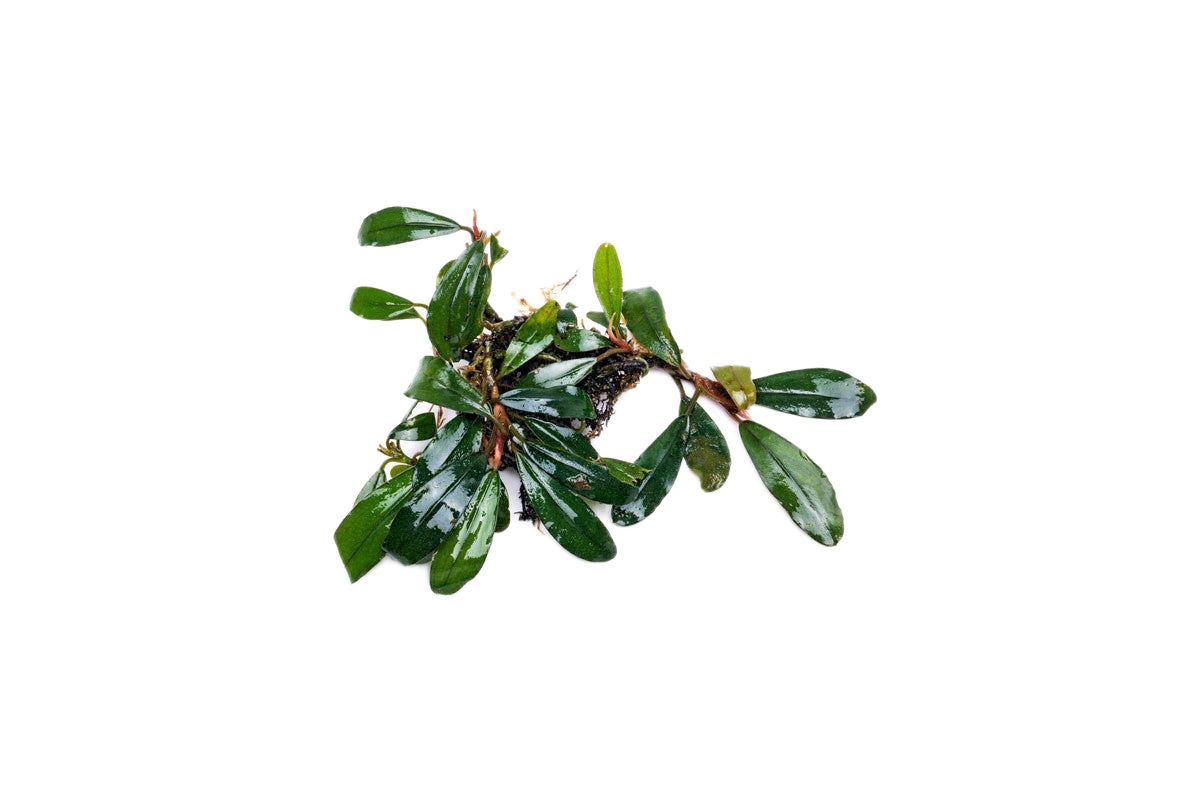
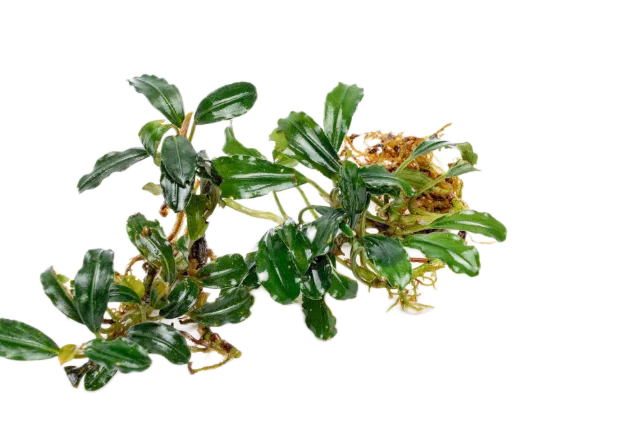
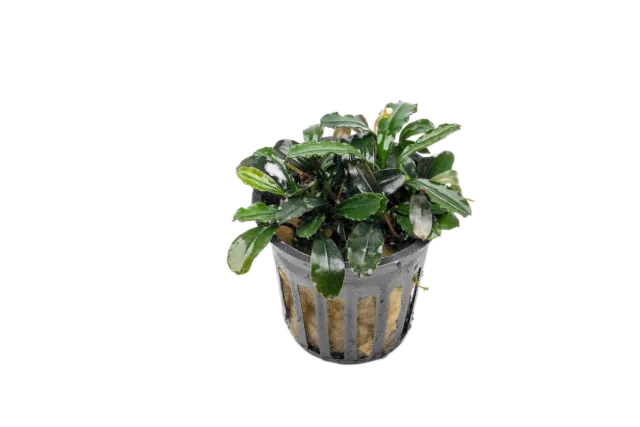
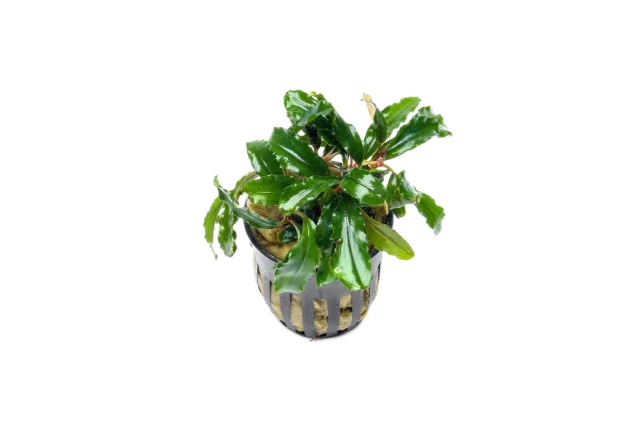
Bucephalandra 'Giant Motleyana' is a robust aquarium plant with elongated, dark olive leaves that develop a striking metallic blue shine under quality LED lighting. Unlike miniature variants, it provides bold texture for the midground, forming a dense, architectural colony on driftwood or rock.
Quick facts
Identity
- Also known as
- Buce Motleyana; Giant Motleyana Buce
- Synonyms
- Bucephalandra 'Giant Motleyana'
- Environment
- Freshwater
- Native to
- Indonesia (Borneo)
- Habitat
- Rheophyte clinging to rocks and driftwood along fast-flowing, shaded forest streams and waterfalls in Borneo; grows emersed in the dry season and submersed when water levels rise.
- Sourcing
- Captive-bred
- Conservation
- Not Evaluated
Care
- Care level
- Easy
- Growth form
- Rhizome
- Max height
- 2 – 4 in (5.1 – 10 cm)
- Spread
- 6 in (15 cm)
- Growth rate
- Slow
- Placement
- Foreground, Midground
Water
- Temperature
- 72 – 82 °F (22 – 28 °C)
- pH
- 6.0 – 7.5
- GH
- 2 – 12 dGH
- dKH
- 1 – 5 dKH
- PAR
- 20 – 50 PAR
- Flow
- Low-Moderate
- Light
- Low
- CO₂
- Beneficial
Planting
- Substrate
- Not needed
- Feeds from
- Both
- Fertilizer needs
- Low
- Colors
- Green, Blue, Brown
Feeding & breeding
- Propagation
- Rhizome division
Something wrong or missing? Submit a correction
Care guide
Overview
Growing larger than most Bucephalandra cultivars, Giant Motleyana produces elongated dark olive leaves on a creeping rhizome that spreads slowly across hardscape. Under moderate light the foliage takes on a metallic blue cast, forming a dense architectural clump rather than a low carpet. Best fixed to wood or rock above the substrate, it suits patient keepers over fast results.
Care
Bucephalandra Giant Motleyana adapts well to a range of light levels but colors up best under moderate lighting, developing a metallic blue sheen on its dark olive leaves as it matures. Growth is very slow, so algae control and stable water conditions matter more than routine trimming. It tolerates both submersed and emersed setups and does well in shaded corners of a tank where faster-growing plants might struggle.
Planting & trimming
Attach the rhizome to driftwood or rock using thread, fishing line, or cyanoacrylate gel, keeping the rhizome itself above the substrate at all times since burial causes rot. Roots can be tucked into crevices or allowed to grip the hardscape naturally as the plant establishes. Trimming is rarely needed given the slow growth rate; simply remove any melted or decaying leaves as they appear.
Fertilizing
Nutrients are absorbed mostly through the leaves and roots directly from the water column rather than from substrate, so a steady dose of liquid all-in-one fertilizer supports healthy growth. No root tabs or nutrient-rich substrate are required since the rhizome is never buried. Added CO2 is not mandatory but noticeably speeds growth and intensifies leaf coloration.
Propagation
Propagate by cutting or snapping the creeping rhizome into sections with a sharp, sterile blade, ensuring each piece retains a few healthy leaves and some roots. Anchor the new sections to separate pieces of hardscape and allow them to reattach before disturbing further.
Problems
New specimens, especially those grown emersed before purchase, often drop a few leaves after submersion in a process known as buce melt, but the rhizome typically pushes new growth if it stays firm and undamaged. The main long-term risk is rhizome rot from burial in substrate or abrupt shifts in water chemistry. Slow leaf turnover also makes older foliage susceptible to black beard algae and green spot algae if light or flow is excessive.
Sources
More Bucephalandra
Something wrong or missing? Submit a correction
In the community
Popular tanks using Bucephalandra Giant Motleyana
No public tanks are showcasing Bucephalandra Giant Motleyana yet.