
Shrimp
Tangerine Tiger Shrimp
Caridina serrataAtyidaeDwarf shrimp
Price: $89.99 USD
Add from My tanks →1 photos
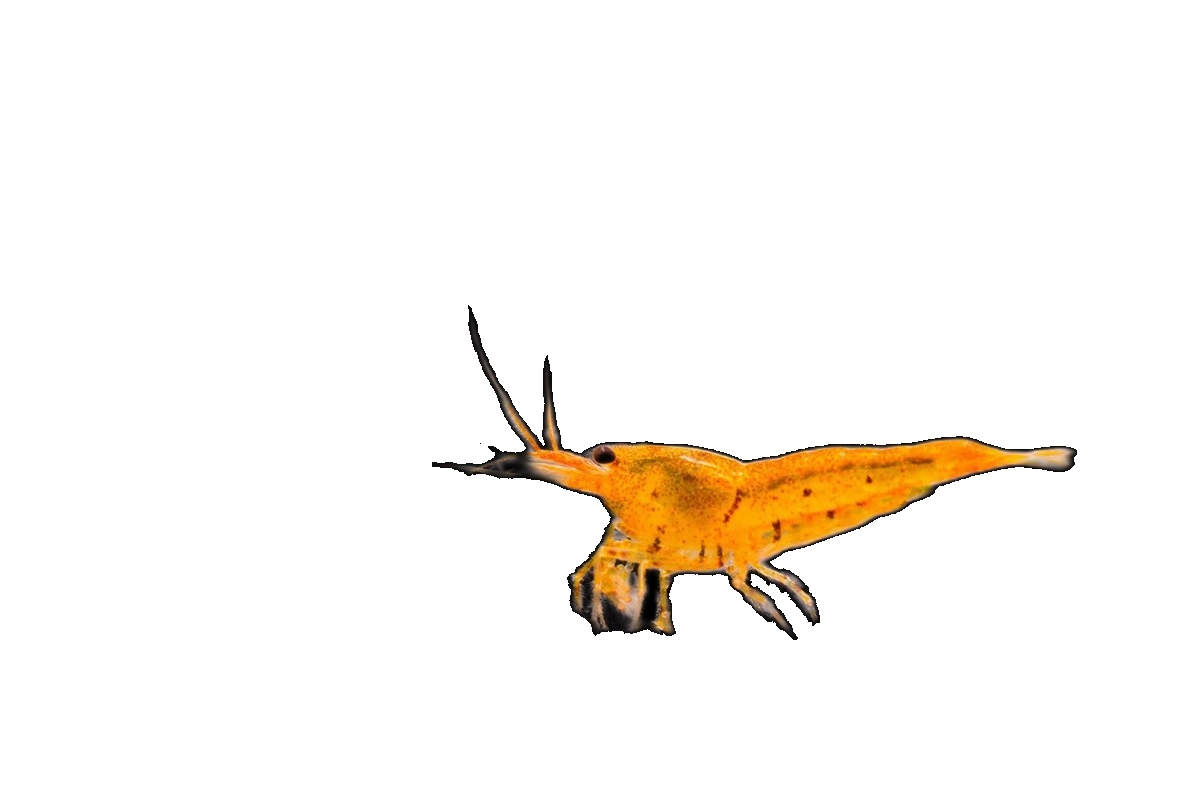
Tangerine Tiger shrimp (Caridina serrata) are a freshwater dwarf shrimp prized for vibrant translucent orange-to-yellow coloration with brown spotting. More tolerant of water parameters than most Caridina, they are easy to intermediate in care, hardy, and eager prolific breeders that make a lively cleanup crew.
Quick facts
Identity
- Also known as
- TT Shrimp; Orange Tiger Shrimp
- Synonyms
- Caridina cantonensis (misapplied); Caridina sp. "Tangerine Tiger"
- Environment
- Freshwater
- Native to
- Southern China, Hong Kong
- Habitat
- Slow to moderate flowing forest streams and pools with leaf litter, rocks, and submerged vegetation
- Sourcing
- Captive-bred
- Conservation
- Not Evaluated
Care
- Care level
- Moderate
- Temperament
- Peaceful
- Adult size
- 0.8 – 1.3 in (2 – 3.2 cm)
- Lifespan
- 1.5 – 2 yrs
- Min tank
- 10 gal (38 L)
- Growth rate
- Moderate
- Placement
- Bottom
Water
- Temperature
- 68 – 75 °F (20 – 24 °C)
- pH
- 6.2 – 7.0
- GH
- 4 – 6 dGH
- TDS
- 120 – 180 ppm
- dKH
- 0 – 2 dKH
- Flow
- Low-Moderate
Behavior & compatibility
- Social
- Group · groups of 10+
- Aggression to own kind
- Low
- Active
- Daytime
- Invert safe
- Yes
- Plant safe
- Yes
- Shrimp safe
- Yes
- Clean-up role
- Algae, Biofilm, Detritus, Leftover food
- Population boom risk
- Moderate
Feeding & breeding
- Diet
- Omnivore
- Foods
- Pellets, Algae, Biofilm, Vegetables, Freeze-dried
- Breeding type
- Direct development
- Breeding difficulty
- Easy
- Sexing
- Females are larger and rounder-bodied with a more pronounced saddle when carrying eggs; males are smaller and more slender
- Target feeding
- Beneficial
Something wrong or missing? Submit a correction
Care guide
Overview
Reaching barely over an inch at maturity, this dwarf shrimp shows translucent orange-to-yellow bodies overlaid with irregular brown spotting rather than the barred pattern of true tiger lines. It grazes biofilm and algae constantly across hardscape and moss, making it a steady bottom-cleaning presence. A stable, soft, mineral-buffered setup with sponge filtration suits it best, and colonies breed readily once settled.
Care
Tangerine Tigers are among the more forgiving members of the Caridina group, tolerating a somewhat wider pH and hardness range than Crystal or Taiwan Bee shrimp while still needing soft, stable, mineral-buffered water. A buffering active substrate helps hold pH in the low-to-mid 6 range and keeps carbonate hardness low, which reduces stress-related losses. Dense moss and other fine-leaved plants give shrimplets cover and grazing surface, and a mature, heavily biofilm-coated tank does most of the feeding work on its own. Sponge or matten filtration is strongly preferred since power filter intakes can pull in shrimplets.
Feeding
Most nutrition comes from grazing biofilm and algae on hardscape, glass, and plant leaves rather than direct feeding. Supplement a few times a week with shrimp-specific pellets, blanched vegetables such as zucchini or spinach, and occasional protein sources like frozen bloodworm in small amounts. Remove uneaten food within a few hours to avoid ammonia spikes, since overfeeding is the most common cause of crashed shrimp colonies.
Tank mates
Best kept in a species-only tank or alongside other peaceful Caridina, since they will interbreed with related Caridina cantonensis-type shrimp and dilute color lines over generations. They do not cross with Neocaridina, so cohabitation with cherry shrimp variants is genetically safe though competition for biofilm can still occur. Avoid any fish, even small ones, since most will eat shrimplets and stress adults; snails and other peaceful invertebrates are fine companions.
Breeding
Females carry roughly 20-35 eggs under the abdomen for three to four weeks before releasing fully formed miniature shrimp, with no larval stage required. New colonies often need a couple of months to settle into a tank before females berry up consistently. Good shrimplet survival and frequent breeding make this one of the easier Caridina to propagate once water parameters are stable.
Health
Sudden swings in pH, TDS, or temperature are the main cause of losses, so drip acclimation and gradual parameter matching during water changes are important. Bacterial and fungal infections can appear if water quality slips or dead shrimp are left to decay uneaten. Molting problems, including stuck molts, are usually linked to unstable GH or insufficient mineral content in the water.
Sources
More Dwarf shrimp
Something wrong or missing? Submit a correction
In the community
Popular tanks using Tangerine Tiger Shrimp
No public tanks are showcasing Tangerine Tiger Shrimp yet.