
Aquatic Plant
Rotala Manipurensis
Rotala manipurensisLythraceaeStem plants
Price: $20.97 USD
Add from My tanks →1 photos
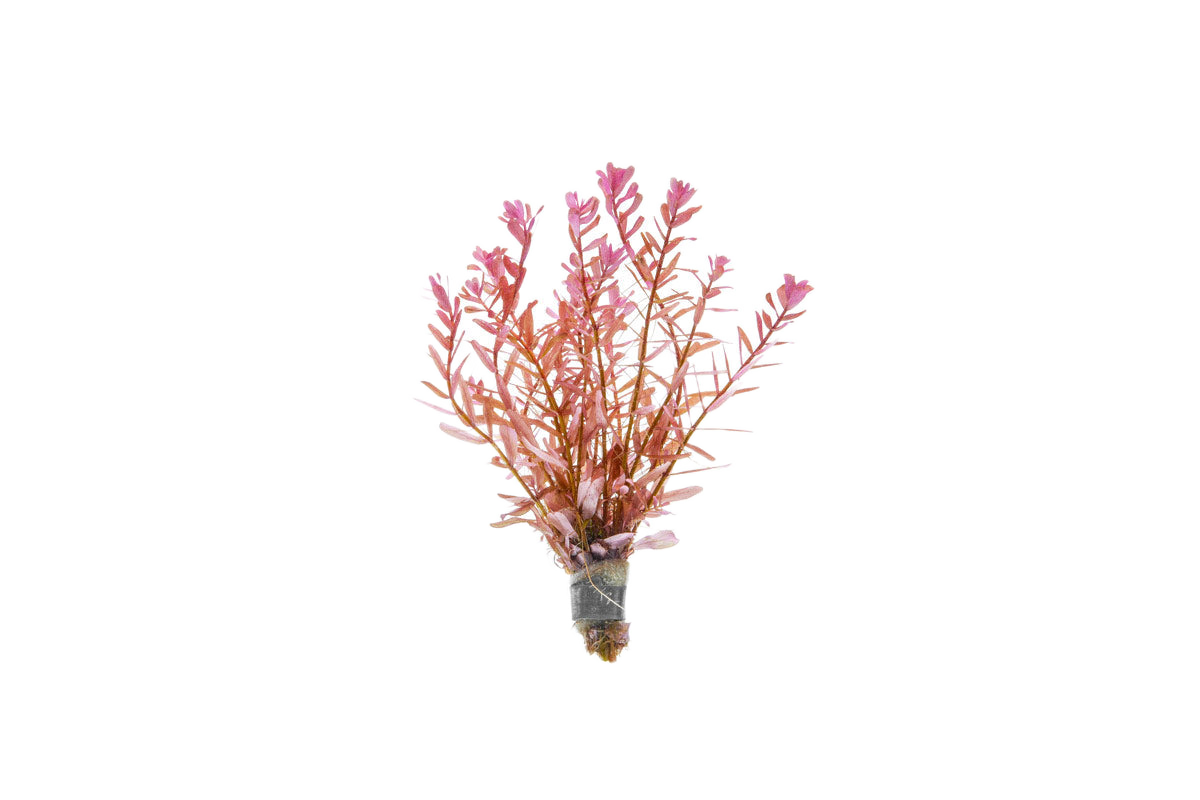
Rotala Manipurensis is a rare aquatic stem plant native to Southeast Asia and northeastern India, with fine, feather-like whorled leaves that blush orange, salmon, and bright pink under high-tech conditions. Once established it grows quickly, filling in with dense, layered stems as a midground or background species that adds warm color contrast to all-green layouts.
Quick facts
Identity
- Also known as
- Rotala sp. Manipur
- Synonyms
- Rotala rotundifolia var. manipurensis; Rotala sp. Manipur
- Environment
- Freshwater
- Native to
- India (Manipur), Southeast Asia
- Habitat
- Wetlands, rice paddies, ditches and marshy ground, growing emersed with rounded leaves much of the year and finer foliage when submersed
- Sourcing
- Aquacultured
- Conservation
- Not Evaluated
Care
- Care level
- Moderate
- Growth form
- Stem
- Max height
- 4 – 16 in (10 – 41 cm)
- Spread
- 4 in (10 cm)
- Growth rate
- Fast
- Placement
- Midground, Background
Water
- Temperature
- 72 – 82 °F (22 – 28 °C)
- pH
- 6.0 – 7.5
- GH
- 1 – 12 dGH
- Flow
- Low-Moderate
- Light
- High
- CO₂
- Beneficial
Planting
- Substrate
- Nutrient-rich preferred
- Feeds from
- Both
- Fertilizer needs
- High
- Colors
- Green, Orange, Pink, Yellow
Feeding & breeding
- Propagation
- Cuttings
Something wrong or missing? Submit a correction
Care guide
Overview
First collected from the rice paddies and marshy ditches of Manipur in northeastern India, this Rotala rotundifolia colour form has since spread through the aquacultured trade. Fine, whorled leaves stay olive under weak light but shift to orange, salmon, and pink tones given strong lighting, CO2, and steady iron dosing. Regular topping keeps stems dense from base to tip.
Care
Manipurensis is a colour form of Rotala rotundifolia and behaves much like its parent, growing as an upright stem that branches readily once topped. Under modest light it stays a plain olive green, but strong lighting combined with CO2 injection and iron dosing pushes the fine, whorled leaves into orange, salmon and pink tones. Growth is quick once the plant settles in, so regular trimming keeps the lower stems from shading out and dropping leaves.
Planting & trimming
Strip the lower inch of foliage from cuttings and use fine-tip forceps to plant stems 1-2 inches deep into the substrate, spacing them a little apart so light reaches the lower leaves. It can be grown as a dense background hedge or trimmed lower for a midground grouping, and it also grows emersed along the waterline. Trim the tops with straight scissors once stems approach the surface and replant the cuttings to keep the planting thick.
Fertilizing
Plant nutrient-rich aquasoil or add root tabs to support the root system, and dose a comprehensive liquid fertilizer with iron in the water column for best coloration. Deficiency in iron or micronutrients shows up as pale, washed-out new growth instead of the desired orange and pink hues. Consistent dosing matters more than any single nutrient, since the plant's color response depends on stable, sufficient fertilization alongside strong light.
Propagation
Propagation is by stem cuttings: trim a healthy top, remove the lowest leaves, and replant directly into the substrate. Cuttings root within about a week under good conditions, making this one of the easier stem plants to multiply.
Problems
The fine, soft leaves are prone to melt if parameters swing or if stems are handled roughly during planting, so keep water conditions stable after introduction. Weak lower stems that get shaded by upper growth will thin out and shed leaves, so periodic trimming and replanting of the tops keeps the plant dense from top to bottom. Because it needs high light to color up, algae can become an issue if fertilization is not balanced to match the light intensity.
Sources
More Stem plants
Something wrong or missing? Submit a correction
In the community
Popular tanks using Rotala Manipurensis
No public tanks are showcasing Rotala Manipurensis yet.