
Aquatic Plant
Rotala Macrandra Green
Rotala macrandra 'Green'LythraceaeStem plants
Price: $20.97 USD
Add from My tanks →1 photos
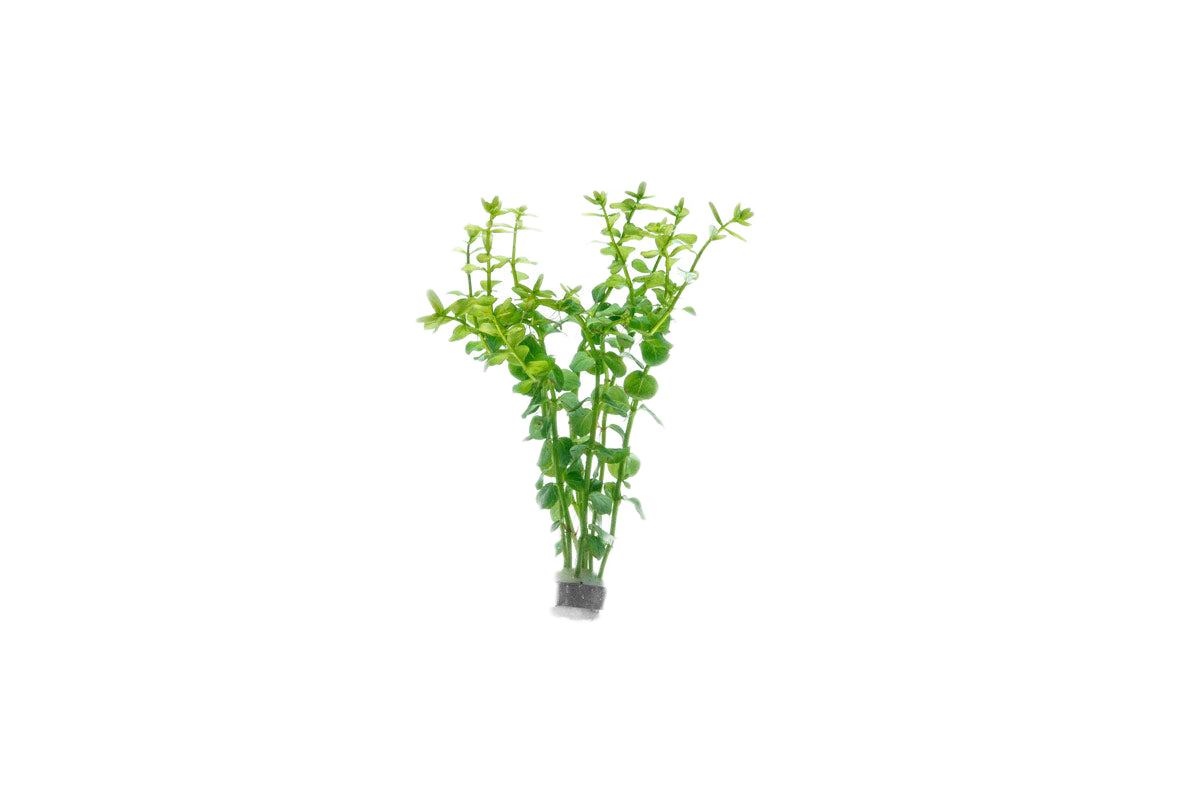
Rotala Macrandra Green is a classic green cultivar of one of aquascaping's most beloved stem plants, adored for its soft, wavy leaves and famously fast growth of up to 4 inches a week in optimal conditions. While lush light-green, its foliage can blush delicate pink to subtle orange tips under high-tech conditions with tuned nutrient dosing.
Quick facts
Identity
- Also known as
- Green Macrandra
- Synonyms
- Rotala macrandra Koehne
- Environment
- Freshwater
- Native to
- India, Sri Lanka
- Habitat
- Marshes, paddy fields, and slow-moving streams in warm, shallow, nutrient-rich water
- Sourcing
- Aquacultured
- Conservation
- Not Evaluated
Care
- Care level
- Difficult
- Growth form
- Stem
- Max height
- 4 – 20 in (10 – 51 cm)
- Spread
- 4 in (10 cm)
- Growth rate
- Fast
- Placement
- Midground, Background
Water
- Temperature
- 72 – 82 °F (22 – 28 °C)
- pH
- 6.0 – 7.0
- GH
- 3 – 8 dGH
- dKH
- 0 – 8 dKH
- Flow
- Moderate
- Light
- High
- CO₂
- Required
Planting
- Substrate
- Nutrient-rich preferred
- Feeds from
- Both
- Fertilizer needs
- High
- Colors
- Red, Green, Pink, Orange
Feeding & breeding
- Propagation
- Cuttings
Something wrong or missing? Submit a correction
Care guide
Overview
Soft, wavy light-green leaves distinguish this cultivar from redder macrandra forms, occasionally taking on pink or orange tips near the growing tips under strong light. Growth is rapid, reaching several inches weekly in a well-dosed tank. It demands the same high light, CO2, and nutrient consistency as other Rotala macrandra varieties.
Care
Rotala macrandra is considered one of the more demanding stem plants in the hobby, requiring strong lighting, consistent CO2 injection, and steady nutrient dosing to keep its large, delicate leaves intact. Stems should be spaced well apart so light reaches the lower leaves, since shading quickly leads to leaf loss and a bare base. It is best suited to established, high-tech planted tanks rather than low-maintenance setups, and it responds poorly to fluctuating CO2 or nutrient levels.
Planting & trimming
Plant stem cuttings individually into a nutrient-rich substrate, spacing them generously so light can reach the lower portions of each stem as the group fills in. Strip the lower leaves before inserting the stem to avoid rot, and avoid crushing the soft stems during planting. Regular trimming of the tops and replanting encourages denser, bushier growth and prevents legginess.
Fertilizing
Root feeding matters more for this species than for many other stem plants, and a nutrient-rich substrate or root tabs noticeably improve stem thickness and leaf size. Liquid fertilizer dosing should supply ample phosphate along with iron and micronutrients, while nitrate is often kept on the lower side to encourage deeper red coloration. Signs of insufficient fertilization include thin stems, pale new growth, or melting of the lower leaves despite adequate light.
Propagation
Propagation is done through stem (head) cuttings taken from healthy, actively growing tops. Remove the lower leaves from the cut section, then replant directly into the substrate where roots will form at the nodes within a week or two. Regular pruning of the mother plant both propagates new stems and keeps the display compact.
Problems
Lower leaves are prone to melting when light is insufficient or when the plant is shaded by taller neighbors, so periodic trimming and replanting of healthy tops helps maintain a full stand. New plantings often shed a few leaves before adapting to submersed conditions, which is normal and not a sign of failure. Algae can settle on the fine leaf hairs if flow and nutrient balance are poor, so stable water parameters and good circulation are important.
Sources
More Stem plants
Something wrong or missing? Submit a correction
In the community
Popular tanks using Rotala Macrandra Green
No public tanks are showcasing Rotala Macrandra Green yet.