
Shrimp
Red Nose Shrimp
Caridina gracilirostrisAtyidaeDwarf shrimp
Price: $61.99 USD
Add from My tanks →1 photos
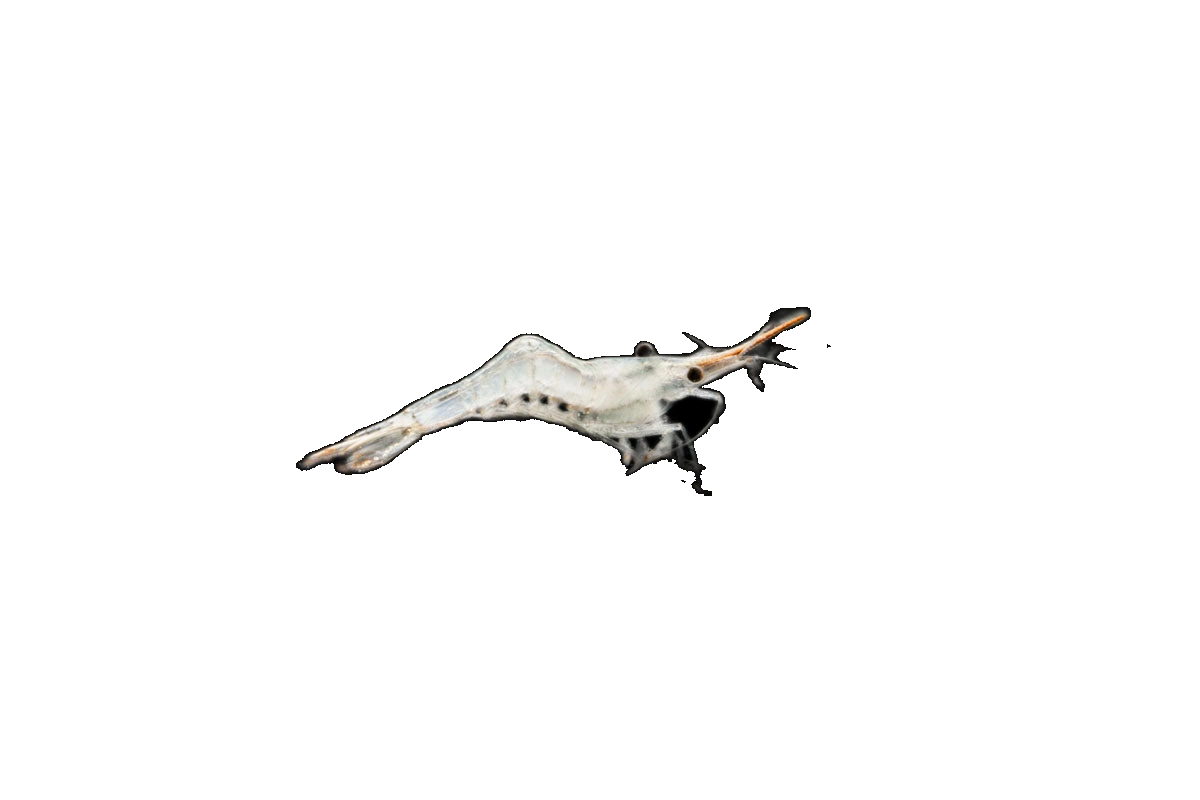
Red Nose Shrimp (Caridina gracilirostris), also called Pinocchio Shrimp, is a charming oddball freshwater shrimp named for its long, needle-like red rostrum, with a translucent body often accented by a yellow or red dorsal stripe. A powerhouse algae eater on par with Amano shrimp for hair algae, it actively hovers in the water column and needs a tight-fitting lid or lower water level since it is known to jump.
Quick facts
Identity
- Also known as
- Pinocchio Shrimp; Rudolph Shrimp; Rhino Shrimp; Red Front Shrimp; Red Rhinoceros Shrimp; Needlenose Caridina; Mosquito Shrimp
- Environment
- Brackish
- Native to
- Japan, Indonesia, Sri Lanka, Australia, Madagascar, Fiji, West Africa, Southeast Asia
- Habitat
- Brackish estuaries, mangroves, marshes and slow-flowing coastal rivers where it lives among aquatic vegetation or in open-water swarms.
- Sourcing
- Wild-caught
- Conservation
- Not Evaluated
Care
- Care level
- Moderate
- Temperament
- Peaceful
- Adult size
- 1 – 1.6 in (2.5 – 4.1 cm)
- Lifespan
- 1 – 2 yrs
- Min tank
- 20 gal (76 L)
- Growth rate
- Moderate
- Placement
- Middle
Water
- Temperature
- 72 – 80 °F (22 – 27 °C)
- pH
- 6.5 – 7.5
- GH
- 4 – 12 dGH
- Salinity
- 1.002 – 1.008 SG
- Flow
- Low-Moderate
Behavior & compatibility
- Social
- Group · groups of 6+
- Aggression to own kind
- Low
- Active
- Daytime
- Invert safe
- Yes
- Plant safe
- Yes
- Shrimp safe
- Yes
- Clean-up role
- Algae, Biofilm
- Population boom risk
- Low
Feeding & breeding
- Diet
- Omnivore
- Foods
- Biofilm, Algae, Frozen, Vegetables, Pellets, Micro-pellets
- Breeding type
- Larval (brackish)
- Breeding difficulty
- Difficult
- Sexing
- Males show red lines running laterally down the body; females are more transparent and less colorful, both sexes have a distinct hump on the abdomen, and berried females carry hundreds of green eggs under the abdomen.
- Target feeding
- Beneficial
Something wrong or missing? Submit a correction
Care guide
Overview
Hovers and swims through open water rather than clinging to surfaces, using its elongated red rostrum and translucent body with a yellow or red dorsal stripe to graze biofilm and hair algae from tank surfaces. Despite the freshwater dwarf shrimp label, it is a brackish estuarine animal that needs a touch of salt for long-term health and a secure lid, being a strong jumper.
Care
This species is often labeled as a freshwater dwarf shrimp in the trade, but it is really a brackish estuarine animal and does best long-term in slightly salted water rather than a pure freshwater planted tank. It spends much of its time hovering and swimming in open water rather than clinging to surfaces like most Caridina, so tanks should be covered or kept with a lower water line since it is a strong jumper. Give it a mature, well-cycled aquarium with biofilm-covered surfaces, low nitrate, and stable mineral content, since sudden parameter swings are poorly tolerated.
Feeding
Feeding centers on biofilm and algae grazed from tank surfaces, supplemented with blanched vegetables, algae wafers, and fine shrimp pellets. Offer small portions once a day and remove leftovers within a few hours to avoid fouling the water, especially in a lightly salted setup where waste breakdown differs from straight freshwater. A varied diet including some frozen zooplankton helps support color and activity.
Tank mates
Peaceful toward other shrimp of similar size and temperament, and it will graze alongside other invertebrates without conflict. Because it needs at least a touch of salt to remain healthy long-term, it should not be mixed with strictly freshwater dwarf shrimp such as Neocaridina or true Amano shrimp that cannot tolerate any salinity. Small peaceful fish that tolerate mild brackish conditions make more suitable companions than typical freshwater community fish.
Breeding
Breeding in the home aquarium is difficult because mating and larval development only succeed in brackish water. Females carry hundreds of small green eggs under the abdomen, but hatched larvae are planktonic and will not molt or survive if raised in plain freshwater. Successful rearing generally requires a dedicated brackish larval setup with appropriate microalgae feeds.
Health
Kept in pure freshwater for extended periods, this shrimp tends to decline and often dies within weeks to a few months, so long-term health depends on providing at least mild salinity. It is sensitive to ammonia, nitrite, and copper-based medications, as are most atyid shrimp. Stable, mature water conditions with minimal fluctuation help avoid stress-related losses.
Sources
More Dwarf shrimp
Something wrong or missing? Submit a correction
In the community
Popular tanks using Red Nose Shrimp
No public tanks are showcasing Red Nose Shrimp yet.