
Aquatic Plant
Ranalisma Rostratum
Ranalisma rostratumAlismataceaeCarpeting plants
Price: $19.99 USD
Add from My tanks →1 photos
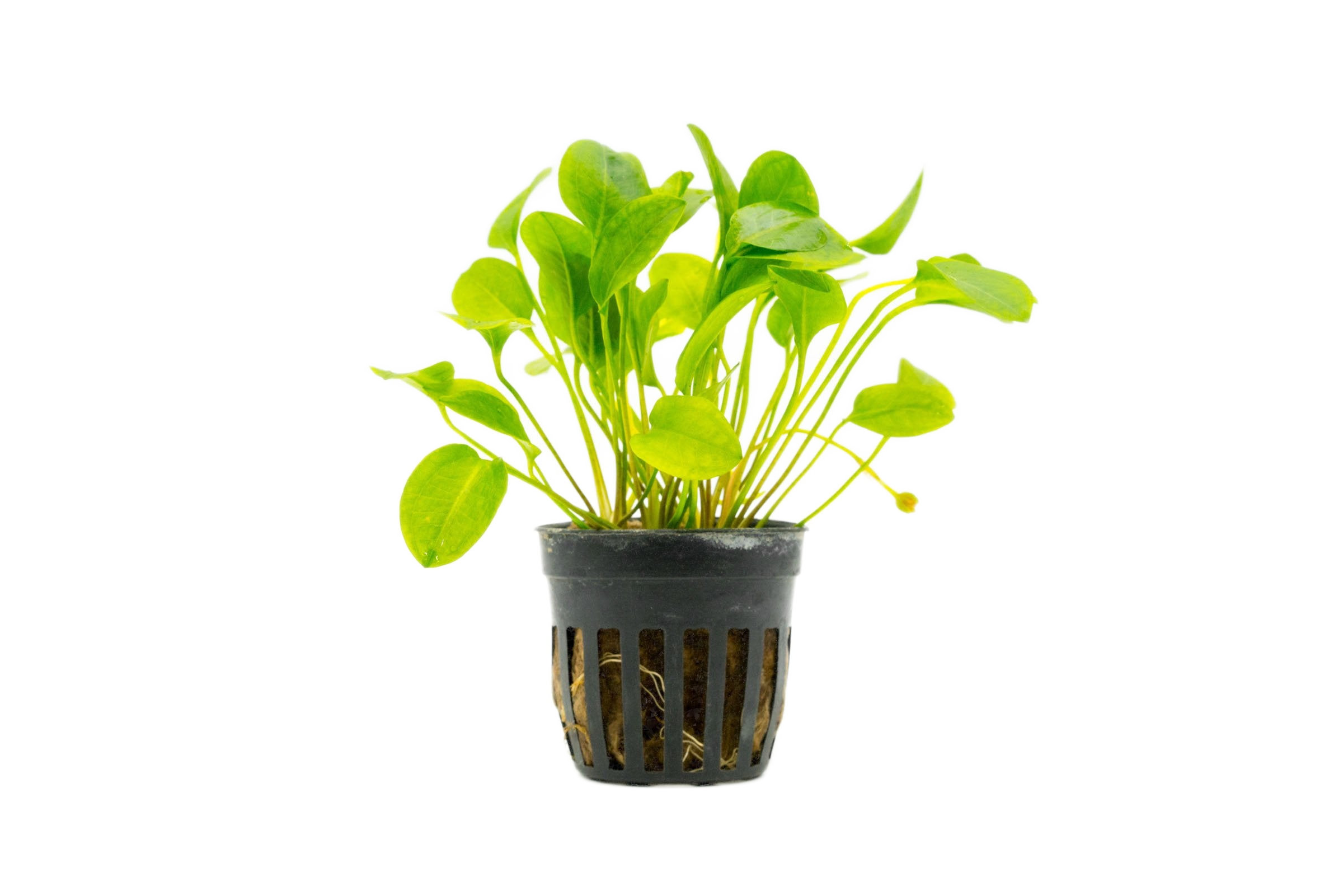
Ranalisma rostratum is a rare Asian aquatic plant whose submerged leaves transform into narrow, grass-like blades, forming a dense green lawn in the foreground. It needs high lighting, CO2 injection and a nutrient-dense substrate, and propagates by replanting runners.
Quick facts
Identity
- Also known as
- Ridley's swordplant
- Synonyms
- Ranalisma rostrata; Echinodorus ridleyi
- Environment
- Freshwater
- Native to
- Thailand, Malaysia, Indonesia, tropical Asia
- Habitat
- Rice paddies, swampy margins, and shallow edges of slow-moving water bodies in tropical Asia
- Sourcing
- Aquacultured
- Conservation
- Not Evaluated
Care
- Care level
- Moderate
- Growth form
- Carpeting
- Max height
- 2 – 3 in (5.1 – 7.6 cm)
- Growth rate
- Fast
- Placement
- Foreground, Carpet
Water
- Temperature
- 68 – 82 °F (20 – 28 °C)
- pH
- 5.0 – 7.5
- dKH
- 0 – 14 dKH
- PAR
- 40 – 80 PAR
- Flow
- Low-Moderate
- Light
- High
- CO₂
- Required
Planting
- Substrate
- Nutrient-rich required
- Feeds from
- Both
- Fertilizer needs
- High
- Colors
- Green
Feeding & breeding
- Propagation
- Runners
Something wrong or missing? Submit a correction
Care guide
Overview
Grown in the rice paddies and shallow, slow-flowing margins of tropical Asia, this species produces narrow, grass-like blades underwater that spread by runners into a dense green foreground mat 1.5-2.5 inches tall. It demands high light, injected CO2, and a nutrient-rich substrate to stay compact rather than stretching into its taller, paler emersed form.
Care
Ranalisma rostratum needs a steady combination of strong lighting, injected CO2, and a nutrient-rich substrate to stay compact and grass-like underwater; without these it stretches out and takes on paler, lanceolate leaves closer to its emersed form. It resembles Helanthium tenellum but stays narrower-leaved and lower, forming a dense mat around 1.5-2.5 inches tall once established. Keep it away from taller plants that would shade it, since it needs a well-lit spot at the front of the tank to hold its compact carpet form.
Planting & trimming
Plant individual rosettes into the substrate a short distance apart rather than as a dense clump, since the runners will fill in the gaps over time. Once established, thin out overly dense patches and trim or remove excess runners to keep the carpet from becoming congested. It can also be grown emersed in paludariums or wabi-kusa setups, where it forms a compact rosette of spoon-shaped leaves.
Fertilizing
Regular dosing of liquid macro and micronutrients supports steady growth, and root tabs pushed into the substrate near the rosettes help fuel runner production. Iron deficiency shows up quickly as pale yellow new growth, so a supplement containing chelated iron is worth adding if leaves start losing their green color. A nutrient-dense aquasoil substrate reduces the need for heavy water column dosing but does not eliminate it entirely.
Propagation
The plant spreads through runners (stolons) that are technically modified inflorescences, sending out plantlets that root into the substrate nearby. New plantlets can be left attached to form a spreading mat or separated with a few leaves and roots and replanted elsewhere. Growth accelerates under strong light and CO2, producing runners at a faster rate.
Problems
Pale, yellowing new leaves point to iron or micronutrient deficiency rather than disease, and is usually corrected with more frequent fertilizer dosing. Insufficient light causes the plant to lose its tight carpet habit and grow taller, thinner leaves similar to its land form. It is not particularly prone to melt after planting, but plant-grazing fish and snails can shred the thin blades and slow carpet formation.
Sources
More Carpeting plants
Something wrong or missing? Submit a correction
In the community
Popular tanks using Ranalisma Rostratum
No public tanks are showcasing Ranalisma Rostratum yet.