
Aquatic Plant
Micro Sword / Lilaeopsis Novaezelandiae
Lilaeopsis brasiliensisApiaceaeCarpeting plants
Price: $24.99 USD
Add from My tanks →1 photos
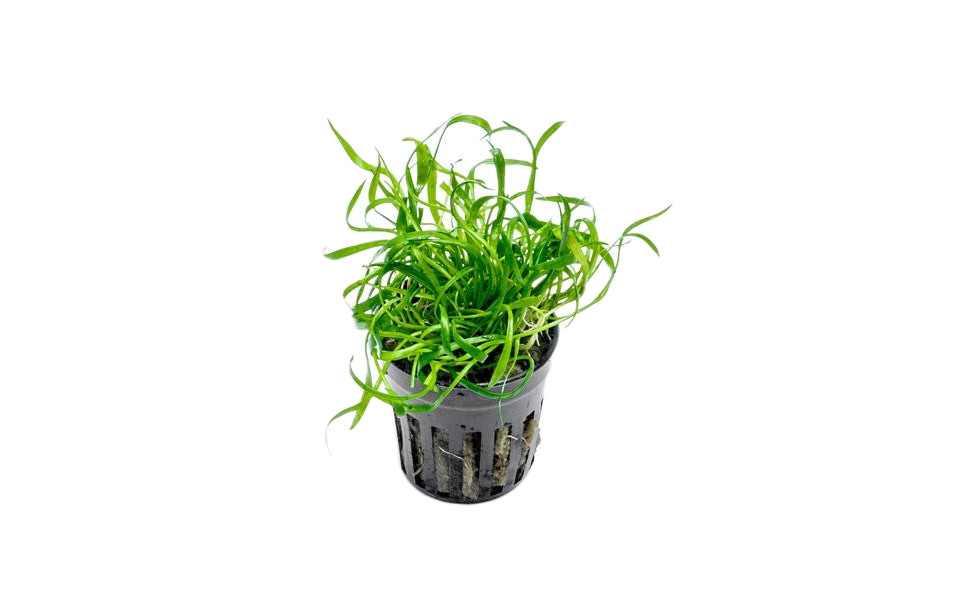
Micro Sword (Lilaeopsis brasiliensis) is an exceptional beginner choice for a first underwater carpet, growing in thick, arching tufts that transform the foreground into a wild, lush field. Highly versatile, it spreads by horizontal runners and works as a foreground carpet or nano midground filler.
Quick facts
Identity
- Also known as
- Brazilian Micro Sword; Micro Sword Plant; Narrow-leaf Micro Sword
- Synonyms
- Lilaeopsis novae-zelandiae (often confused/sold under this name)
- Environment
- Freshwater
- Native to
- Brazil, Argentina, Paraguay
- Habitat
- Marshes, riverbanks, and shallow, periodically flooded lowland areas of South America, often growing partially emersed on damp soil
- Sourcing
- Aquacultured
- Conservation
- Not Evaluated
Care
- Care level
- Moderate
- Growth form
- Carpeting
- Max height
- 1 – 3 in (2.5 – 7.6 cm)
- Growth rate
- Slow
- Placement
- Foreground, Carpet
Water
- Temperature
- 70 – 82 °F (21 – 28 °C)
- pH
- 6.0 – 7.5
- GH
- 2 – 18 dGH
- Flow
- Low-Moderate
- Light
- High
- CO₂
- Beneficial
Planting
- Substrate
- Nutrient-rich preferred
- Feeds from
- Roots
- Fertilizer needs
- Medium
- Colors
- Green
Feeding & breeding
- Propagation
- Runners
Something wrong or missing? Submit a correction
Care guide
Overview
Suits foreground planting in nano to medium tanks where a low, grassy meadow effect is wanted rather than a manicured lawn. Fine grass-like rosettes creep outward via runners, gradually knitting into a carpet under medium-high light and CO2, or filling in slowly under low-tech conditions. Best planted as small tissue-culture portions spaced across the substrate rather than one dense clump.
Care
Micro sword produces grass-like rosettes that spread by creeping stolons, gradually knitting into a low meadow-style carpet rather than a manicured lawn. It fills in fastest with medium to high light and CO2 injection, though it will survive at a much slower pace in a low-tech setup with a sparser result. Regular root tab dosing and a nutrient-rich substrate make the difference between a thin scattering of blades and a dense mat.
Planting & trimming
Plant small tissue-culture portions of just a few blades each, spaced about an inch apart in a grid across the foreground rather than as one large clump, since the fine roots are fragile and easily damaged by crowding. Use tweezers to tuck the roots into a soft, nutrient-rich substrate and reduce flow for the first several days so the plant is not dislodged before it anchors. Trim any runners that creep past the intended planting area, though once the carpet is established it is largely self-maintaining.
Fertilizing
As a root feeder, this plant relies heavily on substrate nutrients, so root tabs pushed near the base every few months are more effective than water column dosing alone. Iron supplementation helps keep the blades a deep green, since pale or yellowing leaves usually point to iron or nitrogen deficiency. A nutrient-rich aquasoil or mineralized substrate gives noticeably better results than inert gravel or sand, which will need more frequent fertilizer top-ups.
Propagation
The plant spreads naturally through horizontal runners that produce new plantlets at intervals along the substrate surface. Once a plantlet has grown its own root system, the runner connecting it to the parent can be cut and the new rosette relocated or left in place to thicken the carpet. This is the only practical propagation method for this species and requires no special technique beyond patience.
Problems
Newly planted clumps often show some leaf melt or yellowing before new growth emerges, which is normal and not a sign of failure. Slow, sparse spread is typically traced to low light or a nutrient-poor substrate rather than disease. Hair algae and BBA can colonize the older, lower portions of dense clumps if flow and CO2 levels are inconsistent, so stable conditions help keep the carpet clean.
Sources
More Carpeting plants
Something wrong or missing? Submit a correction
In the community
Popular tanks using Micro Sword / Lilaeopsis Novaezelandiae
No public tanks are showcasing Micro Sword / Lilaeopsis Novaezelandiae yet.