
Aquatic Plant
Dwarf Hair Grass
Eleocharis parvulaCyperaceaeCarpeting plants
Price: $20.97 USD
Add from My tanks →1 photos
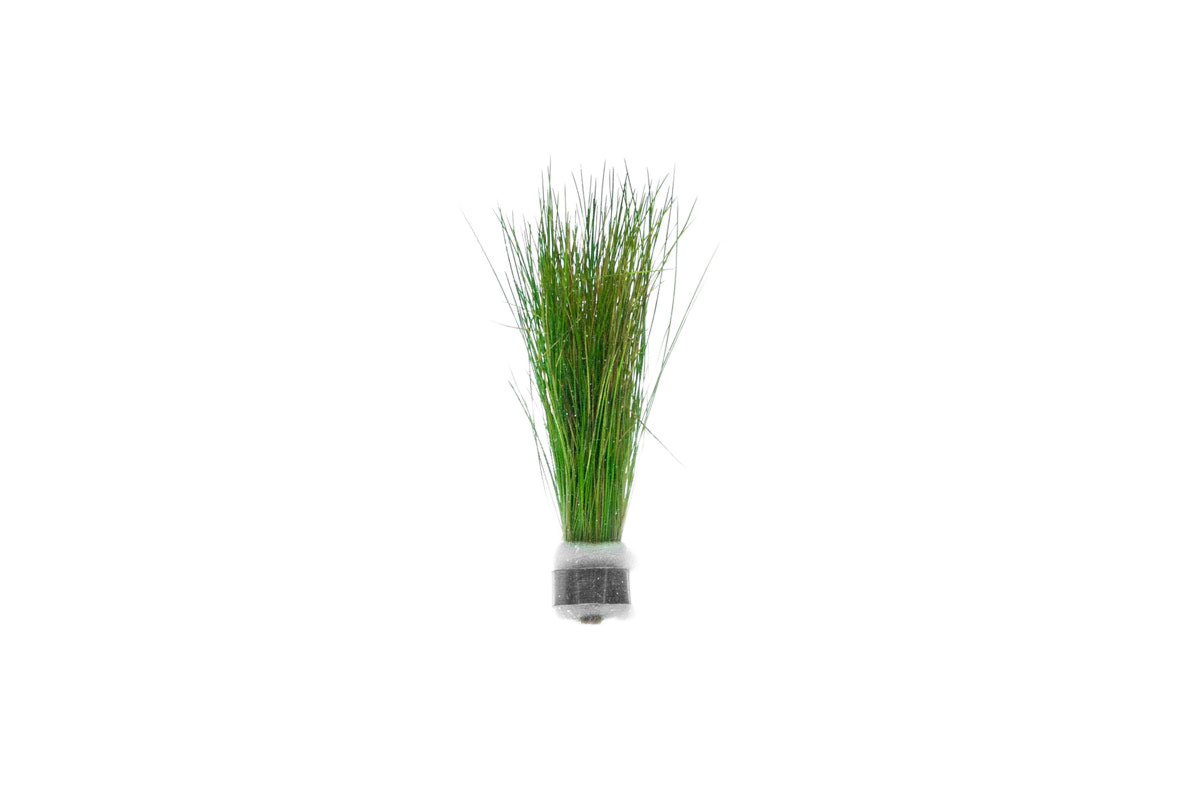
Dwarf Hairgrass (Eleocharis parvula) is a long-standing staple carpeting foreground plant with fine, needle-thin foliage that spreads by runners beneath the substrate. Adaptable to submerged aquariums or emersed setups, easy care, low to high lighting, no CO2 required.
Quick facts
Identity
- Also known as
- Dwarf Hairgrass; Mini Hair Grass; Dwarf Spikerush
- Synonyms
- Eleocharis parvula var. parvula; sometimes confused with Eleocharis acicularis and Eleocharis pusilla in the trade
- Environment
- Freshwater
- Native to
- Cosmopolitan - found in temperate and tropical wetlands worldwide including North America, Europe, and Asia
- Habitat
- Marshes, ditches, and muddy margins of fresh and brackish water; grows emersed in saturated mud and tolerates periodic submersion
- Sourcing
- Both
- Conservation
- Not Evaluated
Care
- Care level
- Moderate
- Growth form
- Carpeting
- Max height
- 1 – 4 in (2.5 – 10 cm)
- Spread
- 12 in (30 cm)
- Growth rate
- Moderate
- Placement
- Foreground, Carpet
Water
- Temperature
- 59 – 82 °F (15 – 28 °C)
- pH
- 6.0 – 7.5
- GH
- 2 – 12 dGH
- PAR
- 50 – 80 PAR
- Flow
- Low-Moderate
- Light
- High
- CO₂
- Beneficial
Planting
- Substrate
- Nutrient-rich preferred
- Feeds from
- Both
- Fertilizer needs
- Medium
- Colors
- Green
Feeding & breeding
- Propagation
- Runners
Something wrong or missing? Submit a correction
Care guide
Overview
Fine needle-thin blades barely an inch or two tall form a dense low lawn across the foreground as runners knit neighboring tufts together. Growth stays low and tight only under strong substrate-level light, so placement near the front glass under high-output lamps suits it best. Expect a slow start with some initial melt before the true submerged carpet fills in.
Care
A true dwarf carpeting sedge rather than a grass, its thin green blades are leafless photosynthetic stems that spread by underground runners to knit into a lawn-like mat. Strong light reaching the substrate is the key requirement; under weak light the plant stretches upward instead of spreading sideways and never forms a proper carpet. It tolerates a wide range of hardness and pH thanks to its cosmopolitan wild distribution, and can be kept in unheated or cool setups as well as tropical tanks.
Planting & trimming
Split tissue-culture cups or potted stock into small tufts of a few blades and press each into fine, nutrient-rich substrate a couple of centimeters apart so runners can connect them into a continuous carpet. Trimming the tips once the carpet establishes encourages it to thicken and spread rather than grow tall. Patience is needed since initial spread is slow before the mat fills in relatively suddenly.
Fertilizing
Root feeding matters more than water column dosing, so a nutrient-rich substrate such as aquasoil or a substrate capped with root tabs produces the best growth. Liquid fertilizer with iron and micronutrients supports leaf color and density, especially in high light setups where uptake demand rises. Pale or yellowing blades usually point to iron or nitrogen deficiency rather than a lighting problem.
Propagation
Propagates by horizontal underground runners that send up new shoots around the parent plant, gradually filling in bare substrate. Established carpets can be divided and replanted elsewhere by lifting sections with an intact runner network.
Problems
Plants sourced emersed, whether potted in rock wool or from tissue culture, commonly die back within the first two weeks after submersed planting as the original blades convert to shorter, finer submerged growth; this is a normal transition and not plant failure. Because it is a slow starter, algae can colonize open substrate around new plugs before the carpet closes, so nutrient and light balance should be dialed in from the start. Coarse or loose substrate causes clumps to lift rather than knit together into a mat.
Sources
More Carpeting plants
Something wrong or missing? Submit a correction
In the community
Popular tanks using Dwarf Hair Grass
No public tanks are showcasing Dwarf Hair Grass yet.