
Aquatic Plant
Persicaria Praetermissa
Persicaria praetermissaPolygonaceaeStem plants
Price: $9.99 USD
Add from My tanks →1 photos
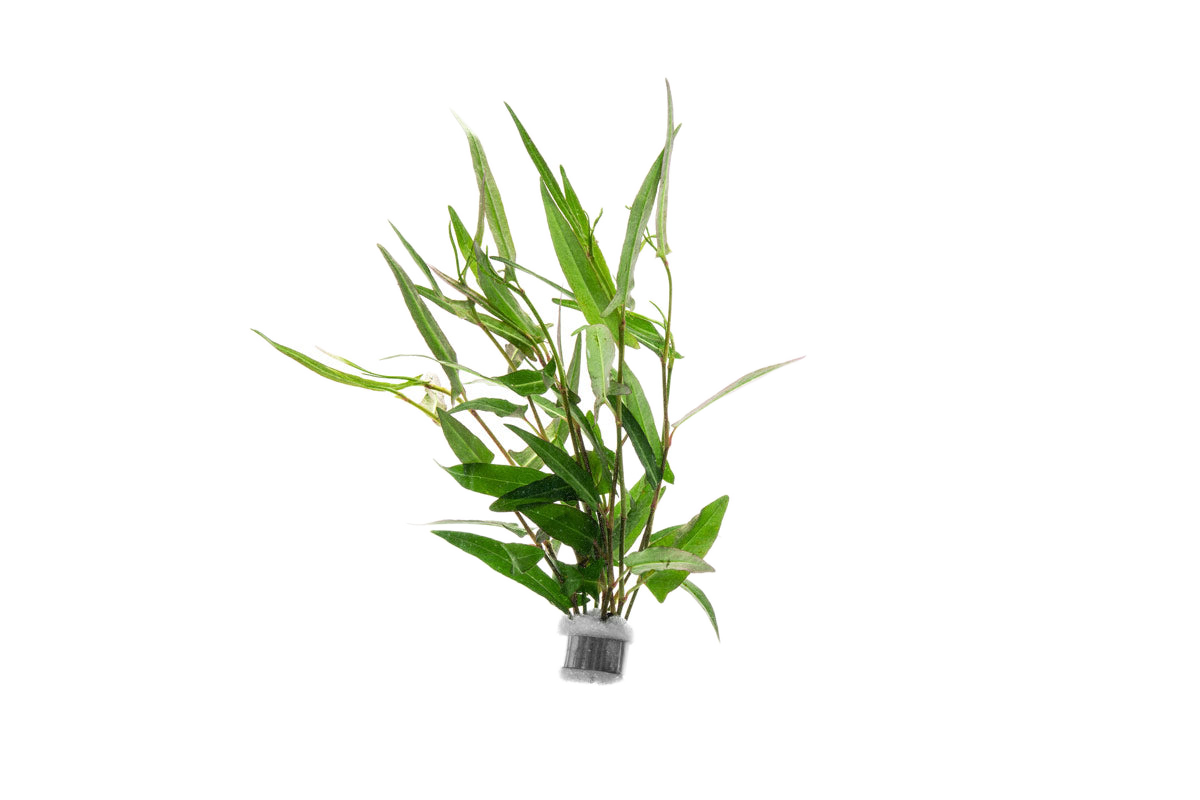
Persicaria praetermissa (Ruby Smartweed) is a rare, fast-growing stem plant from the marshes and riverbanks of Asia and Australia, with distinctive spearhead-shaped leaves that develop rich reddish-brown, copper and magenta tones when submerged. Easy to moderate, it needs medium to high light, benefits from CO2 and iron for deeper color, and propagates from stem cuttings.
Quick facts
Identity
- Also known as
- Ruby Smartweed; Polygonum Ruby
- Synonyms
- Polygonum sp. 'Ruby'; Polygonum praetermissum; Persicaria sp. Ruby
- Environment
- Freshwater
- Native to
- Tropical Asia, Australia
- Habitat
- Marshes, wet ditches and muddy margins of still or slow-moving water, growing amphibiously emersed on wet ground or fully submersed when flooded
- Sourcing
- Aquacultured
- Conservation
- Not Evaluated
Care
- Care level
- Moderate
- Growth form
- Stem
- Max height
- 3 – 14 in (7.6 – 36 cm)
- Spread
- 6 in (15 cm)
- Growth rate
- Fast
- Placement
- Midground, Background
Water
- Temperature
- 64 – 86 °F (18 – 30 °C)
- pH
- 5.0 – 7.0
- GH
- 2 – 6 dGH
- dKH
- 0 – 14 dKH
- Flow
- Moderate
- Light
- Medium
- CO₂
- Beneficial
Planting
- Substrate
- Nutrient-rich preferred
- Feeds from
- Both
- Fertilizer needs
- Medium
- Colors
- Red, Brown, Orange
Feeding & breeding
- Propagation
- Cuttings
Something wrong or missing? Submit a correction
Care guide
Overview
Narrow, spearhead-shaped leaves take on copper, magenta and reddish-brown hues underwater, deepest under strong light and steady CO2. Growth leans diagonally rather than upright, letting stems drape over hardscape and fill the midground. Fast growing and shrimp safe, it wants a nutrient-rich substrate and regular thinning to keep lower leaves from shading out.
Care
This knotweed stands out among stem plants for its diagonal, sprawling growth habit, with shoots leaning sideways rather than racing to the surface, so it fills the midground and drapes over hardscape rather than forming a vertical hedge. Underwater the narrow, spearhead-shaped leaves shift to brown-red or copper tones, most intense under strong light with CO2 and consistent nutrient dosing, though the plant will survive on less at the cost of color and density. It is not a demanding species by the standards of colored Persicaria, but it stalls and fades in dim, lean setups, so plan for moderate to high light and a fertilized substrate.
Planting & trimming
Plant cuttings directly into open substrate, spacing them enough to allow the sprawling shoots room to spread sideways rather than crowding vertically. When a stem wanders too far across the layout, trim it back to a node and replant the cut top to keep growth dense and controlled. It converts readily between emersed and submersed forms, so it can also be grown emersed in paludariums or as a start-up culture before flooding.
Fertilizing
A nutrient-rich substrate supports root development and vigorous growth, since this plant draws nutrients through both roots and the water column. Regular liquid fertilization with iron helps maintain the deeper copper and magenta leaf tones, and pale or washed-out new growth is usually a sign of insufficient iron or light. CO2 injection is strongly recommended, as growth and coloration are noticeably weaker without it.
Propagation
Propagation is by stem cuttings: cut a healthy shoot below a node, remove the lower leaves, and replant the top section in substrate where it will root within a couple of weeks. The original base often continues to branch and produce additional side shoots that can later be harvested as further cuttings.
Problems
Lower leaves can drop or thin out if light or nutrients are inadequate, and stems tend to stretch and lose color in shaded tanks. Because the sparsely branched shoots grow diagonally, lower portions of the plant can become shaded by their own upper growth or by neighboring stems, so periodic thinning helps keep the base healthy. Algae can settle on slower-growing sections in tanks with excess nutrients relative to light and CO2.
Sources
More Stem plants
Something wrong or missing? Submit a correction
In the community
Popular tanks using Persicaria Praetermissa
No public tanks are showcasing Persicaria Praetermissa yet.