
Aquatic Plant
Persicaria Hydropiper
Persicaria hydropiperPolygonaceaeStem plants
Price: $9.99 USD
Add from My tanks →1 photos
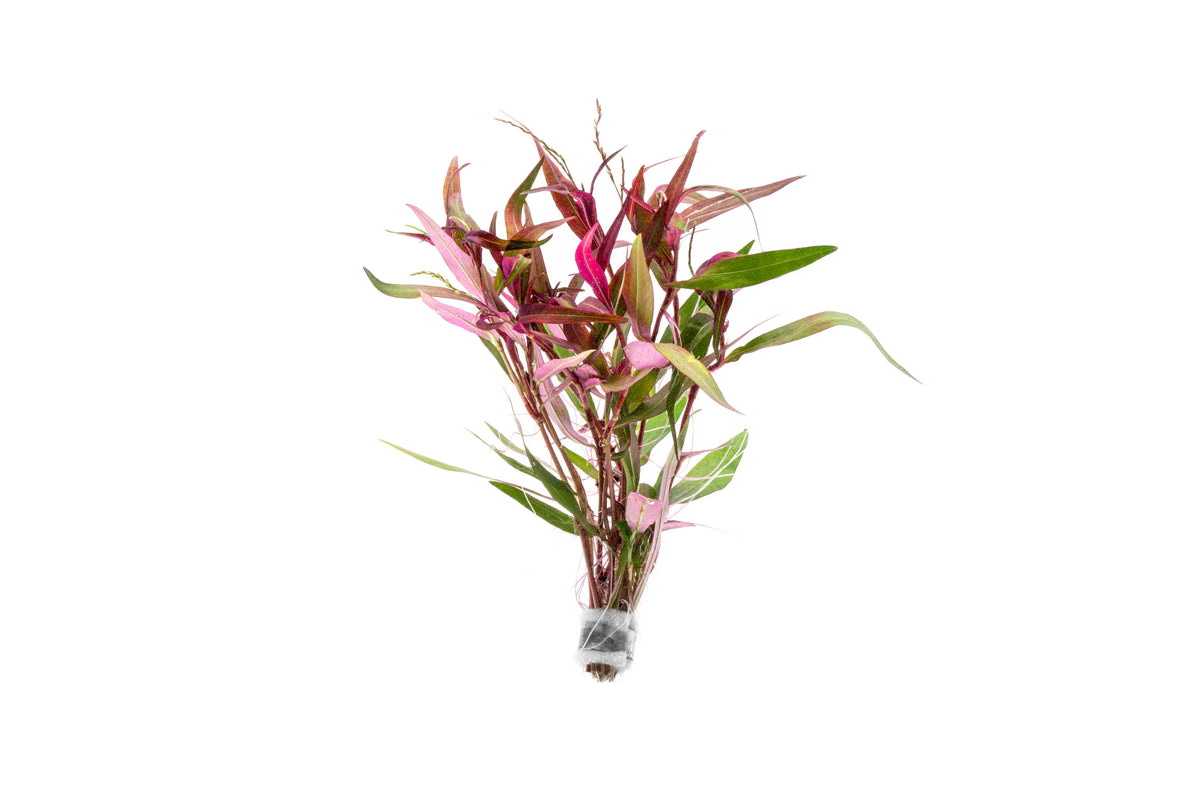
Persicaria hydropiper is a fast-growing stem plant from moist riverbanks and marshes worldwide, with slender leaves that turn bright green, soft pink and deep red when submerged. Easy to moderate, it needs medium to high light, benefits from CO2 and fertilization for deeper color, and propagates from stem cuttings.
Quick facts
Identity
- Also known as
- marshpepper knotweed; marsh pepper smartweed; arse smart; tade; knotweed
- Synonyms
- Polygonum hydropiper
- Environment
- Freshwater
- Native to
- Europe, Asia, North America, Australia, New Zealand
- Habitat
- Damp riverbanks, marshes, ditches, and shallow pond and stream margins in temperate regions worldwide
- Sourcing
- Aquacultured
- Conservation
- Not Evaluated
Care
- Care level
- Easy
- Growth form
- Stem
- Max height
- 4 – 12 in (10 – 30 cm)
- Spread
- 4 in (10 cm)
- Growth rate
- Fast
- Placement
- Midground, Background
Water
- Temperature
- 64 – 79 °F (18 – 26 °C)
- pH
- 6.0 – 7.5
- Flow
- Low-Moderate
- Light
- Medium
- CO₂
- Beneficial
Planting
- Substrate
- Nutrient-rich preferred
- Feeds from
- Both
- Fertilizer needs
- Medium
- Colors
- Green, Pink, Red
Feeding & breeding
- Propagation
- Cuttings
Something wrong or missing? Submit a correction
Care guide
Overview
Water pepper is a stem plant grown for its narrow foliage, which stays green under modest light but shifts toward pink and red with stronger light, CO2 and iron dosing. It adapts readily between emersed and submerged forms and grows quickly, so regular trimming keeps stems from thinning out. Suits midground to background planting in nutrient-rich substrate.
Care
Persicaria hydropiper adapts to both emersed and fully submerged growth, making it useful for tanks with a paludarium or bog section as well as conventional planted aquascapes. Under medium light it stays mostly green, while stronger light paired with CO2 injection and iron-rich fertilizing brings out pink and red tones in the narrow leaves. Because it grows quickly once established, regular trimming keeps stems from becoming leggy and thin. Nursery specimens are usually grown emersed and will shed their original leaves as they convert to a submersed form, which is a normal transition rather than a sign of poor health.
Planting & trimming
Strip the lower leaves from bare stems and push them one to two inches into a rich substrate, spacing individual stems a few centimeters apart so light still reaches the lower foliage. It roots readily and settles quickly whether planted directly in an aquarium substrate or in the damp margin of a riparium or bog planter. Once stems reach the desired height, trim the tops and replant the cuttings to keep the group dense and encourage bushier growth.
Fertilizing
Root tabs pushed into nutrient-rich substrate support the root system, while regular liquid fertilizing supplies the iron and micronutrients needed for the pink and red coloration to develop. Under low nutrients or weak light the plant tends to stay a plain green and grows more slowly. Pale new growth or stunted stems usually point to insufficient iron or macronutrient dosing rather than a lighting problem alone.
Propagation
Propagation is done by cutting the growing tips once stems reach a workable length and replanting them directly into the substrate, where they root within a week or two. Side shoots left on the original stem after trimming will also branch out and thicken the planting over time.
Problems
Newly submerged stems can drop their original emersed leaves within the first couple of weeks, which looks concerning but is a normal adjustment rather than true melt. Persistent leaf loss or blackened stem tips more often points to insufficient light or an unstable CO2 supply. Weak or leggy growth under low light can also invite algae to settle on the older, slower-growing leaves.
Sources
More Stem plants
Something wrong or missing? Submit a correction
In the community
Popular tanks using Persicaria Hydropiper
No public tanks are showcasing Persicaria Hydropiper yet.