
Shrimp
Orange Eye Royal Blue Tiger Shrimp
Caridina mariaeAtyidaeDwarf shrimp
Price: $129.99 USD
Add from My tanks →1 photos
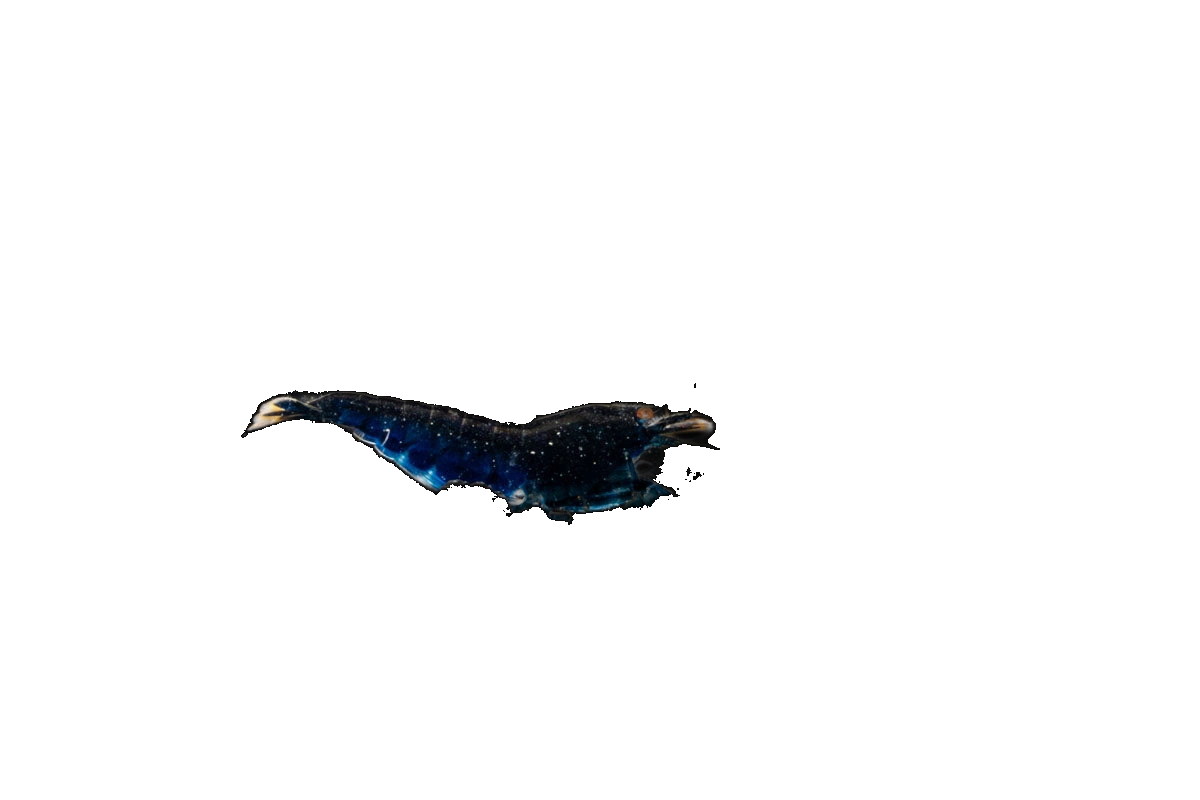
The Orange Eye Royal Blue Tiger is the crown jewel of the Tiger shrimp family (Caridina mariae), selectively bred for a solid, opaque, nearly black-blue body contrasting with glowing orange eyes. These active, social scavengers graze on biofilm and diatoms, and need stable soft, acidic water with near-zero carbonate hardness over an active buffering substrate.
Quick facts
Identity
- Also known as
- Royal Blue Tiger; OEBT; Orange Eye Blue Tiger; Tiger Shrimp
- Synonyms
- Caridina cantonensis var. 'Orange Eye Blue Tiger'; Caridina cf. cantonensis
- Environment
- Freshwater
- Native to
- Southern China, Hong Kong
- Habitat
- Slow to moderate flowing forest streams and rivers with rocky substrate, leaf litter and biofilm-covered surfaces
- Sourcing
- Captive-bred
- Conservation
- Not Evaluated
Care
- Care level
- Moderate
- Temperament
- Peaceful
- Adult size
- 0.8 – 1.3 in (2 – 3.2 cm)
- Lifespan
- 1 – 2 yrs
- Min tank
- 10 gal (38 L)
- Growth rate
- Moderate
- Placement
- Bottom
Water
- Temperature
- 68 – 75 °F (20 – 24 °C)
- pH
- 6.5 – 7.4
- GH
- 4 – 8 dGH
- TDS
- 120 – 200 ppm
- dKH
- 0 – 4 dKH
- Flow
- Low-Moderate
Behavior & compatibility
- Social
- Group · groups of 10+
- Aggression to own kind
- Low
- Active
- Daytime
- Invert safe
- Yes
- Plant safe
- Yes
- Shrimp safe
- Yes
- Clean-up role
- Algae, Biofilm, Detritus, Leftover food
- Population boom risk
- Moderate
Feeding & breeding
- Diet
- Omnivore
- Foods
- Micro-pellets, Pellets, Algae, Biofilm, Vegetables, Frozen, Freeze-dried
- Breeding type
- Direct development
- Breeding difficulty
- Moderate
- Sexing
- Females are larger and rounder-bodied with a more pronounced saddle and underbelly curve; males are smaller and slimmer
- Target feeding
- Beneficial
Something wrong or missing? Submit a correction
Care guide
Overview
Orange Eye Royal Blue Tiger describes a selectively bred line of Caridina mariae with an opaque, near-black-blue body and dark banding set off by orange eyes lacking normal pigment. Colony members graze biofilm and diatoms constantly and molt regularly, but stall or die off if TDS, pH, or hardness swing, so mature, copper-free water and separation from other tiger or bee lines are essential.
Care
This is a selectively bred color form of the wild tiger shrimp, prized for a solid blue body, dark striping, and bright orange eyes caused by a lack of eye pigment. It sits between hardy Neocaridina and demanding Taiwan bee shrimp in difficulty, tolerating a moderate pH and hardness range but still needing stable, mature water rather than fluctuating conditions. A sponge-filtered, well-planted nano tank with plenty of biofilm-covered surfaces and moss suits it well, and sudden parameter swings are the most common cause of losses. Copper-based medications and trace metals in tap water should be avoided since shrimp are highly sensitive to them.
Feeding
Most of its diet comes from grazing biofilm, algae, and detritus that accumulate naturally on decor, glass, and plant surfaces in a mature tank. Supplement a few times a week with sinking shrimp pellets, blanched vegetables, or algae wafers, offering only what can be cleared within a couple of hours to avoid fouling the water. Variety in food sources helps support consistent molting and color development over time.
Tank mates
Best kept in a species-only tank or alongside small peaceful fish that will not hunt shrimplets, since babies are vulnerable to predation. Avoid combining with other Caridina tiger or bee varieties, as they interbreed freely and dilute the blue coloration over generations. Compatible with snails and other cleanup crew invertebrates that do not compete aggressively for food.
Breeding
Breeding follows the typical dwarf shrimp pattern, with females carrying 20-30 eggs under the abdomen for roughly a month before releasing fully formed juveniles. The line does not breed true, so broods contain a mix of dark blue, pale, and patterned offspring, and maintaining strong color requires regular culling of lighter individuals from the breeding stock. Stable, soft-to-moderate water and steady GH support successful molting through the berried period and reduce egg loss.
Health
Sudden shifts in TDS, pH, or temperature are the most common trigger for stress, failed molts, or die-offs in an established colony. Ammonia and nitrite spikes are fatal quickly, so the tank should be fully cycled and mature before shrimp are added. Watch for signs of bacterial or fungal infection following incomplete molts, which are usually linked to unstable mineral content in the water.
Sources
- Orange Eye Blue Tiger (OEBT) Shrimp Care Guide: Parameters & Breeding | ShrimpKeeper | ShrimpKeepers
- Tiger Shrimp Care Guide: OEBT, Super Tiger, Fancy Tiger & More | ShrimpKeepers
- Blue Tiger Shrimp Care (Orange Eye Blue Tiger): Parameters, Genetics, Breeding | ShrimpTank101
- Orange Eye Blue Tiger Shrimp | Shrimp Science
Varieties in the catalog
More Dwarf shrimp
Something wrong or missing? Submit a correction
In the community
Popular tanks using Orange Eye Royal Blue Tiger Shrimp
No public tanks are showcasing Orange Eye Royal Blue Tiger Shrimp yet.