
Coral
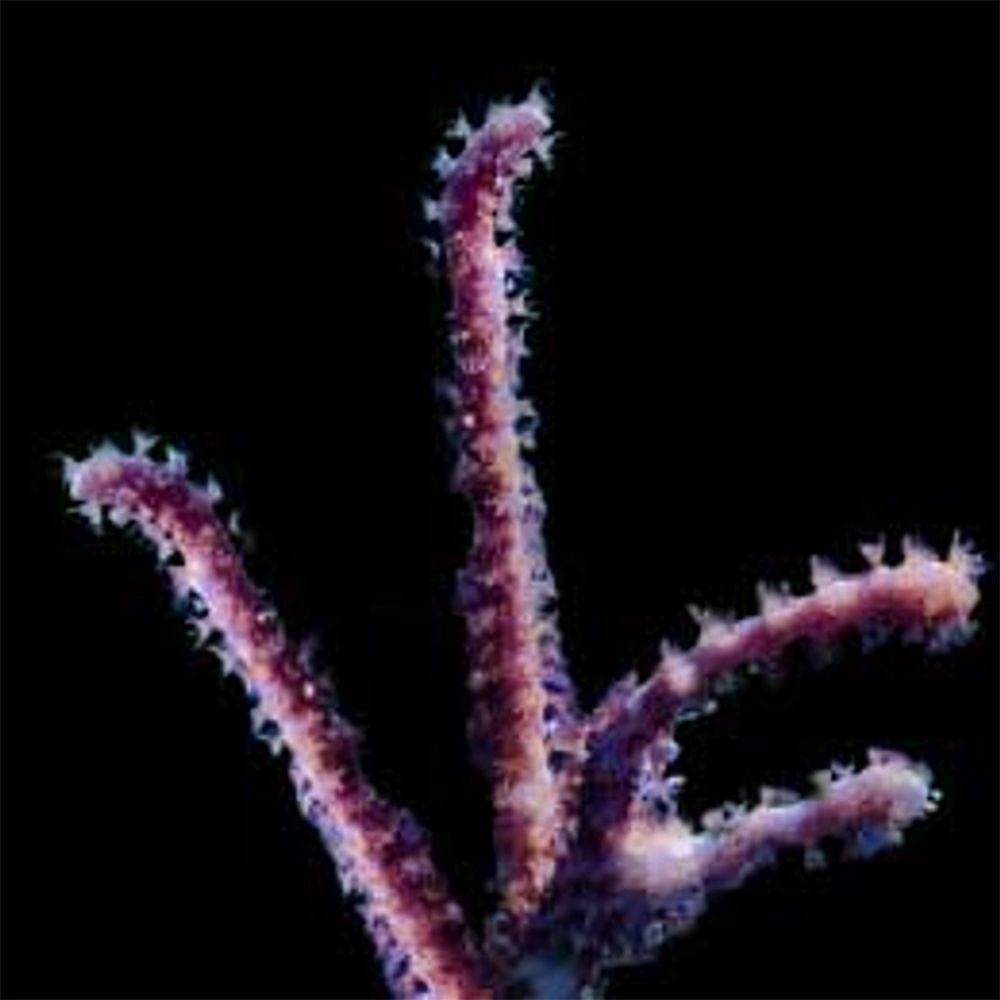
ORA Rumphella Gorgonian Coral
Rumphella sp.GorgoniidaeGorgonians
Add from My tanks →1 photos
A rare and prized macro algae valued for its striking blue coloration; helps reduce nitrates and phosphates and provides habitat for copepods and amphipods, though its color can vary from red to bright blue with stress and nutrition.
Quick facts
Identity
- Also known as
- Furry Sea Fan; Branching Gorgonian
- Environment
- Saltwater
- Native to
- Indo-Pacific
- Habitat
- Reef slopes and hard substrates with good water movement in the Indo-West Pacific
- Sourcing
- Aquacultured
- Conservation
- Not Evaluated
Care
- Care level
- Moderate
- Coral type
- Soft
- Temperament
- Peaceful
- Growth form
- Gorgonian
- Adult size
- 2 – 12 in (5.1 – 30 cm)
- Spread
- 12 in (30 cm)
- Growth rate
- Moderate
- Placement
- Middle, High
Water
- Temperature
- 76 – 80 °F (24 – 27 °C)
- pH
- 8.1 – 8.4
- dKH
- 8 – 12 dKH
- Salinity
- 1.024 – 1.026 SG
- PAR
- 75 – 150 PAR
- Flow
- Moderate-High
- Light
- Medium
Reef care
- Nutrient preference
- Medium
- Alk/Ca uptake
- Low
- Target feeding
- Beneficial
- Give it room
- 6 in (15 cm)
- Colors
- Brown, Pink
Feeding & breeding
- Diet
- Photosynthetic
- Foods
- Phytoplankton, Zooplankton, Coral food
- Propagation
- Fragging
Something wrong or missing? Submit a correction
Care guide
Overview
Suited to established reef systems with strong, alternating flow and stable lighting, this aquacultured gorgonian carries zooxanthellae, so most nutrition comes from light rather than heavy feeding. Fine polyps cover the branching brown-to-pink skeleton, giving a furry look when extended. Keepers should mount it securely, leave room for outward growth, and watch for prolonged polyp retraction as a stress signal.
Care
This gorgonian forms a flexible, bushy skeleton that branches repeatedly, with fine polyps covering the surface to give a furry appearance when extended. Unlike many Caribbean gorgonians, Rumphella carries zooxanthellae and derives much of its energy from light, which makes it considerably easier to keep than non-photosynthetic sea fans. Moderate to strong, ideally turbulent or alternating flow across the whole colony helps prevent detritus and cyanobacteria from settling on the branches. It tolerates a range of lighting intensities and can be started lower in the tank and allowed to grow toward brighter areas.
Placement & acclimation
Acclimate gradually to lighting when introducing to a new tank, since sudden increases in intensity can stress the colony even though it is photosynthetic. Mount the holdfast securely to live rock or a hard substrate in an area with moderate to strong, ideally random or alternating flow. Leave open space around the colony to accommodate outward branching growth as it matures.
Feeding
Most nutrition comes from photosynthesis, but occasional feeding of fine phytoplankton and small zooplankton supports steadier growth and richer color. Broadcast feeding or spot feeding with powdered coral foods a few times a week is sufficient, and amino acid dosing can offer additional benefit. Overfeeding should be avoided since excess nutrients can encourage algae growth on the exposed skeletal axis rather than improving coral health.
Neighbors
Give this coral clearance from neighboring corals and equipment since the branches spread outward and sway with current over time. It does not appear to carry strong sweeper tentacles or aggressive chemical defenses, so it mixes reasonably well in a mixed reef display. As with any gorgonian, avoid placing it where flow is blocked by nearby colonies, since stagnant pockets encourage sediment buildup on the branches.
Fragging
Colonies can be fragged by cutting healthy branch sections with clean cutters and mounting the cut ends to rubble or plugs until they attach. Allow fresh cuts to heal in low-to-moderate flow before moving frags into higher flow display positions.
Pests & problems
Polyps that stay retracted for extended periods usually indicate insufficient flow, sediment accumulation, or a recent transplant stress response, and colonies often need days to weeks to settle in after introduction. Bare, algae-covered patches on the skeletal axis are a sign of tissue recession and should prompt a check of flow, water quality, and nutrient stability. Because Rumphella is traded and identified only to genus level, husbandry needs can vary somewhat between specimens, so it is worth observing polyp behavior closely after any change in conditions.
Sources
More Gorgonians
Something wrong or missing? Submit a correction
In the community
Popular tanks using ORA Rumphella Gorgonian Coral
No public tanks are showcasing ORA Rumphella Gorgonian Coral yet.