
Coral
ORA Purple Gorgonian
Pterogorgia citrinaGorgoniidaeGorgonians
Add from My tanks →1 photos
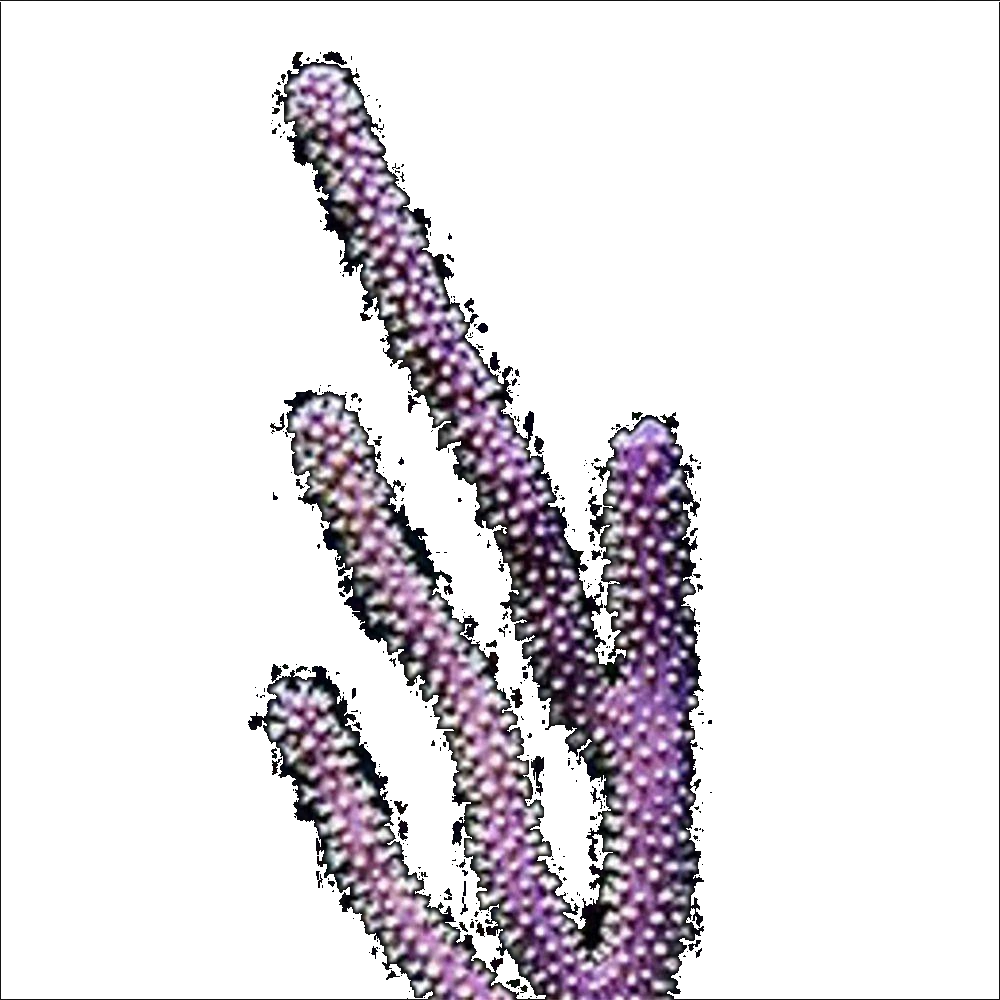
The ORA Purple Gorgonian is a fully photosynthetic soft coral that gets all of its nutrition from light, making it easy to keep in the home aquarium. Its slender, deep purple branches add vertical structure to the reef and can also serve as natural perches for seahorses.
Quick facts
Identity
- Also known as
- Yellow Sea Whip; Yellow Sea Blade; Green Sea Blade; Green Lace Gorgonian; Purple Polyp
- Synonyms
- Pterogorgia citrina var. purple
- Environment
- Saltwater
- Native to
- Caribbean Sea, Bahamas, Florida Keys, Gulf of Mexico, northern South America
- Habitat
- Shallow reef flats, reef crests, and back reefs with strong current, typically at 3-30 feet depth attached to hard substrate
- Sourcing
- Both
- Conservation
- Not Evaluated
Care
- Care level
- Moderate
- Coral type
- Soft
- Temperament
- Peaceful
- Growth form
- Gorgonian
- Adult size
- 1.5 – 12 in (3.8 – 30 cm)
- Spread
- 12 in (30 cm)
- Growth rate
- Moderate
- Placement
- Middle, High
Water
- Temperature
- 75 – 80 °F (24 – 27 °C)
- pH
- 8.1 – 8.4
- dKH
- 8 – 12 dKH
- Salinity
- 1.023 – 1.026 SG
- PAR
- 150 – 250 PAR
- Flow
- Moderate-High
- Light
- Medium
Reef care
- Nutrient preference
- Medium
- Alk/Ca uptake
- Low
- Target feeding
- Beneficial
- Give it room
- 6 in (15 cm)
- Colors
- Purple
Feeding & breeding
- Diet
- Photosynthetic
- Foods
- Zooplankton, Phytoplankton, Coral food
- Propagation
- Fragging
Something wrong or missing? Submit a correction
Care guide
Overview
Branches sway continuously in current, sweeping the water column for zooplankton while deep purple tissue photosynthesizes under medium lighting. This aquacultured Pterogorgia citrina forms an upright, gorgonian-shaped colony reaching up to a foot tall and needs strong flow to stay clean and detritus-free. Give it space from neighboring corals, as its sweeper tentacles can sting sessile tankmates on contact.
Care
This gorgonian grows in an upright, branching form and does best in an established reef tank with strong, consistent water flow to keep its tissue free of algae and detritus. It needs moderate lighting and stable water chemistry, with regular dosing of calcium, strontium, and iodine to support tissue health. Polyps typically extend during the day when flow and light are adequate, and prolonged polyp closure often signals stress or poor water quality.
Placement & acclimation
Mount securely to live rock or rubble using coral epoxy or cyanoacrylate glue, oriented so branches can sway freely without contacting neighboring corals. Acclimate to lighting gradually over one to two weeks when moving from lower to higher intensity systems, and allow at least 30 minutes for standard drip or float acclimation to temperature and salinity.
Feeding
Most of its nutritional needs come from zooxanthellae housed in its tissue, so it does not strictly require target feeding. Occasional offerings of fine zooplankton or phytoplankton support better polyp extension and long-term growth. Feeding is most beneficial when flow is reduced briefly to allow the polyps time to capture food particles.
Neighbors
Peaceful toward tankmates but should be given clear space from neighboring corals since sweeper tentacles or contact stinging can damage adjacent colonies as it sways in the current. Its swaying branches can also serve as a perch for seahorses or other slow-moving fish. Avoid placing it too close to corals that might be abraded by its constant motion.
Fragging
Colonies can be fragged by cutting healthy branch sections with clean shears and securing the cut end to a new base with epoxy or glue, allowing the wound to heal in low-flow, stable conditions before returning to normal placement.
Pests & problems
Tissue recession and rapid deterioration can occur if algae or cyanobacteria colonize bare skeleton, so any affected areas should be manually cleaned promptly. Inadequate flow is the most common cause of decline, since detritus settling on the branches leads to necrosis. New specimens can be slow to acclimate and may go through a period of reduced polyp extension before settling in.
Sources
More Gorgonians
Something wrong or missing? Submit a correction
In the community
Popular tanks using ORA Purple Gorgonian
No public tanks are showcasing ORA Purple Gorgonian yet.