
Coral
ORA Grube's Gorgonian
Pinnigorgia flavaPterogorgiidaeGorgonians
Add from My tanks →1 photos
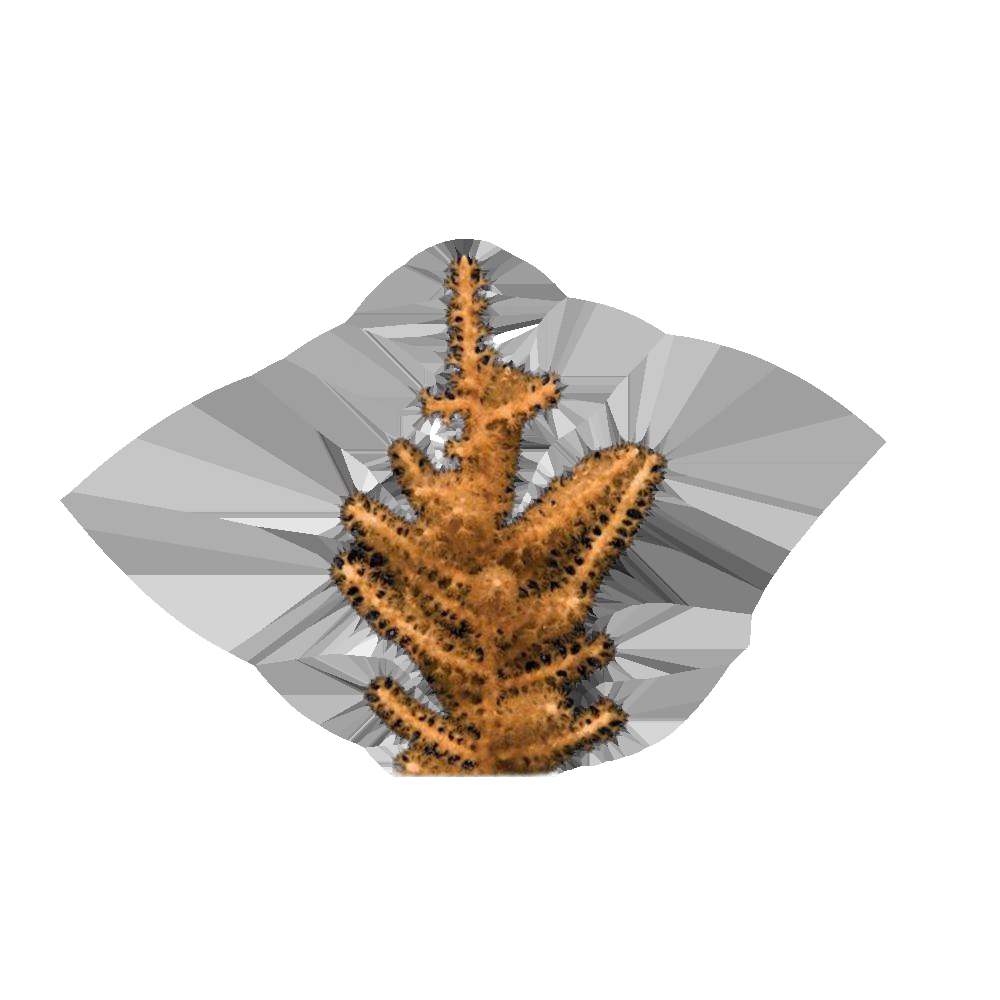
The ORA Grube's Gorgonian (Pinnigorgia flava) is a hardy, photosynthetic soft coral with thin, tan to pink branches and matching polyps; known for its graceful appearance and relatively fast growth in reef aquariums, its ability to photosynthesize makes it easier to care for than non-photosynthetic gorgonians. It prefers medium to high lighting (150-250+ PAR) and medium to high flow, with standard stable reef parameters — salinity 1.025-1.026, temperature 76-80 degrees F, pH 8.1-8.4.
Quick facts
Identity
- Also known as
- Fan Gorgonian; Grube's Sea Fan
- Synonyms
- Euplexaura flava; Plexaura flava
- Environment
- Saltwater
- Native to
- Indo-Pacific
- Habitat
- Shallow reef flats and lagoons with moderate to strong water movement
- Sourcing
- Aquacultured
- Conservation
- Not Evaluated
Care
- Care level
- Moderate
- Coral type
- Gorgonian
- Temperament
- Peaceful
- Growth form
- Gorgonian
- Adult size
- 1 – 12 in (2.5 – 30 cm)
- Spread
- 12 in (30 cm)
- Growth rate
- Fast
- Placement
- Middle, High
Water
- Temperature
- 76 – 80 °F (24 – 27 °C)
- pH
- 8.1 – 8.4
- dKH
- 8 – 12 dKH
- Salinity
- 1.025 – 1.026 SG
- PAR
- 150 – 250 PAR
- Flow
- Moderate-High
- Light
- Medium
Reef care
- Nutrient preference
- Medium
- Alk/Ca uptake
- Low
- Target feeding
- Beneficial
- Give it room
- 6 in (15 cm)
- Colors
- Yellow, Orange, Pink, Brown
Feeding & breeding
- Diet
- Photosynthetic
- Foods
- Coral food, Phytoplankton, Zooplankton
- Propagation
- Fragging
Something wrong or missing? Submit a correction
Care guide
Overview
Thin, tan to pink branches fan outward from a central holdfast, carrying polyps of matching color that extend along the length of each stalk when flow and lighting suit the colony. This aquacultured gorgonian photosynthesizes, so it relies mainly on medium to high PAR rather than constant target feeding. Give it steady, randomized flow and stable parameters, and expect a fast-spreading fan needing generous clearance from neighbors.
Care
This gorgonian is photosynthetic and considerably easier to keep than non-photosynthetic species because it draws most of its energy from light rather than requiring constant target feeding. Provide medium to high PAR and steady, somewhat randomized flow strong enough to sway the thin branches without collapsing them against rockwork. It does best in a mature, stable system, as it can be sensitive to swings in water chemistry, and periodic dips or inspections help keep sediment and algae off the fine branch surface.
Placement & acclimation
Acclimate to lighting gradually, starting in a lower-light area of the tank and moving it toward medium-high PAR over one to two weeks to avoid bleaching. Mount the holdfast securely to live rock in an area with strong, indirect flow oriented so current passes through the branches rather than directly blasting the polyps.
Feeding
Most nutrition comes from zooxanthellae under adequate lighting, but growth and coloration improve with occasional feedings of phytoplankton and fine zooplankton. Target feeding is not essential for survival but can speed growth in an otherwise well-lit tank. Avoid overfeeding, since excess organics can foul the delicate branch tissue if flow is insufficient to keep detritus moving.
Neighbors
Leave generous clearance around the colony since it spreads into a wide fan shape as it matures and can eventually crowd or contact neighboring corals. It lacks strong sweeper tentacles or aggressive chemical defenses, making it a reasonably safe neighbor in a mixed reef, but sessile invertebrates placed too close may still be shaded or brushed by its swaying branches. Fish that nip at soft coral tissue should be avoided.
Fragging
Propagated by fragging; branches can be cut or allowed to break off naturally and will reattach and grow when secured to a hard substrate with cyanoacrylate glue or a frag plug. Fragments generally callus and establish holdfasts readily given adequate flow and light.
Pests & problems
Closed or retracted polyps for an extended period usually point to insufficient or excessive flow, sediment buildup on the branches, or unstable water parameters rather than disease. Some gorgonians can be prone to tissue recession or algae overgrowth if flow is too weak to keep detritus from settling on the axis. New colonies should be inspected and dipped before introduction to rule out hitchhiking pests.
Sources
More Gorgonians
Something wrong or missing? Submit a correction
In the community
Popular tanks using ORA Grube's Gorgonian
No public tanks are showcasing ORA Grube's Gorgonian yet.