
Coral
ORA Neon Green Sinularia Finger Leather Coral
Sinularia sp.AlcyoniidaeLeather corals
Add from My tanks →1 photos
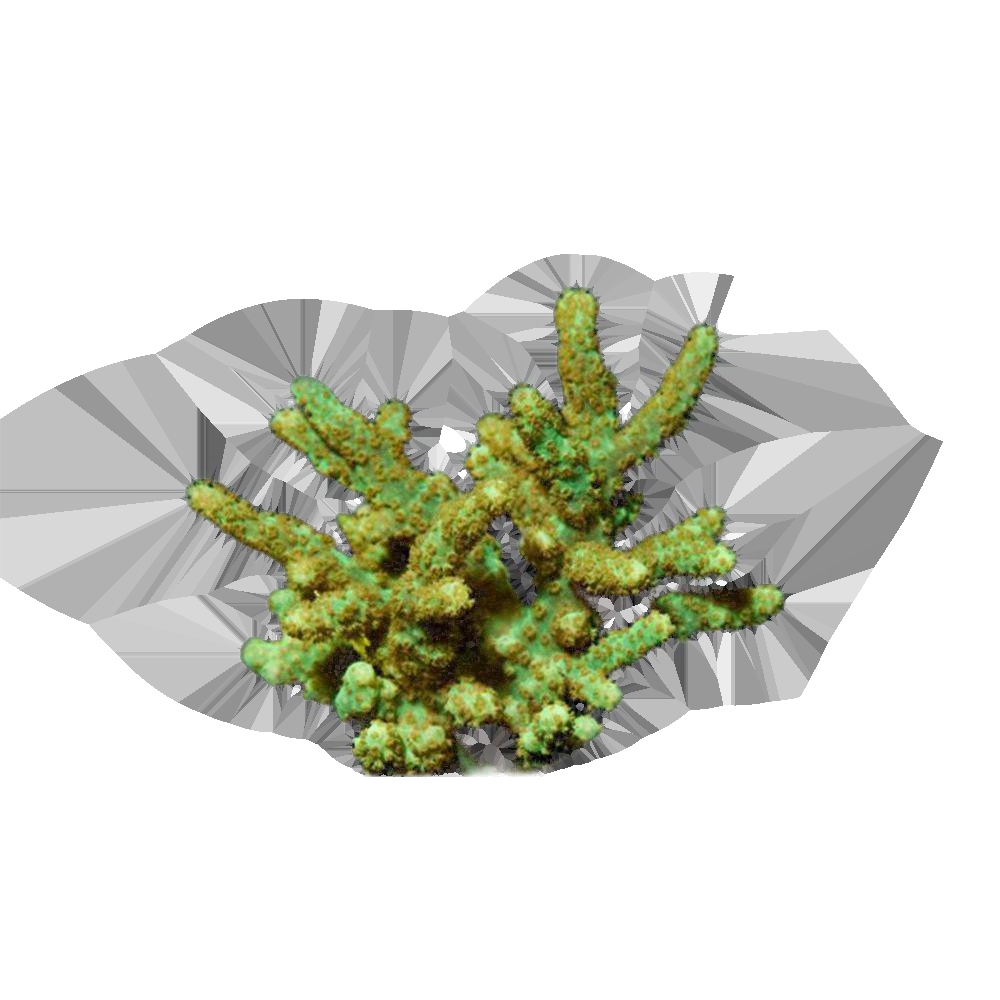
The ORA Neon Green Sinularia Finger Leather Coral is a hardy aquacultured soft coral with a bright neon green base and yellow-green polyps. It is easy to care for and a great choice for both beginner and experienced hobbyists, doing best under moderate lighting (150-250 PAR) and moderate water flow.
Quick facts
Handling caution: Releases irritant terpenoid compounds; wear gloves when handling or fragging
Identity
- Also known as
- Finger Leather Coral; Cabbage Leather Coral
- Synonyms
- Sinularia notanda; Sinularia flexibilis; Sinularia dura
- Environment
- Saltwater
- Native to
- Indo-Pacific, Red Sea, East Africa, Indonesia, Philippines, Great Barrier Reef
- Habitat
- Shallow reef flats, lagoon margins, and reef slopes with strong light and brisk water movement, forming large low colonies on rock
- Sourcing
- Both
- Conservation
- Not Evaluated
Care
- Care level
- Easy
- Coral type
- Soft
- Temperament
- Semi-Aggressive
- Growth form
- Branching
- Adult size
- 2 – 12 in (5.1 – 30 cm)
- Spread
- 18 in (46 cm)
- Growth rate
- Fast
- Placement
- Middle, High
Water
- Temperature
- 75 – 81 °F (24 – 27 °C)
- pH
- 8.1 – 8.4
- dKH
- 8 – 11 dKH
- Salinity
- 1.024 – 1.026 SG
- PAR
- 75 – 150 PAR
- Flow
- Moderate-High
- Light
- Medium
Reef care
- Nutrient preference
- Medium
- Alk/Ca uptake
- Low
- Target feeding
- Beneficial
- Give it room
- 4 in (10 cm)
- Colors
- Green, Brown, Yellow, Cream
Feeding & breeding
- Diet
- Photosynthetic
- Foods
- Coral food, Phytoplankton, Zooplankton
- Propagation
- Fragging
Something wrong or missing? Submit a correction
Care guide
Overview
Maricultured on frags before reaching hobbyist tanks, this Sinularia carries a neon green base with yellow-green polyps that expand under moderate lighting and flow. It grows quickly once acclimated and spreads its lobed branches to fill available space on the rockwork. Keep several inches from neighboring corals to offset its terpenoid defenses.
Care
Sinularia leather corals tolerate a wide range of reef conditions and are a common recommendation for keepers moving beyond soft coral basics. They do best with moderate to strong indirect flow that helps them shed their periodic waxy film, and moderate lighting in the range of roughly 75-150 PAR, though they can adapt down to lower intensities with slower growth. Stability of parameters matters more than chasing exact numbers, and they tolerate slightly higher nutrient levels than stony corals. Give colonies room to expand since branches thicken and lengthen substantially with age.
Placement & acclimation
Acclimate gradually to lighting by starting new colonies lower in the aquascape and moving them up over one to two weeks to avoid bleaching or stress. Mount on rockwork in the middle to upper reef using coral glue or epoxy, or wedge frag plugs into rock crevices, leaving open space for the finger-like lobes to expand. A brief iodine dip on arrival can help settle newly acquired specimens.
Feeding
Most of its energy comes from zooxanthellae through photosynthesis, so no direct feeding is required for survival. Occasional broadcast feeding of phytoplankton, fine zooplankton, or powdered coral foods can support faster growth, particularly in nutrient-poor systems. Newly introduced colonies should be allowed to settle in for a couple of weeks before supplemental feeding is attempted.
Neighbors
This coral lacks sweeper tentacles and will not sting neighbors directly, but it releases terpenoid compounds that can irritate or suppress nearby corals, especially small-polyp stony species. Leave several inches of clearance from other corals and run fresh activated carbon along with strong skimming to dilute these chemicals in mixed reef systems. It coexists well with reef-safe fish and most invertebrates.
Fragging
Propagation is done by cutting healthy branches from the parent colony with a sharp blade or scissors and allowing the cut to firm up before mounting. Fragments can be attached to live rock rubble, plugs, or tucked into rockwork with rubber bands or mesh until they attach on their own, typically within a few weeks. Cutting during a period of good polyp extension improves survival of the frag.
Pests & problems
Periodic shedding of a waxy surface coating with temporary polyp closure is a normal event and not a sign of illness, and recovery is faster with good flow and stable water quality. Chronic tissue recession, persistent drooping, or stark paling usually point to flow, lighting, or nutrient problems rather than disease. Bristle worms and coral-eating nudibranchs occasionally target leather corals but are not a common issue.
Sources
Varieties in the catalog
More Leather corals
Something wrong or missing? Submit a correction
In the community
Popular tanks using ORA Neon Green Sinularia Finger Leather Coral
No public tanks are showcasing ORA Neon Green Sinularia Finger Leather Coral yet.