
Coral
ORA Micronesian Red Lobophyllia Coral
Lobophyllia sp.LobophylliidaeLPS corals
Add from My tanks →1 photos
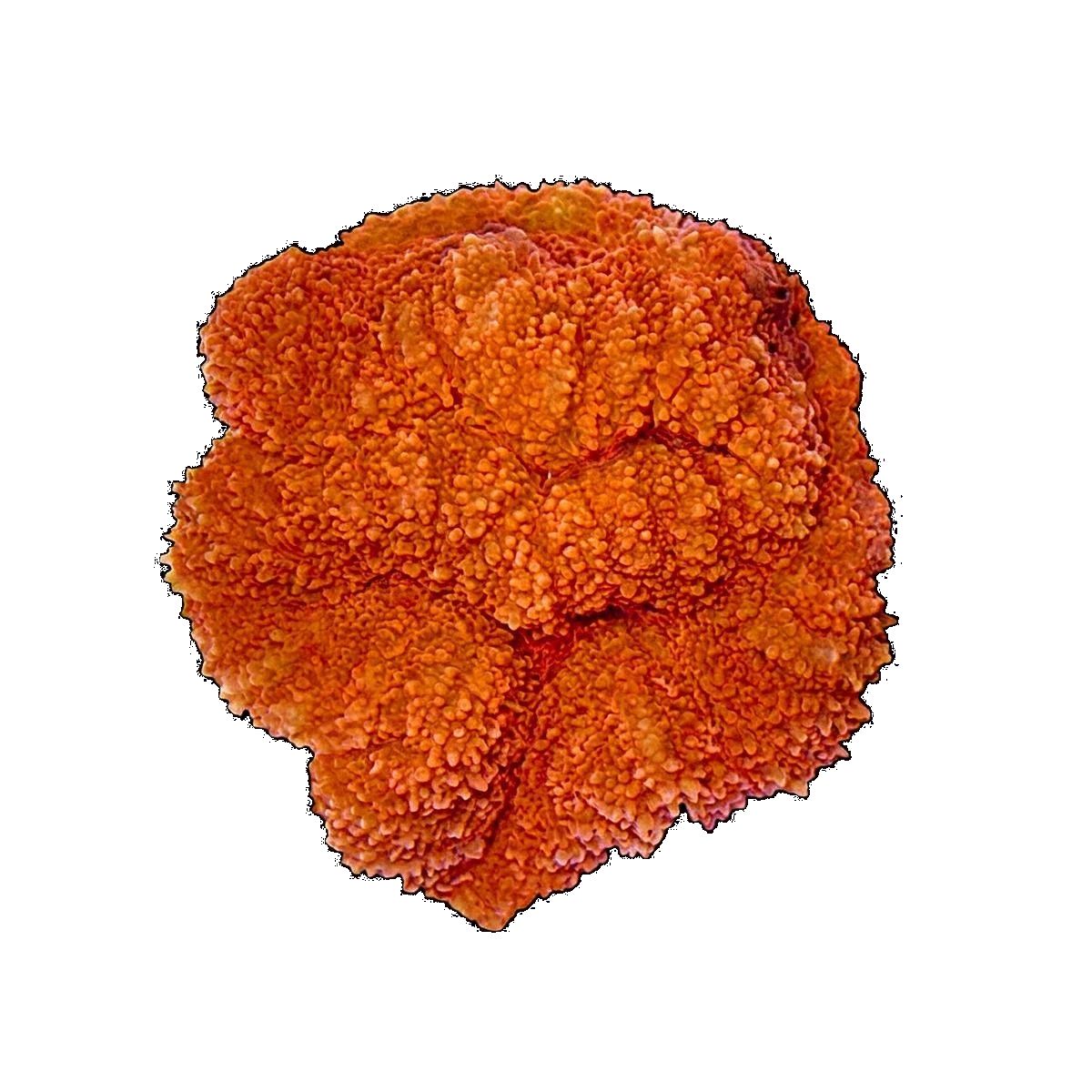
A bold red Lobophyllia (Lobophyllia sp.) with deep crimson to cherry red tones and sculpted fleshy ridges giving a brain-like appearance; hardy and adaptable under low to moderate lighting and flow, with a visible feeding response.
Quick facts
Handling caution: Fleshy polyps are easily torn when handled, risking tissue damage and infection; avoid direct contact.
Identity
- Also known as
- Lobed brain coral; Lobo coral; Lobo brain coral; Meat coral
- Synonyms
- Symphyllia spp.
- Environment
- Saltwater
- Native to
- Indo-Pacific, Indonesia, Great Barrier Reef, Micronesia
- Habitat
- Reef slopes and lagoons across the Indo-Pacific, typically lower on the reef where light is more subdued.
- Sourcing
- Both
- Conservation
- Not Evaluated
Care
- Care level
- Moderate
- Coral type
- LPS
- Temperament
- Aggressive
- Growth form
- Solitary
- Adult size
- 2 – 12 in (5.1 – 30 cm)
- Spread
- 12 in (30 cm)
- Growth rate
- Slow
- Placement
- Sand bed, Low
Water
- Temperature
- 75 – 81 °F (24 – 27 °C)
- pH
- 8.1 – 8.4
- dKH
- 8 – 12 dKH
- Salinity
- 1.024 – 1.026 SG
- PAR
- 80 – 150 PAR
- Flow
- Low-Moderate
- Light
- Medium
Reef care
- Nutrient preference
- Medium
- Alk/Ca uptake
- Medium
- Target feeding
- Beneficial
- Give it room
- 6 in (15 cm)
- Colors
- Red, Green, Brown, Orange, Multicolor
Feeding & breeding
- Diet
- Photosynthetic
- Foods
- Frozen, Zooplankton, Coral food
- Propagation
- Fragging
Something wrong or missing? Submit a correction
Care guide
Overview
Lobophyllia colonies in this crimson to cherry red form display the same sculpted, fleshy ridges that give the genus its brain-like look, with color intensity varying by lighting and specimen. It settles well under low to moderate PAR and flow, feeds visibly on offered mysis, and needs clearance from tankmates due to nighttime feeding tentacles.
Care
Lobophyllia is a large-polyp stony coral that fares best once acclimated to captivity, so specimens that have been in the trade for a while or are aquacultured tend to settle in more reliably than freshly imported wild colonies. It wants low to moderate lighting, roughly 80 to 150 PAR, and just enough flow to clear detritus from its mouths without keeping the fleshy lobes retracted. Give it generous open space on the sand bed or lower rockwork, since the tissue expands well beyond the underlying skeleton and can sting or digest neighboring corals it contacts, especially at night.
Placement & acclimation
Acclimate gradually to lighting over one to two weeks, starting in a shaded or lower-light spot in the tank if the coral's prior lighting history is unknown. Place on open sand bed or low rockwork with clearance from neighbors, allowing the fleshy skirt room to expand fully without touching adjacent corals or rock.
Feeding
Most of its nutrition comes from zooxanthellae, but it responds well to occasional target feeding of mysis or brine shrimp with flow paused for several minutes. Feeding once or twice a week is generally enough to support good coloration and tissue fill. Overfeeding or feeding during strong flow tends to go to waste and can foul the water instead of reaching the polyps.
Neighbors
Despite its docile daytime appearance, Lobophyllia extends mesenterial filaments after dark to digest neighboring coral tissue it can reach, so keep a genuine gap of several inches to a foot from other corals. It does not produce long stinging sweeper tentacles like Euphyllia, but proximity aggression is still a real risk. Fish that peck at LPS flesh, such as some butterflyfish, should be avoided in the same system.
Fragging
Fragging is done by cutting between the fleshy lobes to separate sections of the skeleton, though Lobophyllia grows slowly and does not frag as readily or heal as fast as many other LPS, making large-scale propagation uncommon.
Pests & problems
Recently imported colonies often arrive stressed and can suffer tissue recession or bacterial infection if handled roughly during transport or placement. Elevated nitrate, generally above 30 to 40 ppm, has been linked to tissue loss, so stable water chemistry matters more than intense lighting. Bleaching or excessive polyp retraction usually signals too much light or flow rather than disease.
Sources
Varieties in the catalog
More LPS corals
Something wrong or missing? Submit a correction
In the community
Popular tanks using ORA Micronesian Red Lobophyllia Coral
No public tanks are showcasing ORA Micronesian Red Lobophyllia Coral yet.