
Coral
ECC Frankenstein Leptoseris
Leptoseris sp.AgariciidaeLPS corals
Add from My tanks →1 photos
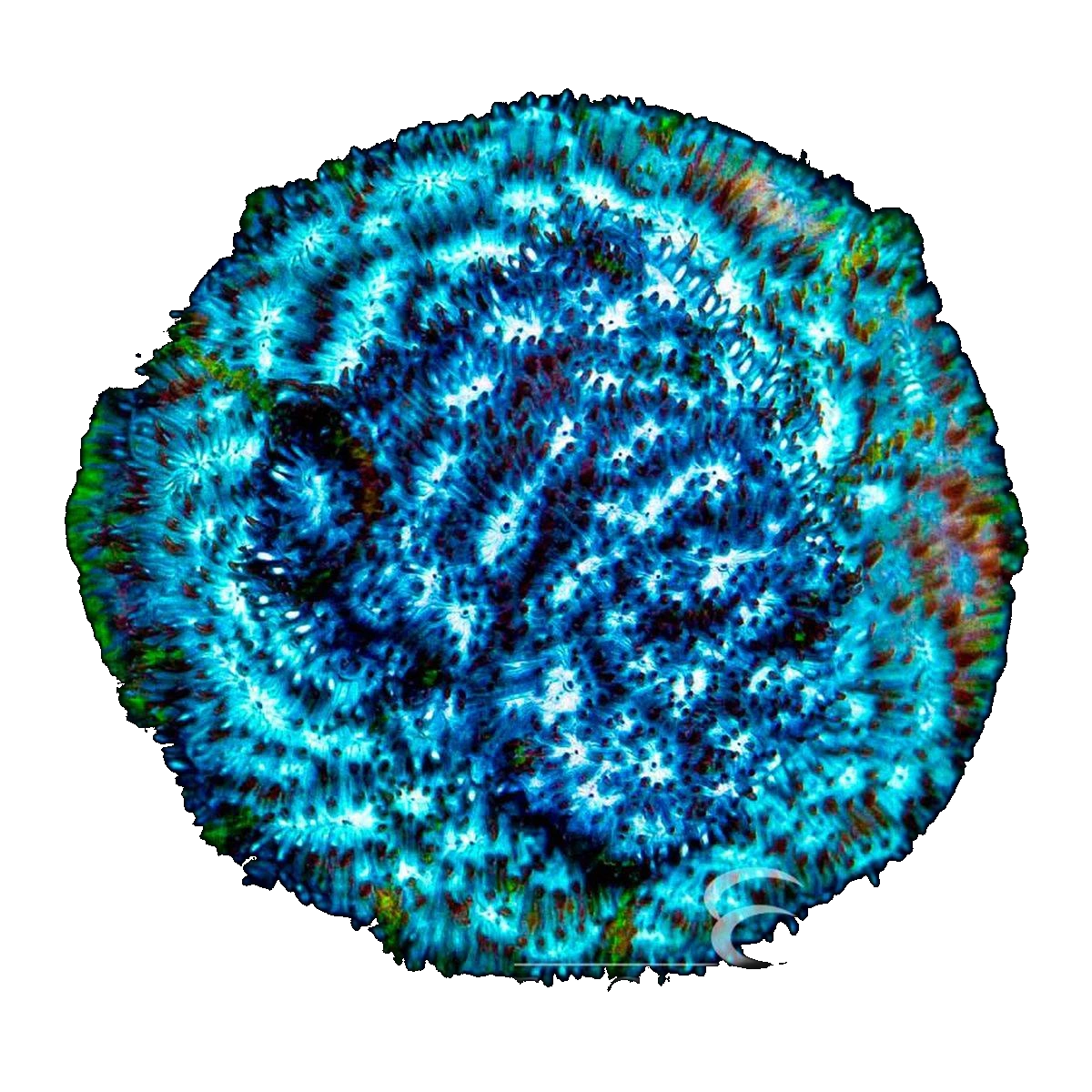
The ECC Frankenstein Leptoseris is a low-maintenance encrusting LPS coral that thrives in shaded or less intensely lit parts of the tank, filling in bare rock surfaces where other corals might struggle. It does best in stable conditions with low to medium lighting (75-250 PAR) and moderate flow; its encrusting growth spreads across uneven surfaces, it has short sweeper tentacles that can sting neighboring corals so give it room to grow, it primarily relies on photosynthesis but can benefit from amino acids, and it is a fast grower.
Quick facts
Handling caution: Short sweeper tentacles can sting neighboring corals; skeleton is thin and fragile when handling frags
Identity
- Also known as
- Wrinkle coral; Jack O Lantern Leptoseris
- Environment
- Saltwater
- Native to
- Indo-Pacific
- Habitat
- Reef walls and deep or mesophotic reef slopes with reduced light penetration
- Sourcing
- Aquacultured
- Conservation
- Not Evaluated
Care
- Care level
- Easy
- Coral type
- LPS
- Temperament
- Semi-Aggressive
- Growth form
- Encrusting
- Adult size
- 0.5 – 12 in (1.3 – 30 cm)
- Spread
- 12 in (30 cm)
- Growth rate
- Fast
- Placement
- Low, Middle
Water
- Temperature
- 75 – 80 °F (24 – 27 °C)
- pH
- 8.1 – 8.4
- dKH
- 8 – 9.5 dKH
- Salinity
- 1.025 – 1.026 SG
- PAR
- 50 – 250 PAR
- Flow
- Low-Moderate
- Light
- Low
Reef care
- Nutrient preference
- Medium
- Alk/Ca uptake
- Medium
- Target feeding
- Beneficial
- Give it room
- 2 in (5.1 cm)
- Colors
- Green, Orange, Yellow, Blue, Multicolor
Feeding & breeding
- Diet
- Photosynthetic
- Foods
- Coral food, Phytoplankton, Zooplankton
- Propagation
- Fragging
Something wrong or missing? Submit a correction
Care guide
Overview
Spreads gradually across bare rock and cave entrances, colonizing shaded surfaces that brighter LPS and SPS avoid. This Leptoseris tolerates low to medium PAR and moderate flow, growing quickly once settled, though its short sweeper tentacles demand a few inches of clearance from neighboring corals. Watch edges for recession if alkalinity swings.
Care
This encrusting LPS does well in lower-light zones of the reef tank where many other corals struggle, making it a useful filler for shaded rockwork or cave entrances. It tolerates a range of light from roughly 50 to 250 PAR but should be acclimated slowly since it evolved in dimmer, mesophotic conditions and can bleach under sudden intense light. Moderate, gentle flow keeps its thin encrusting plates free of detritus without tearing tissue, and stable calcium, alkalinity, and magnesium levels support steady skeletal growth.
Placement & acclimation
Mount frags on rockwork or bare glass in low to medium light areas with moderate, indirect flow, leaving open space for lateral spread. New pieces should be acclimated gradually over two to three weeks, starting in a dimmer spot before moving toward target lighting to avoid shock. A brief mild iodine dip on arrival is a reasonable precaution given how thin and easily damaged the skeleton is.
Feeding
Most of its nutrition comes from photosynthesis through zooxanthellae, so consistent lighting is the primary feeding requirement. Occasional target feeding of fine particulate foods such as phytoplankton, rotifers, or powdered coral food can boost color and growth, best offered with flow reduced so food settles onto the tissue. Amino acid dosing has also been reported to help maintain coloration in dimmer setups.
Neighbors
Give this coral generous clearance from neighbors, at least a couple of inches, since its sweeper tentacles can sting adjacent corals at night. Because it encrusts continuously in any direction with no natural stopping point, placement should account for future spread onto rockwork or glass. It generally coexists well with other LPS and soft corals as long as spacing is respected and more aggressive stinging corals are kept farther away.
Fragging
Frag by cutting or cracking off encrusted sections of skeleton along with living tissue and mounting the pieces on plugs or rock; the growing edge will re-encrust onto the new surface. Growth is relatively fast for an LPS, so fragments recover and re-attach within a few weeks under stable conditions.
Pests & problems
Tissue that turns pale or white usually signals excess light or bleaching stress, while browning can indicate low light or elevated nutrients. Edge recession is often tied to swings in alkalinity or accumulated detritus trapped against the thin plates. Regularly clearing debris with a turkey baster and keeping parameters stable helps prevent slow tissue loss along the growing margins.
Sources
Varieties in the catalog
More LPS corals
Something wrong or missing? Submit a correction
In the community
Popular tanks using ECC Frankenstein Leptoseris
No public tanks are showcasing ECC Frankenstein Leptoseris yet.