
Coral
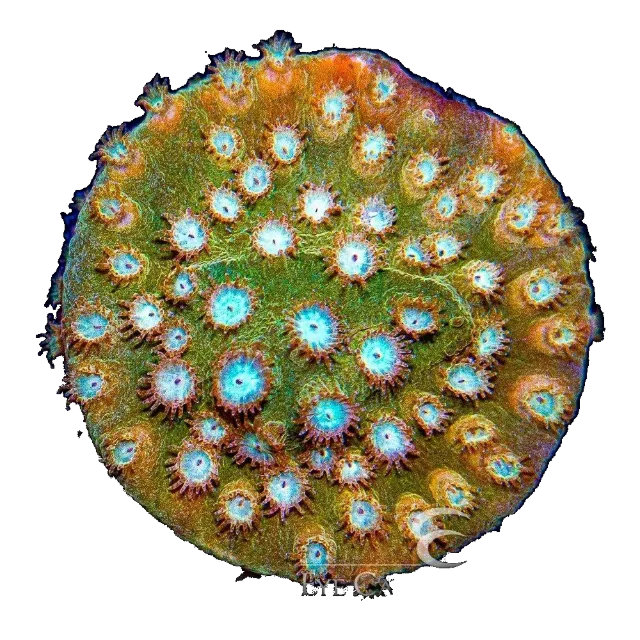
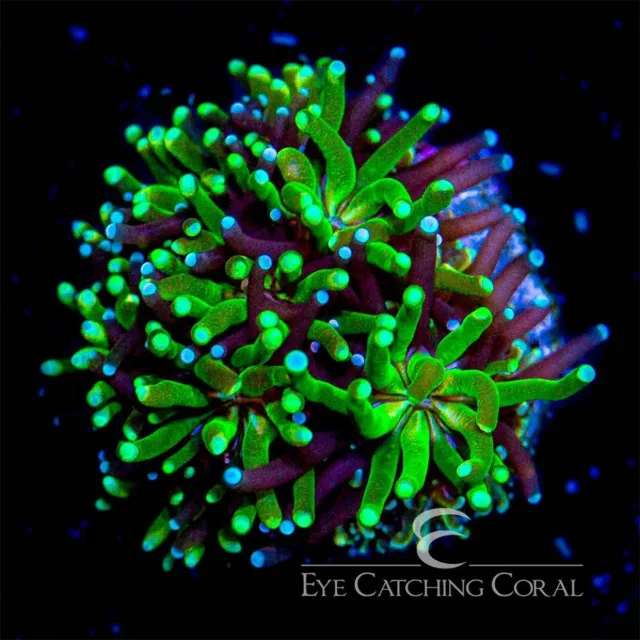
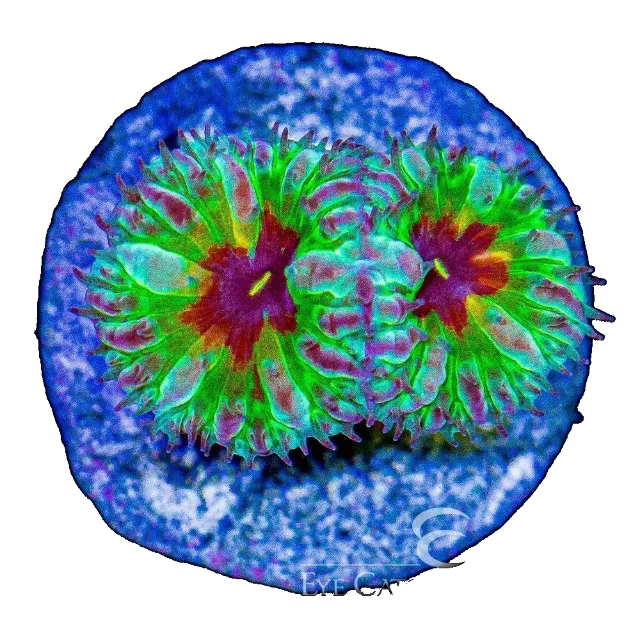
ECC Citrus Burst Cyphastrea
Cyphastrea sp.MerulinidaeLPS corals
Add from My tanks →1 photos
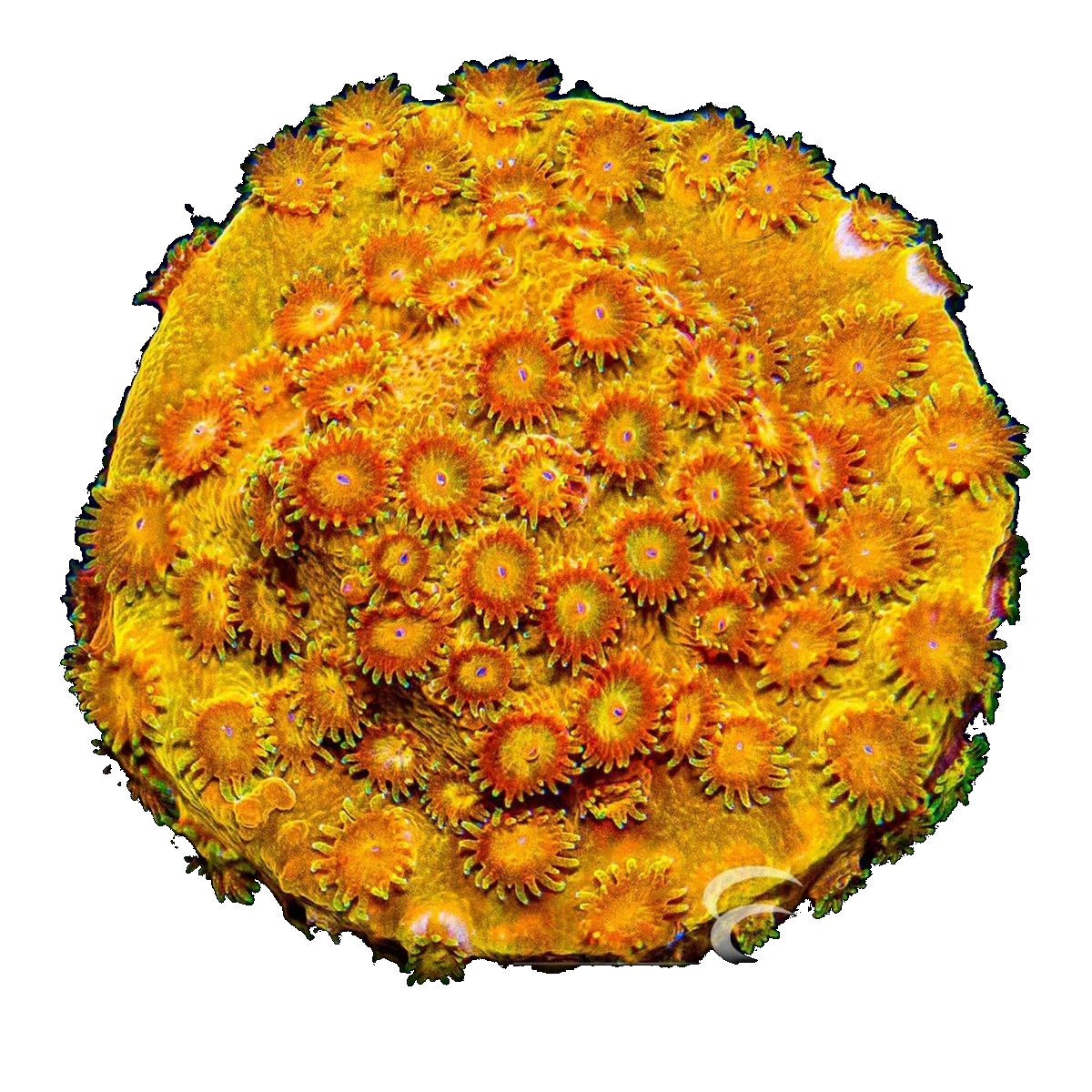
An encrusting SPS coral that does well in lower light (75-250 PAR); versatile for filling open rockwork or covering bare-bottom tank glass, adapting to stable systems with moderate flow and growing steadily once settled.
Quick facts
Handling caution: Possesses nocturnal sweeper tentacles; may sting adjacent corals if placed too close
Identity
- Also known as
- Citrus Burst Cyphastrea
- Environment
- Saltwater
- Native to
- Indo-Pacific, Coral Triangle, Indonesia, Red Sea
- Habitat
- Shallow reef flats, lagoons, and reef slopes, often in shaded or turbid areas with moderate to low light
- Sourcing
- Aquacultured
- Conservation
- Not Evaluated
Care
- Care level
- Easy
- Coral type
- LPS
- Temperament
- Peaceful
- Growth form
- Encrusting
- Adult size
- 1 – 6 in (2.5 – 15 cm)
- Spread
- 12 in (30 cm)
- Growth rate
- Moderate
- Placement
- Low, Middle
Water
- Temperature
- 75 – 80 °F (24 – 27 °C)
- pH
- 8.1 – 8.4
- dKH
- 8 – 10 dKH
- Salinity
- 1.024 – 1.026 SG
- PAR
- 50 – 150 PAR
- Flow
- Moderate
- Light
- Low
Reef care
- Nutrient preference
- Medium
- Alk/Ca uptake
- Medium
- Target feeding
- Beneficial
- Give it room
- 3 in (7.6 cm)
- Colors
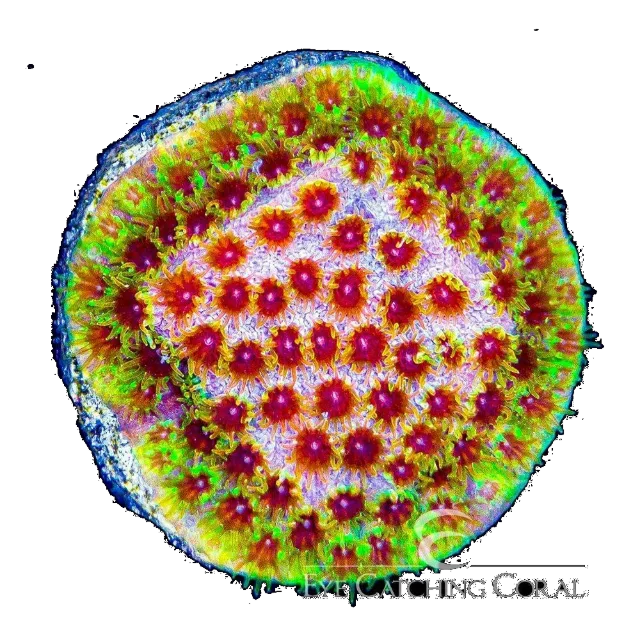
- Green, Orange, Pink, Yellow, Red, Purple, Teal, Multicolor
Feeding & breeding
- Diet
- Photosynthetic
- Foods
- Coral food, Zooplankton, Phytoplankton
- Propagation
- Fragging
Something wrong or missing? Submit a correction
Care guide
Overview
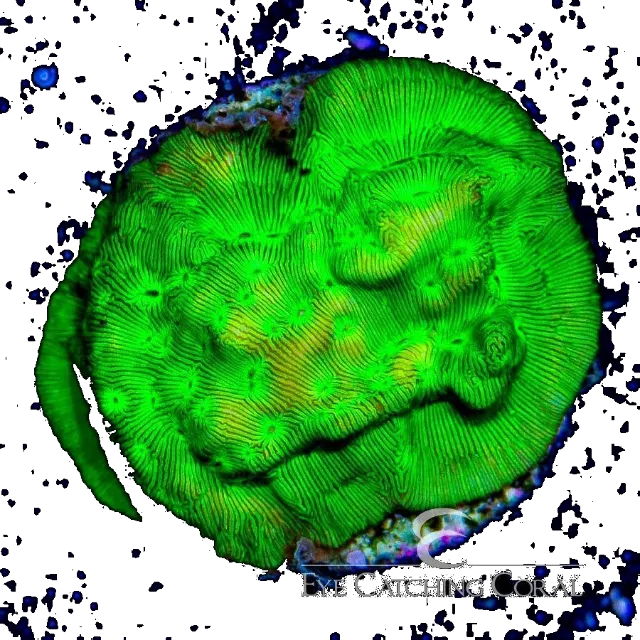
Small star-shaped polyps encrust a low, thickening mat across rock or bare glass rather than branching upward. Tolerates 75-250 PAR and moderate flow, adapting well to stable systems once settled. Growth is steady and gradual, making it useful for filling gaps without the demands of brighter-light SPS corals.
Care
Cyphastrea is one of the more forgiving stony corals available to reef keepers, tolerating a wide swing of nutrient levels and lighting once acclimated. It grows as a thin encrusting mat over rock or frag plugs, gradually covering bare surfaces and building a textured, colorful crust of small star-shaped polyps. Unlike many SPS corals it actually prefers lower to moderate light and can bleach or lose color under intense output, so shaded rockwork or the lower half of the tank suits it well. Growth is slow to moderate, and detritus that collects in its crevices should be flushed out periodically with a turkey baster to prevent tissue recession.
Placement & acclimation
Acclimate gradually to light by starting new colonies in a lower, shaded position and moving them incrementally brighter over several weeks while watching for bleaching or tight polyp closure. Mount frags securely to rock or a plug with reef-safe cyanoacrylate gel or epoxy, choosing a site with moderate indirect flow and two to three inches of clearance from other corals. A short dip in a coral-safe treatment prior to placement in the display is recommended to guard against pests.
Feeding
Cyphastrea is primarily photosynthetic and can be kept healthy on light alone in a well-lit reef system with adequate flow. Occasional target feeding with powdered coral foods, small zooplankton, or amino acid supplements one to two times a week can improve polyp extension and coloration, best done with flow paused briefly so food is not swept away. Ambient nutrients from regular fish feeding are usually sufficient, and this coral does not require heavy supplemental feeding to do well.
Neighbors
Despite its passive appearance, Cyphastrea extends sweeper tentacles at night and will sting neighboring corals that are placed too close, so leave two to three inches of clearance around the colony. It is a peaceful competitor for space by day but should not be allowed to grow into direct contact with zoanthids, soft corals, or other encrusters unless overgrowth is intended. It pairs well with other lower-light, hardy LPS and encrusting species that share similar flow and lighting preferences.
Fragging
Cyphastrea frags very easily by cutting or breaking off encrusted sections of rock or plug with a bone cutter or small saw, since the coral spreads as a thin crust rather than discrete branches. Fresh cut edges heal over quickly under stable water conditions, and fragments can be glued to a new plug or rock rubble to start additional colonies. Because it grows steadily but not explosively, colonies can be left to spread and periodically trimmed back if overgrowth becomes an issue.
Pests & problems
Fading or pale coloration usually signals too much light or insufficient nutrients, while tissue recession at the growing edge often points to detritus buildup or unstable water chemistry. Polyps that stay retracted for extended periods can indicate excess flow or stress from a recent move and should prompt a check of alkalinity stability. This coral is generally hardy and resistant to common coral pests, though it should still be dipped before introduction to a display tank.
Sources
Varieties in the catalog
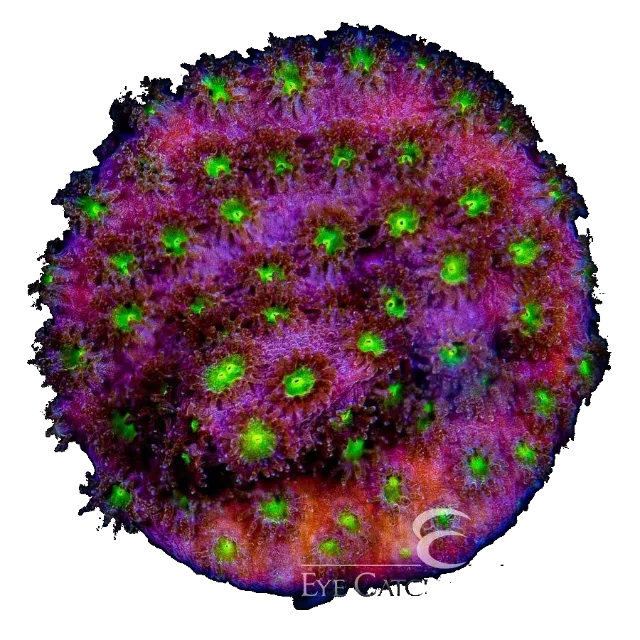
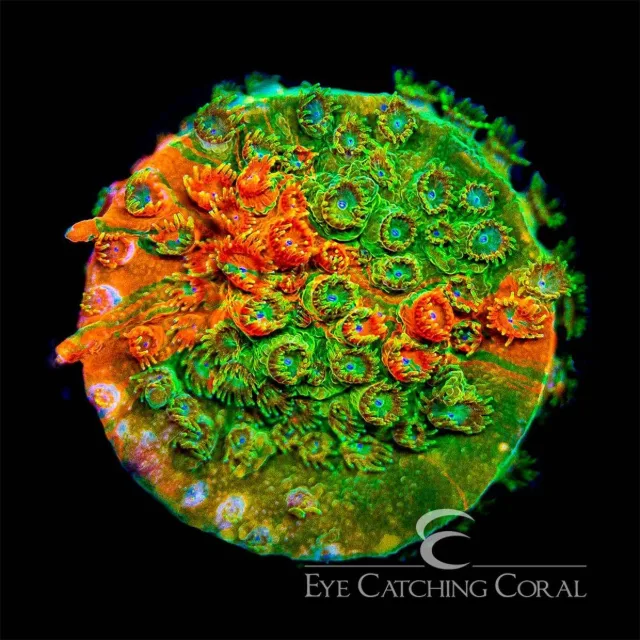
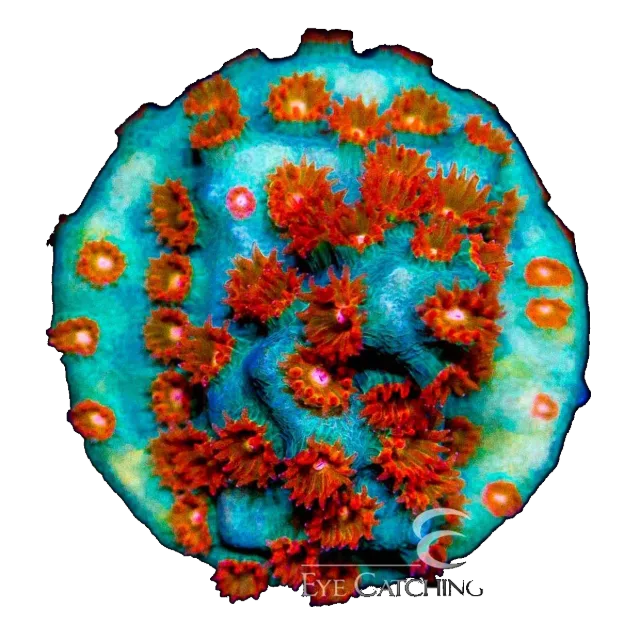
More LPS corals
Something wrong or missing? Submit a correction
In the community
Popular tanks using ECC Citrus Burst Cyphastrea
No public tanks are showcasing ECC Citrus Burst Cyphastrea yet.