
Marine Invertebrates
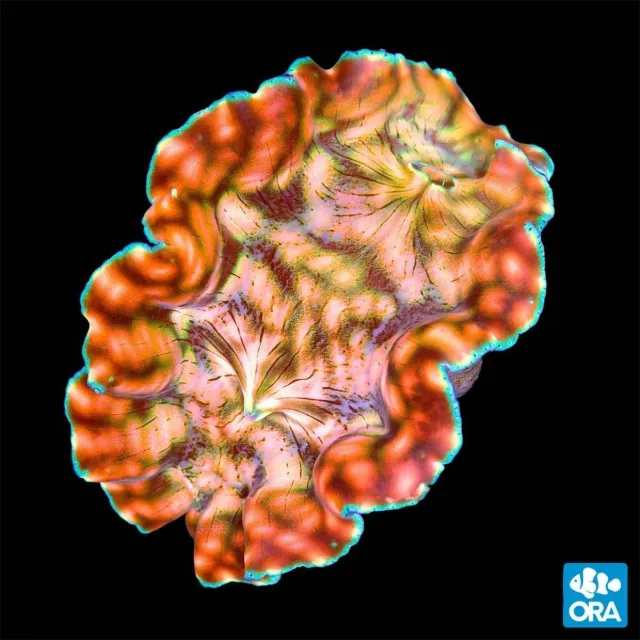
ORA Gold Maxima Clam
Tridacna maximaTridacnidaeClams
Add from My tanks →1 photos
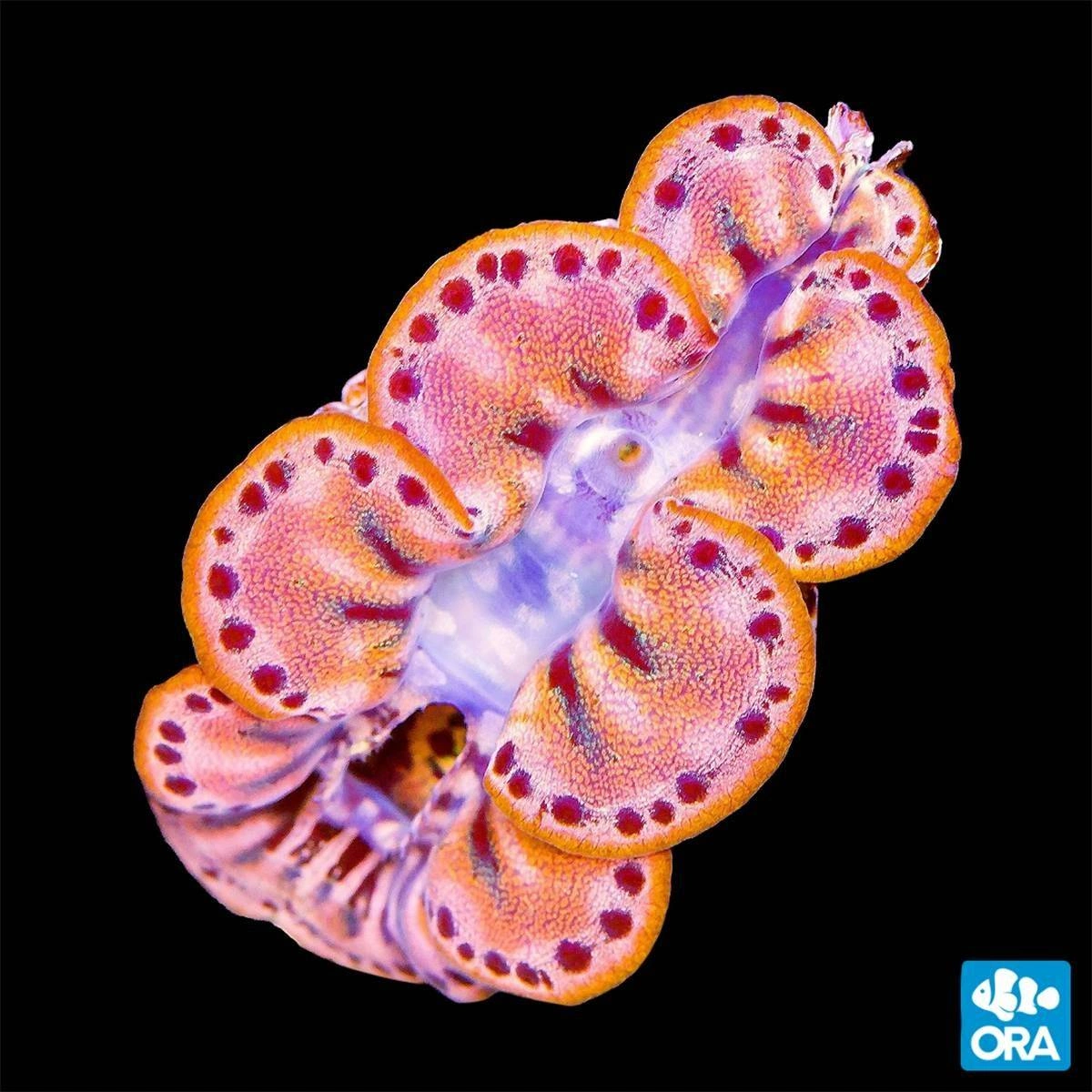
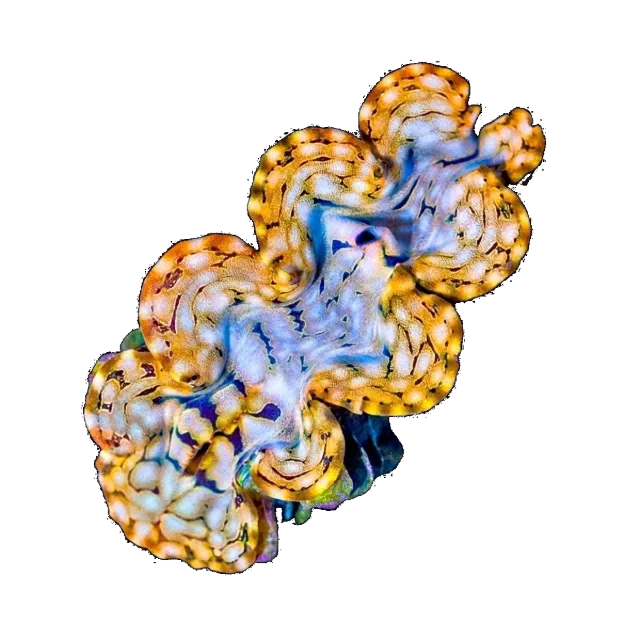
The ORA Gold Maxima Clam (Tridacna maxima) is a gold-graded mantle color variety of the maxima clam. It requires high light (250-350+ PAR), placement high in the tank close to the lights, moderate steady flow, and calcium/alkalinity supplementation; it benefits from live phytoplankton feeding, anchors to substrate with byssal threads, and can grow to nearly 12 inches.
Quick facts
Identity
- Also known as
- Small giant clam; Elongate clam; Gold maxima
- Synonyms
- Tridacna elongata; Tridacna maculata
- Environment
- Saltwater
- Native to
- Red Sea, East Africa, India, Southeast Asia, China, Australia, Polynesia, Indo-Pacific
- Habitat
- Shallow, clear, high-current reef flats and reef slopes, often attached to rock or rubble in high-density aggregations
- Sourcing
- Both
- Conservation
- Not Evaluated
Care
- Care level
- Moderate
- Temperament
- Peaceful
- Adult size
- 1.5 – 8 in (3.8 – 20 cm)
- Lifespan
- 10 – 20 yrs
- Min tank
- 40 gal (151 L)
- Growth rate
- Slow
- Placement
- Top
Water
- Temperature
- 75 – 78 °F (24 – 26 °C)
- pH
- 8.1 – 8.4
- dKH
- 8 – 12 dKH
- Salinity
- 1.023 – 1.026 SG
- Flow
- Moderate
Behavior & compatibility
- Social
- Solitary
- Aggression to own kind
- Low
- Active
- Daytime
- Reef safe
- Yes
- Invert safe
- Yes
- Shrimp safe
- Yes
- Clean-up role
- Filter feeding
- Population boom risk
- Low
Feeding & breeding
- Diet
- Photosynthetic
- Foods
- Phytoplankton, Zooplankton
- Breeding type
- Broadcast spawner
- Breeding difficulty
- Not bred in captivity
- Sexing
- Simultaneous hermaphrodite; not externally sexed
- Target feeding
- Beneficial
Something wrong or missing? Submit a correction
Care guide
Overview
Anchors itself to rock or rubble via byssal threads soon after placement and then stays fixed for life, drawing most of its energy from light rather than water-column feeding. This gold-mantled selection needs high PAR near the fixtures, moderate steady flow, and pristine, calcium-rich water to reach its eventual size of up to eight inches.
Care
Maxima clams need very bright, full-spectrum lighting placed high in the tank close to the fixtures, since most of their nutrition comes from the zooxanthellae housed in their mantle tissue. Moderate, steady flow is preferred; strong direct flow can cause repeated closing and stress. Water quality must be kept nearly pristine, with undetectable ammonia and nitrite and very low nitrate and phosphate, along with stable calcium, alkalinity and magnesium to support shell growth. This species is considered more demanding than other Tridacna species and is best suited to established, mature reef systems.
Feeding
The bulk of daily energy comes from photosynthesis via symbiotic algae, so consistent, intense lighting matters more than direct feeding. Dosing live phytoplankton periodically can supplement growth, especially for smaller or newly acquired individuals still adjusting to tank conditions. No target feeding is required once the clam is established under adequate light.
Tank mates
Avoid fish known to pick at clam mantles or siphons, including certain wrasses, triggerfish, puffers, and some large angelfish. The clam itself is peaceful and poses no threat to tankmates. It pairs well with other photosynthetic reef life once its lighting and placement needs are met and it is left undisturbed after attaching.
Breeding
Tridacna maxima is a broadcast spawner and simultaneous hermaphrodite in the wild, releasing eggs and sperm into the water column during mass spawning events. Captive spawning is essentially never observed in home aquaria, though commercial hatcheries such as ORA propagate this species using controlled spawning and larval rearing techniques. Home aquarists should not expect or attempt to breed this species.
Health
Newly introduced clams, especially smaller individuals under two inches, are prone to bleaching or tissue damage if placed under overly intense light without gradual acclimation. Sudden closures unrelated to feeding or disturbance can signal poor water quality or predation attempts by fish or pyramidellid snails. Byssal attachment should be allowed to occur naturally and never forced or cut away except as a last resort with a clean blade.
Sources
Varieties in the catalog
More Clams
Something wrong or missing? Submit a correction
In the community
Popular tanks using ORA Gold Maxima Clam
No public tanks are showcasing ORA Gold Maxima Clam yet.