
Marine Invertebrates
ORA Derasa Clam
Tridacna derasaCardiidae (Tridacninae)Clams
Add from My tanks →1 photos
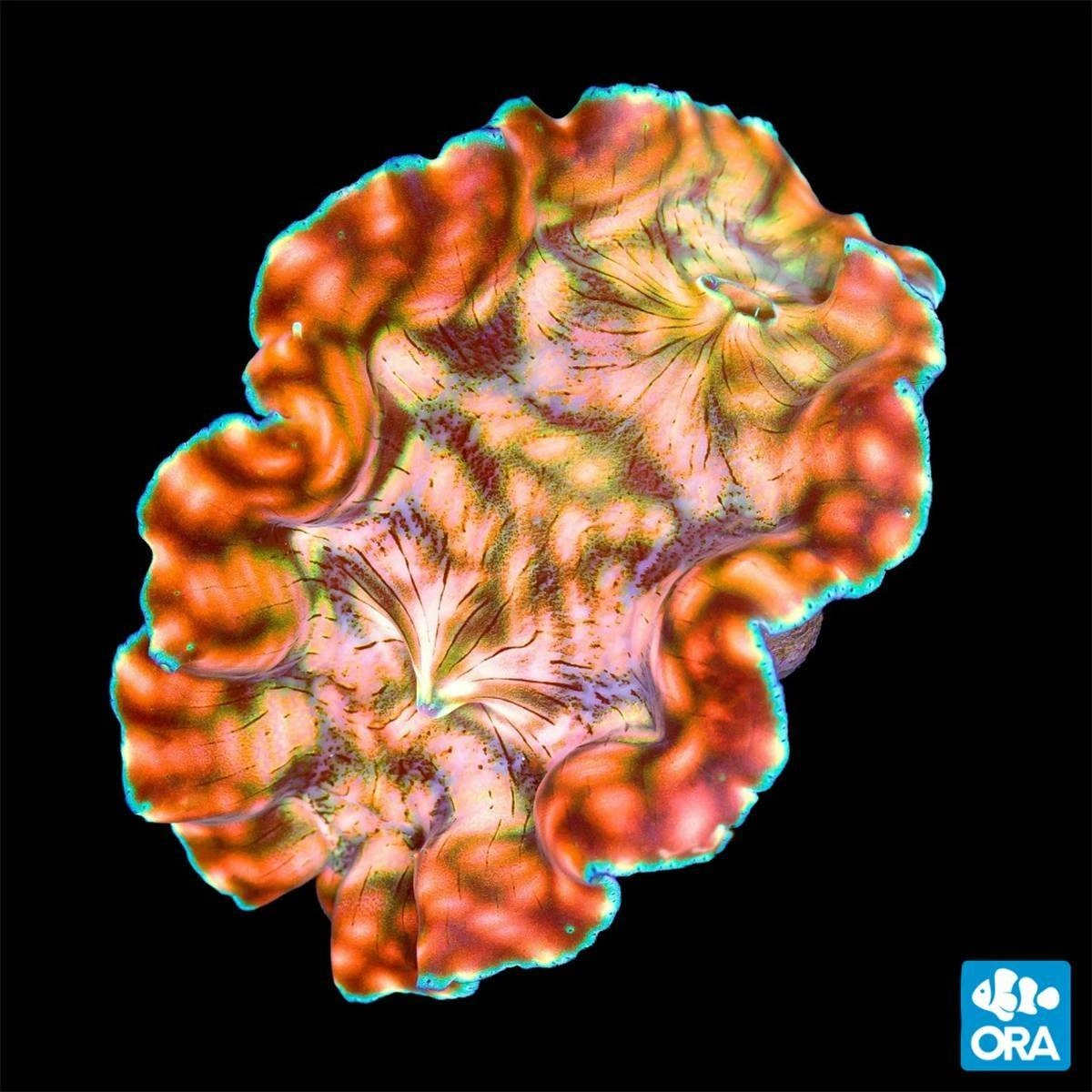
A 'sand' clam (Tridacna derasa), one of the largest clams at up to 16 inches, usually colored with orange/yellow and black stripes and a blue rim; very easy to keep, preferring clear water and placement directly on the sandbed.
Quick facts
Identity
- Also known as
- Southern giant clam; Smooth giant clam; Sand clam
- Synonyms
- Tridacna cumingii
- Environment
- Saltwater
- Native to
- Australia, Papua New Guinea, Indonesia, Philippines, Fiji, Tonga, Palau, Solomon Islands, Vietnam
- Habitat
- Outer reef slopes of the Indo-West Pacific, typically at 4-10 m depth on sand or coral rubble, in areas of strong wave energy and bright light.
- Sourcing
- Both
- Conservation
- Vulnerable
Care
- Care level
- Moderate
- Temperament
- Peaceful
- Adult size
- 2 – 20 in (5.1 – 51 cm)
- Lifespan
- 15 – 40 yrs
- Min tank
- 40 gal (151 L)
- Growth rate
- Fast
- Placement
- Bottom
Water
- Temperature
- 75 – 81 °F (24 – 27 °C)
- pH
- 8.1 – 8.4
- dKH
- 8 – 12 dKH
- Salinity
- 1.023 – 1.025 SG
- Flow
- Moderate
Behavior & compatibility
- Social
- Solitary
- Aggression to own kind
- Low
- Active
- Daytime
- Reef safe
- Yes
- Invert safe
- Yes
- Shrimp safe
- Yes
- Clean-up role
- Filter feeding
- Population boom risk
- Low
Feeding & breeding
- Diet
- Photosynthetic
- Foods
- Phytoplankton, Zooplankton
- Breeding type
- Broadcast spawner
- Breeding difficulty
- Not bred in captivity
- Sexing
- Simultaneous hermaphrodite; sex cannot be determined externally.
- Target feeding
- Beneficial
Something wrong or missing? Submit a correction
Care guide
Overview
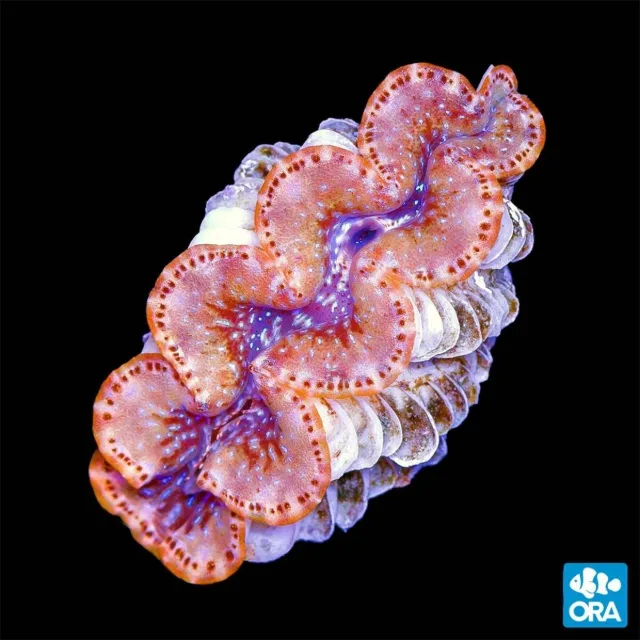
ORA-raised specimens of Tridacna derasa show orange-yellow mantle tissue broken by dark stripes and a fine blue outer rim. Among the largest giant clams, this species can approach 16 inches and is considered the most forgiving to keep, tolerating moderate reef lighting and settling directly on open sandbed rather than wedging into rock.
Care
Derasa clams are among the easiest giant clams to keep, tolerating moderate reef lighting better than maxima or crocea clams. They should rest on open sandbed rather than being wedged into rockwork, since adults typically lose their byssal attachment and simply sit under their own weight. Stable, elevated calcium, alkalinity, and magnesium are essential since this is a fast-growing species that draws heavily on all three. New arrivals do best acclimated to lower light for a week or two before being moved to full intensity.
Feeding
Most nutrition comes from photosynthetic zooxanthellae housed in the mantle tissue, so strong full-spectrum lighting matters more than direct feeding for adults. Specimens under about 4 inches benefit from regular dosing of phytoplankton or a fine reef food a few times weekly to supplement filter feeding. Once a clam reaches a larger size it generally needs no additional feeding and relies on light and ambient dissolved nutrients.
Tank mates
Best kept with peaceful reef fish and corals that will not sting or shade it, since sweeper tentacles from nearby LPS or aggressive corals can damage the exposed mantle. Avoid triggerfish, puffers, and certain wrasses known to nip at clam mantles, along with predatory crabs and shrimp. Pyramidellid snails are a persistent threat and should be checked for during acclimation and periodically afterward.
Breeding
Reproduction in home aquaria is essentially unknown, as spawning requires precise environmental triggers and coordinated release of gametes best managed in aquaculture facilities. Most specimens in the trade are produced by commercial hatcheries such as ORA rather than bred by hobbyists. Home aquarists should not expect or attempt to breed this species.
Health
Watch for gaping, a retracted mantle, or repeated slipping off its perch, which can indicate stress, poor water quality, or insufficient light. Pyramidellid snails are the most common parasite, feeding on the clam at night and sometimes going unnoticed until a population builds up. Mantle nipping from fish or invertebrates can leave the tissue vulnerable to infection if damage is severe or repeated.
Sources
More Clams
Something wrong or missing? Submit a correction
In the community
Popular tanks using ORA Derasa Clam
No public tanks are showcasing ORA Derasa Clam yet.