
Coral
ORA Blue Lagoon Acan Coral
Acanthastrea lordhowensisLobophylliidaeLPS corals
Add from My tanks →1 photos
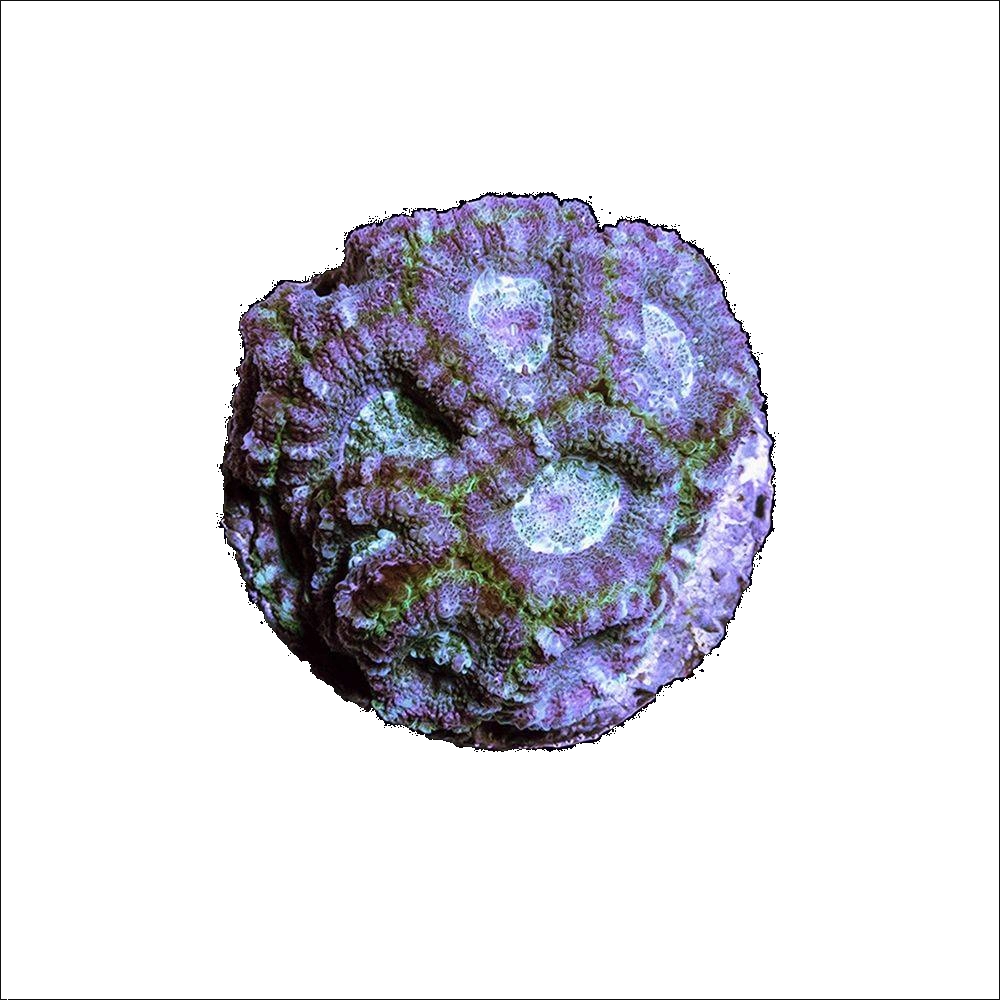
The ORA Blue Lagoon Acan Coral is a popular, aquacultured LPS coral known for vibrant greens, teals, and purples with sandy white stripes. It is relatively easy to care for, thriving in low to medium lighting with low to moderate flow, and regular feeding of small particulate foods improves coloration and polyp extension.
Quick facts
Handling caution: Sweeper tentacles can sting skin and neighboring corals; wear gloves when fragging to avoid irritation from coral slime
Identity
- Also known as
- Blue Lagoon Micromussa; ORA Acan Lord
- Synonyms
- Micromussa lordhowensis
- Environment
- Saltwater
- Native to
- Australia, Indo-Pacific, Lord Howe Island
- Habitat
- Sheltered reef slopes and lagoons with moderate light and gentle to moderate water movement
- Sourcing
- Both
- Conservation
- Not Evaluated
Care
- Care level
- Moderate
- Coral type
- LPS
- Temperament
- Semi-Aggressive
- Growth form
- Colonial polyps
- Adult size
- 1 – 6 in (2.5 – 15 cm)
- Spread
- 12 in (30 cm)
- Growth rate
- Slow
- Placement
- Low, Middle
Water
- Temperature
- 76 – 80 °F (24 – 27 °C)
- pH
- 8.0 – 8.4
- dKH
- 8 – 10 dKH
- Salinity
- 1.025 – 1.026 SG
- PAR
- 50 – 125 PAR
- Flow
- Low-Moderate
- Light
- Low
Reef care
- Nutrient preference
- Medium
- Alk/Ca uptake
- Medium
- Target feeding
- Beneficial
- Give it room
- 5 in (13 cm)
- Colors
- Green, Teal, Purple, Orange, Red, Cream, Multicolor
Feeding & breeding
- Diet
- Photosynthetic
- Foods
- Frozen, Zooplankton, Coral food, Micro-pellets
- Propagation
- Fragging
Something wrong or missing? Submit a correction
Care guide
Overview
Suited to reefkeepers who want a fleshy focal coral without SPS-level demands, this aquacultured strain shows fleshy polyps in green, teal and purple tones broken by sandy white stripes. Each head inflates broadly under low to moderate light, retracting after dark to extend short feeding tentacles. Give it isolated placement, since neighboring colonies can be stung.
Care
Acan Lords adapt well to typical reef tank conditions once alkalinity, calcium, and salinity are kept stable, making them a reasonable choice for reefkeepers past the total beginner stage. Low to moderate lighting in the 50-125 PAR range paired with gentle, indirect flow keeps the fleshy polyps inflated and prevents bleaching or retraction. Sudden swings in alkalinity or salinity are poorly tolerated, so gradual acclimation to a new tank or new placement is recommended.
Placement & acclimation
Mount frags or colonies on stable rock in a low to mid position, either on a shaded ledge or near the sandbed, and avoid placing directly on the main rockwork where it can overgrow neighbors. Acclimate to lighting gradually by starting at the lower end of the PAR range and increasing over one to two weeks, using a screen or shortened photoperiod initially. Drip acclimation over 30-45 minutes is advisable for new arrivals to adjust to tank salinity and parameters.
Feeding
Zooxanthellae supply a portion of daily energy, but regular target feeding drives better growth and color saturation. Offer small meaty foods such as mysis, chopped shrimp, or fine coral pellets once or twice a week after the lights dim, when the short feeder tentacles extend. Some keepers also broadcast-feed fine plankton or powdered foods to supply nutrients across the whole colony.
Neighbors
Give at least 4 to 6 inches of clearance from other stony corals, since this species extends sweeper tentacles at night and can sting nearby colonies. It is best kept away from more delicate SPS and other slow-growing LPS that cannot recover quickly from stings. Placement on an isolated rock or ledge rather than directly on the main reef structure limits contact as the colony spreads.
Fragging
Colonies frag readily by cutting between polyp centers with a coral saw, bandsaw, or bone cutters once several heads have formed. Wear gloves and safety glasses, since the coral produces significant defensive slime and mucus when cut. Fresh frags should be kept in lower flow with stable parameters until tissue has recovered over the cut edges.
Pests & problems
Excess light commonly causes bleaching, faded coloration, and chronic polyp retraction, so a colony that stops opening should be moved lower in the tank before other causes are investigated. Unstable alkalinity or handling damage can lead to tissue recession or bacterial brown jelly infection, which is best managed by fragging away the affected polyps and improving flow. Pests such as flatworms or nudibranchs occasionally target Acan colonies and warrant a dip on arrival or during quarantine.
Sources
More LPS corals
Something wrong or missing? Submit a correction
In the community
Popular tanks using ORA Blue Lagoon Acan Coral
No public tanks are showcasing ORA Blue Lagoon Acan Coral yet.