
Aquatic Plant
Nesaea Triflora
Nesaea trifloraLythraceaeStem plants
Price: $23.99 USD
Add from My tanks →1 photos
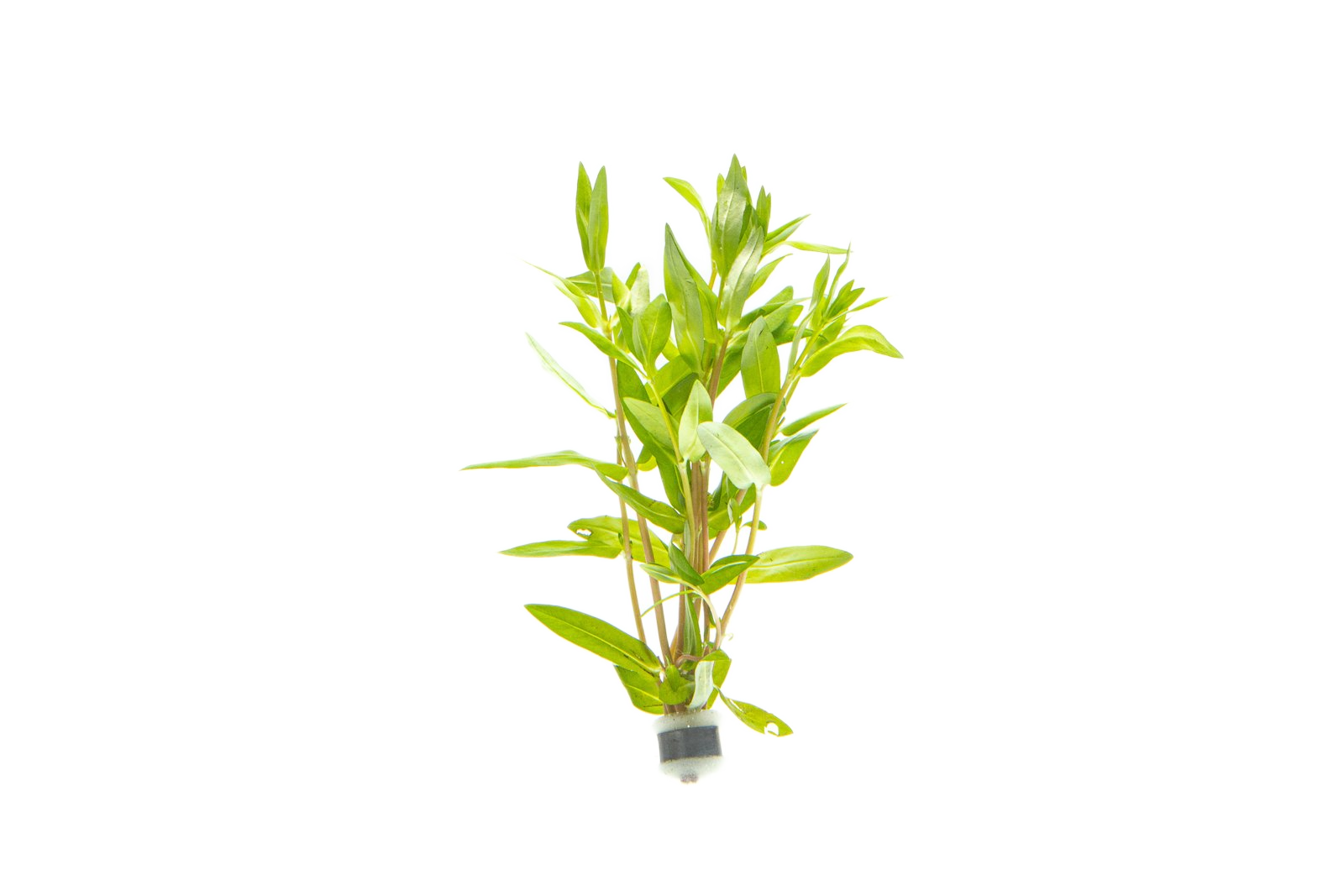
Nesaea Triflora is a stunning plant from Africa and Asia (Madagascar, Sri Lanka, Mauritius), with oblong leaves growing in paired opposite decussating patterns. Its stems and veins carry a reddish tint that contrasts nicely with the green leaves, intensified under high light and CO2; a background or midground choice for regular trimming.
Quick facts
Identity
- Also known as
- Three-flower Nesaea
- Synonyms
- Ammannia mauritiana; Ammannia capitellata
- Environment
- Freshwater
- Native to
- Madagascar, Mauritius, Sri Lanka, southern India, coastal East Africa
- Habitat
- Sunny marshes, wet riverbanks, ditches and shallow pools that cycle between emersed and submersed growth seasonally
- Sourcing
- Captive-bred
- Conservation
- Not Evaluated
Care
- Care level
- Moderate
- Growth form
- Stem
- Max height
- 6 – 16 in (15 – 41 cm)
- Spread
- 4 in (10 cm)
- Growth rate
- Moderate
- Placement
- Midground, Background
Water
- Temperature
- 72 – 82 °F (22 – 28 °C)
- pH
- 6.0 – 7.5
- GH
- 4 – 10 dGH
- dKH
- 2 – 5 dKH
- Flow
- Low-Moderate
- Light
- High
- CO₂
- Beneficial
Planting
- Substrate
- Nutrient-rich preferred
- Feeds from
- Both
- Fertilizer needs
- High
- Colors
- Green, Red, Orange, Pink
Feeding & breeding
- Propagation
- Cuttings
Something wrong or missing? Submit a correction
Care guide
Overview
Marshes and riverbanks across Madagascar, Sri Lanka, southern India and Mauritius give rise to this fine-stemmed Lythraceae species, sold here as a rooted stem plant. Oblong leaves grow in opposite decussate pairs along hollow, easily-snapped stems that flush red-orange under strong light and CO2 but revert to plain green without it. Best sited in low-moderate flow as a midground or background stem with regular trimming to prevent bare, leggy growth.
Care
This is a delicate stem plant with hollow, fragile stems that snap easily in strong flow or during handling, so plant it in areas of gentle water movement. It needs strong lighting and a steady CO2 supply to hold its orange-to-red coloration and to prevent the stems from melting; without enough light or carbon it tends toward plain green and leggy growth. Stable water chemistry matters more than exact numbers, since sudden swings in parameters can trigger stem rot in this and related Lythraceae species.
Planting & trimming
Space individual stems roughly an inch apart so light can still reach the lower leaves, since crowding causes the base of the stem to go bare over time. It can be planted directly into the substrate as a stem plant and grows both emersed and submersed, though a transition period is needed when switching between the two. Trim tops regularly to keep growth compact and to prevent the stems from becoming tall and sparse.
Fertilizing
Plant in a nutrient-rich active substrate, as this species is a fairly heavy root feeder and responds well to root tabs placed near the base. A comprehensive liquid fertilizer routine with chelated iron and trace elements supports the reddish pigmentation and prevents the lower leaves from yellowing and dropping. Deficiency typically shows first as pale or bare lower stems, a sign nutrients or light are insufficient to support the whole plant.
Propagation
Propagate by cutting healthy side shoots or stem tops and replanting them directly into the substrate, where they root readily within a couple of weeks. Regular trimming of the mother plant encourages branching, producing more side shoots that can be used for further cuttings.
Problems
The most common issue is melt or stem collapse following transitions from emersed to submersed growth or after abrupt changes in water parameters. Insufficient light or CO2 causes weak, stretched growth and loss of the characteristic pink and orange tones. Bare lower stems and yellowing lower leaves usually point to shading from dense planting or a lack of iron and trace nutrients.
Sources
More Stem plants
Something wrong or missing? Submit a correction
In the community
Popular tanks using Nesaea Triflora
No public tanks are showcasing Nesaea Triflora yet.