
Aquatic Plant
Nesaea Crassicaulis
Nesaea crassicaulisLythraceaeStem plants
Price: $7.99 USD
Add from My tanks →1 photos
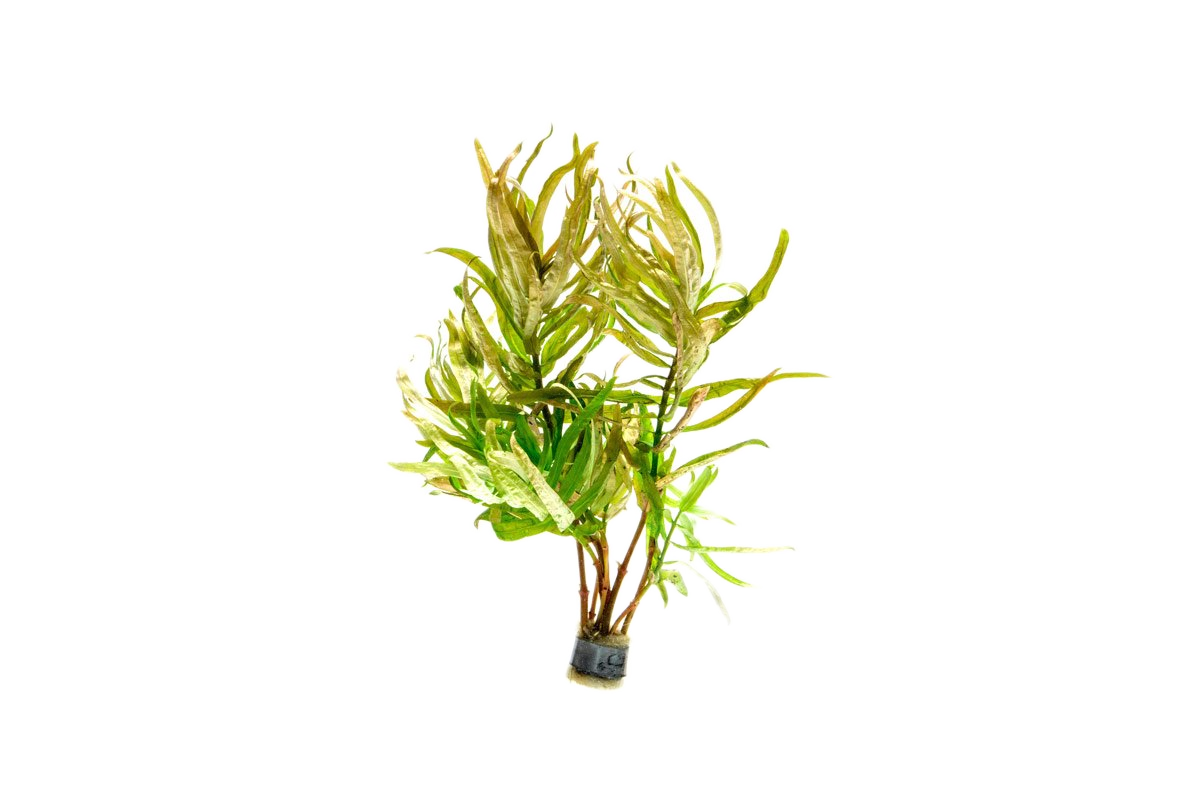
Nesaea Crassicaulis is a rare, rewarding aquatic stem plant native to tropical Africa and Madagascar, prized for its bold reddish-brown to burnt-orange narrow leaves. Under high-tech conditions it develops thick stems and vibrant foliage contrasting green and red plants; reaching 6–12 inches, it makes an extraordinary background focal point with a rich, earthy color palette.
Quick facts
Identity
- Also known as
- Red Ammannia
- Synonyms
- Ammannia crassicaulis (Guill. & Perr.) Koehne
- Environment
- Freshwater
- Native to
- Tropical and southeastern Africa, Madagascar
- Habitat
- Swamps, marshes, rice paddies, and seasonally flooded rivulets and riverbanks in tropical Africa and Madagascar
- Sourcing
- Aquacultured
- Conservation
- Not Evaluated
Care
- Care level
- Difficult
- Growth form
- Stem
- Max height
- 4 – 20 in (10 – 51 cm)
- Spread
- 6 in (15 cm)
- Growth rate
- Fast
- Placement
- Background, Midground
Water
- Temperature
- 72 – 82 °F (22 – 28 °C)
- pH
- 6.0 – 7.5
- GH
- 2 – 12 dGH
- dKH
- 0 – 9 dKH
- Flow
- Moderate
- Light
- High
- CO₂
- Required
Planting
- Substrate
- Nutrient-rich required
- Feeds from
- Both
- Fertilizer needs
- High
- Colors
- Green, Red, Brown, Orange
Feeding & breeding
- Propagation
- Cuttings
Something wrong or missing? Submit a correction
Care guide
Overview
Grows upright in dense background stands, pushing out narrow reddish-brown to burnt-orange leaves along thick stems as it matures. Success depends on strong lighting, pressurized CO2, and heavy root and water-column feeding, without which it fades to green and drops lower leaves. Space stems apart and trim tops every one to two weeks to maintain a full, non-leggy stand.
Care
This stem plant needs strong, unobstructed lighting to keep its lower leaves from dropping and its color from fading toward plain green. It grows best with pressurized CO2 injection and consistent nutrient dosing, since without both algae tends to outcompete it under the bright light it demands. Space stems apart rather than packing them tightly so light and water movement can reach the base, and expect to trim and replant tops every one to two weeks once established.
Planting & trimming
Trim healthy side shoots or stem tops, strip the lowest pair of leaves to expose bare stem, and press the cutting gently into fine gravel or aquasoil without crushing the tissue. Keep new plantings spaced generously so light reaches down between stems as they mature. Replace old, balding lower stems periodically with fresh top cuttings to maintain a full look.
Fertilizing
Provide a nutrient-rich substrate supplemented with root tabs along with regular liquid fertilizer dosing, since this plant is a heavy feeder through both roots and water column. Iron and micronutrient dosing help maintain the reddish-brown coloration on new growth. A lack of light penetration or nutrients typically shows up first as pale, leggy stems and dropped lower leaves rather than nutrient spotting.
Propagation
Propagates readily from cuttings taken from healthy side shoots or stem tops, which root within a few weeks when replanted in the substrate. Regular pruning of established stems encourages branching and a bushier growth habit.
Problems
Insufficient light or CO2 relative to the plant's demand quickly leads to algae fouling the stems and leaves, especially diatoms and green film algae on older growth. Bare, leggy lower stems are a common sign that the plant has been left too long without trimming or that neighboring plants are shading its base. It is frequently mislabeled in the trade and confused with the similar but less demanding Ammannia gracilis.
Sources
More Stem plants
Something wrong or missing? Submit a correction
In the community
Popular tanks using Nesaea Crassicaulis
No public tanks are showcasing Nesaea Crassicaulis yet.