
Aquatic Plant
Najas Indica
Najas indicaHydrocharitaceaeStem plants
Price: $29.97 USD
Add from My tanks →1 photos
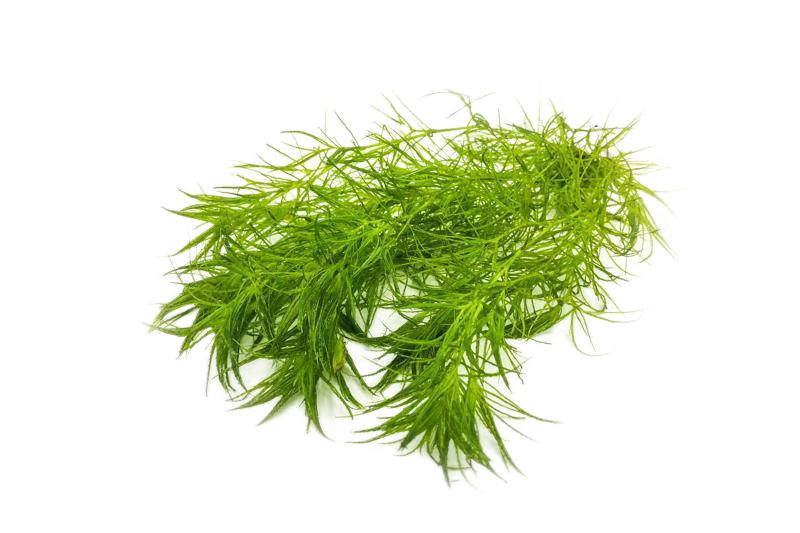
Najas Indica, affectionately known as Guppy Grass, is a nearly indestructible beginner plant that can float along the surface or be anchored as a stem plant, exploding into a lush, jungle-like sanctuary within weeks. It sucks up nitrates, outcompetes algae, and creates a paradise for shrimp and fry.
Quick facts
Identity
- Also known as
- Guppy grass; Indian najas; Water nymph
- Synonyms
- Najas graminea var. indica
- Environment
- Freshwater
- Native to
- India, Southeast Asia, East Asia
- Habitat
- Still and slow-moving freshwater such as ponds, ditches, canals and rice paddies across tropical and subtropical Asia.
- Sourcing
- Aquacultured
- Conservation
- Not Evaluated
Care
- Care level
- Easy
- Growth form
- Stem
- Max height
- 4 – 23.6 in (10 – 60 cm)
- Spread
- 9.8 in (25 cm)
- Growth rate
- Fast
- Placement
- Midground, Background, Floating
Water
- Temperature
- 64 – 86 °F (18 – 30 °C)
- pH
- 6.0 – 7.5
- GH
- 1 – 14 dGH
- Flow
- Low-Moderate
- Light
- Low
- CO₂
- Not needed
Planting
- Substrate
- Any
- Feeds from
- Water column
- Fertilizer needs
- Low
- Colors
- Green
Feeding & breeding
- Propagation
- Cuttings
Something wrong or missing? Submit a correction
Care guide
Overview
Thin, bright green stems branch repeatedly into fine, needle-like leaves that form loose, tangled masses either floating at the surface or rooted lightly in substrate. Growth is fast and unfussy, needing only low light and no CO2, so trimming every one to two weeks keeps it from shading out other plants. Brittle stems fragment easily, and each piece roots or drifts to start anew, making overpopulation the main thing to manage.
Care
Guppy grass of this type is kept the same way as its more common cousin Najas guadalupensis, either drifting loose in the water column or pushed lightly into substrate as stem bundles. It asks for nothing special: modest light, no CO2, and whatever nutrients are already present in a typical stocked tank. Because the stems are brittle and snap on contact, expect fragments to break off and root or float elsewhere, gradually filling open water unless thinned back regularly. In nutrient-rich tanks it grows fast enough to shade out plants below it, so periodic removal of handfuls keeps the mass in check.
Planting & trimming
Plant it by simply dropping loose stems into the water to float, or gently press small bundles into the substrate without burying growth points too deeply, since roots are minimal and mainly serve to anchor rather than feed. Trim by hand or scissors on a weekly or biweekly basis, removing 30 to 50 percent of the mass to prevent it from shading lower plants or clogging filter intakes. Never discard trimmings outdoors or into waterways, as the species can naturalize and become invasive.
Fertilizing
No fertilizer dosing is required since the plant draws nutrients directly from the water column rather than through roots. In a lean, low-nutrient aquarium it can actually help by soaking up excess nitrate and ammonia, acting as a natural nutrient sponge. Root tabs are unnecessary and largely wasted on this species, though a general liquid fertilizer in a heavily planted, high-light tank can support faster growth.
Propagation
Propagation is essentially automatic: any stem fragment, even a small broken piece, will continue growing and can root in substrate or keep drifting as a floating mat. Deliberate propagation simply means cutting healthy stem sections and either replanting them in small clusters or letting them float freely to fill in a tank quickly.
Problems
The main issue is not disease but uncontrolled spread, since every broken fragment can start a new plant and a single bunch can overrun a tank within weeks. In low-light or nutrient-poor setups growth slows and stems can thin out or yellow, which usually resolves once light or nutrient levels are raised slightly. It has little tolerance for being kept as a true annual in the wild, so indoor conditions with stable temperature keep it perennial in the aquarium.
Sources
More Stem plants
Something wrong or missing? Submit a correction
In the community
Popular tanks using Najas Indica
No public tanks are showcasing Najas Indica yet.