
Aquatic Plant
Myriophyllum Tetrandrum
Myriophyllum tetrandrumHaloragaceaeStem plants
Price: $23.97 USD
Add from My tanks →1 photos
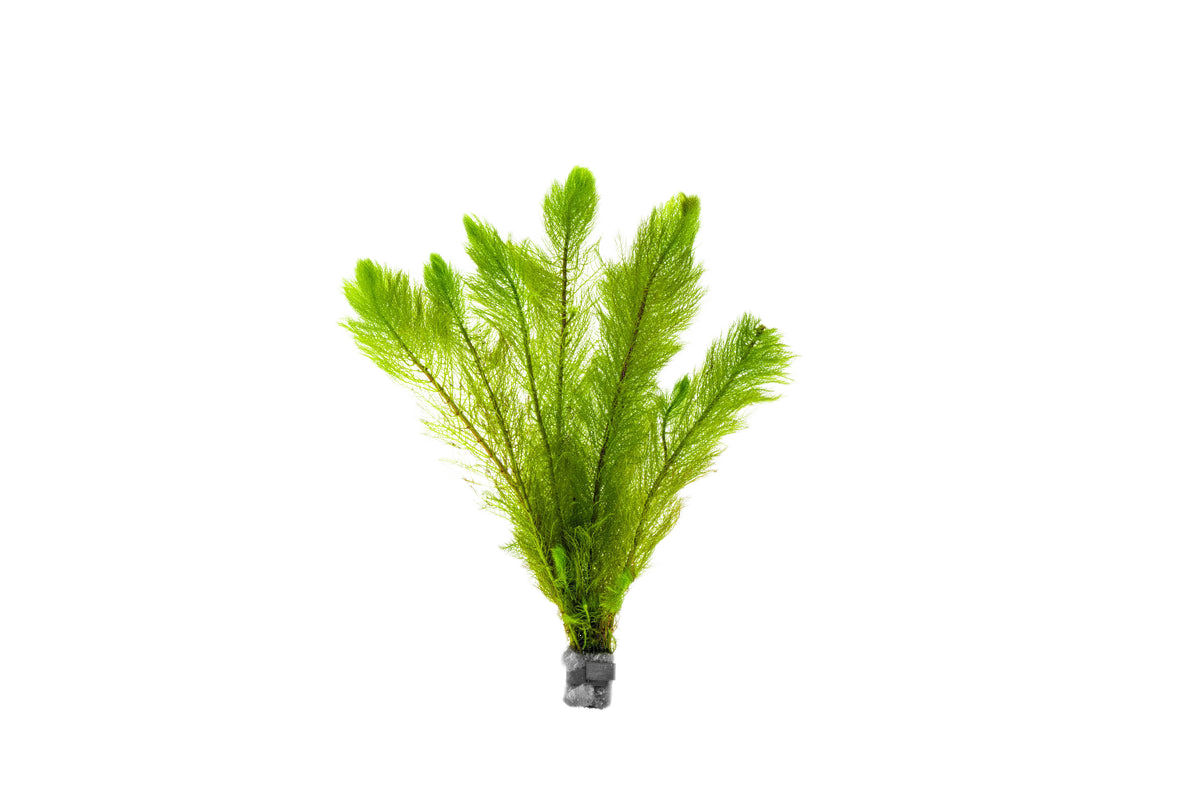
Myriophyllum Tetrandrum is a delicate aquatic stem plant that closely resembles Parrot's Feather, though better adapted for long-term submerged growth. Its fine, needle-like lime-green leaves radiate in fir-like whorls against reddish-brown stems; thriving even in harder water, it forms dense, cloud-like green bushes.
Quick facts
Identity
- Also known as
- Green Cabomba-like Milfoil
- Environment
- Freshwater
- Native to
- Thailand, Southeast Asia
- Habitat
- Calm or slow-moving freshwater such as lakes, ponds, swamps, and canals in tropical and subtropical regions, where sunlight readily penetrates the water column.
- Sourcing
- Aquacultured
- Conservation
- Not Evaluated
Care
- Care level
- Moderate
- Growth form
- Stem
- Max height
- 4 – 16 in (10 – 41 cm)
- Spread
- 6 in (15 cm)
- Growth rate
- Fast
- Placement
- Midground, Background
Water
- Temperature
- 72 – 82 °F (22 – 28 °C)
- pH
- 5.5 – 7.5
- dKH
- 0 – 8 dKH
- Flow
- Moderate
- Light
- High
- CO₂
- Beneficial
Planting
- Substrate
- Nutrient-rich preferred
- Feeds from
- Both
- Fertilizer needs
- Medium
- Colors
- Green, Brown
Feeding & breeding
- Propagation
- Cuttings
Something wrong or missing? Submit a correction
Care guide
Overview
Myriophyllum tetrandrum is a fine-leaved milfoil grown fully submerged, its lime-green needle whorls radiating from wiry reddish-brown stems in a fir-like, cloud-textured mass. It suits midground or background planting under moderate to high light with CO2, and needs regular topping to stay bushy rather than leggy. Tolerant of a wide hardness range, it adapts readily once acclimated.
Care
This fine-leaved milfoil forms dense, fir-like whorls of lime-green foliage on wiry reddish-brown stems, giving a cloud-like texture in the midground or background of a planted tank. It tolerates a wide temperature and hardness range and adapts to both soft and harder water, but consistent parameters help avoid stress after planting. Moderate to high lighting keeps growth compact; under weak light the stems stretch and lose their bushy shape. Regular trimming and replanting of tops keeps the lower stems from going bare and thinning out.
Planting & trimming
Cut stems from the lead bunch, remove any wool or rubber bands around the base, and push the stems a short distance into a nutrient-rich substrate, spacing them enough to avoid overcrowding and self-shading. Regular topping and replanting of cuttings keeps the display dense and prevents the base from becoming bare over time. It can also be grown emersed along the waterline of paludariums.
Fertilizing
Growth responds well to CO2 injection paired with a nutrient-rich substrate or root tabs, since the root system is modest and mainly serves as an anchor. Liquid fertilizer supplying iron and potassium supports the deep green color of the feathery foliage. Yellowing or shedding of older leaves is usually a sign of insufficient CO2 or a lack of micronutrients rather than a lighting problem.
Propagation
Propagated by cutting healthy stem tips and replanting them directly into the substrate, where new roots form within days under adequate light and CO2. Side shoots can also be separated once a stem has branched sufficiently.
Problems
Poor circulation or debris settling on the fine foliage can block light and trigger algae growth on the lower stems. Sudden changes in water chemistry after planting may cause the lower leaves to melt or drop, so gradual acclimation is advised. Leggy, sparse growth typically points to insufficient light or CO2 rather than disease.
Sources
More Stem plants
Something wrong or missing? Submit a correction
In the community
Popular tanks using Myriophyllum Tetrandrum
No public tanks are showcasing Myriophyllum Tetrandrum yet.