
Aquatic Plant
Micranthemum Umbrosum
Micranthemum umbrosumLinderniaceaeStem plants
Price: $20.97 USD
Add from My tanks →1 photos
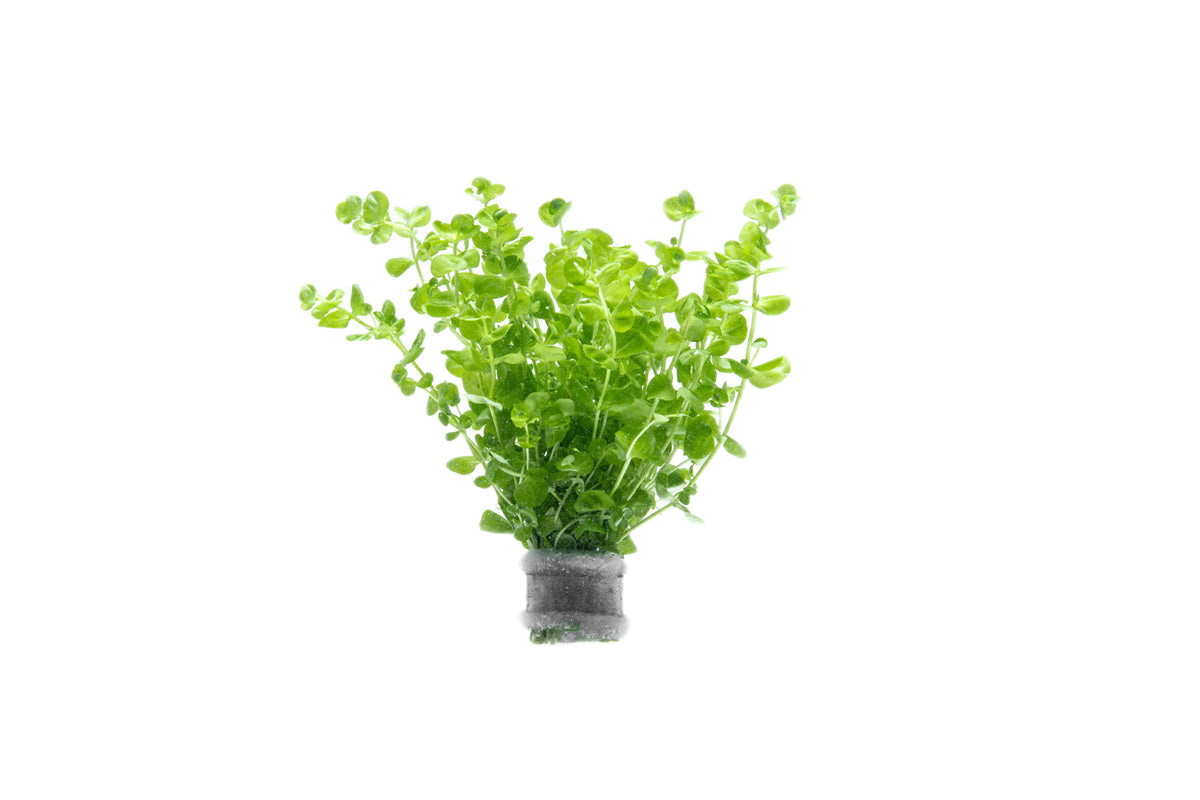
Micranthemum Umbrosum (Giant Baby Tears) is a bright green aquatic stem plant native to the southeastern US and Central America, Pearl Weed's bigger, bolder cousin. Tiny, perfectly round leaves grow in opposing pairs along delicate creeping stems; it forms a lush foreground carpet under strong light with pruning.
Quick facts
Identity
- Also known as
- Giant Baby Tears; Baby Tears; Pearlweed's bigger cousin
- Synonyms
- Hemianthus micranthemoides (misapplied); Micranthemum nuttallii
- Environment
- Freshwater
- Native to
- United States, Central America
- Habitat
- Shallow, slow-moving freshwater streams, ditches, ponds, and marshy areas in the southeastern United States and Central America
- Sourcing
- Aquacultured
- Conservation
- Not Evaluated
Care
- Care level
- Easy
- Growth form
- Stem
- Max height
- 2 – 6 in (5.1 – 15 cm)
- Spread
- 12 in (30 cm)
- Growth rate
- Fast
- Placement
- Foreground, Midground, Background
Water
- Temperature
- 68 – 82 °F (20 – 28 °C)
- pH
- 6.0 – 7.5
- GH
- 2 – 15 dGH
- PAR
- 40 – 70 PAR
- Flow
- Moderate
- Light
- Medium
- CO₂
- Beneficial
Planting
- Substrate
- Nutrient-rich preferred
- Feeds from
- Both
- Fertilizer needs
- Medium
- Colors
- Green
Feeding & breeding
- Propagation
- Cuttings
Something wrong or missing? Submit a correction
Care guide
Overview
Small round leaves grow in opposing pairs along thin, branching stems that spread low across the substrate when kept trimmed. Under medium to high light it stays compact and mounded; in dimmer setups it stretches with wider gaps between leaves. Easy to grow and shrimp-safe, it roots quickly from cuttings and benefits from weekly fertilizing.
Care
Giant baby tears is an undemanding stem plant that adapts to a wide range of freshwater setups, from low-tech tubs to bright CO2-injected scapes. Under medium to high light it stays compact with tight internodes, while dimmer conditions cause the stems to stretch and the paired round leaves to space out along them. Regular trimming every one to two weeks keeps the growth dense and encourages the lateral branching that gives it a mounded, carpet-like appearance in the foreground or midground.
Planting & trimming
Trim several stems to a few inches long, bundle several cuttings together, and bury the bare lower portion in the substrate so the leaves sit just above the surface. Plant in small clusters spaced an inch or two apart rather than one dense clump, which allows light and flow to reach the base and encourages faster carpet formation. Regular topping keeps the plant low and bushy; left untrimmed it will grow upright into a looser background bush.
Fertilizing
A weekly dose of a liquid all-in-one fertilizer supports steady growth, and root tabs pushed into the substrate near the base of the stems help anchor and feed the fine root system. Iron and micronutrient supplementation prevents the pale new growth and stunted tips that signal a deficiency. CO2 is not mandatory but noticeably improves density and recovery speed after heavy pruning.
Propagation
Propagation is simply done by cutting healthy stem tips and replanting them directly into the substrate, where they root within one to two weeks. Trimmed side shoots can also be left to float at the surface as a holding method before replanting. A single well-established stem can be divided repeatedly over time to fill out a tank.
Problems
New plantings often shed a few lower leaves as they adjust to submersed life, especially if the stock was grown emersed at the nursery; this settles once roots establish. Yellowing leaves or slowed growth usually point to insufficient nutrients rather than disease, and thin, leggy stems indicate the plant is reaching for more light. Diatom or green film algae can settle on the small leaves in low-flow, low-nutrient tanks, so improving circulation and dosing fertilizer more consistently usually resolves it.
Sources
More Stem plants
Something wrong or missing? Submit a correction
In the community
Popular tanks using Micranthemum Umbrosum
No public tanks are showcasing Micranthemum Umbrosum yet.