
Aquatic Plant
Mayaca Fluviatilis
Mayaca fluviatilisMayacaceaeStem plants
Price: $23.97 USD
Add from My tanks →1 photos
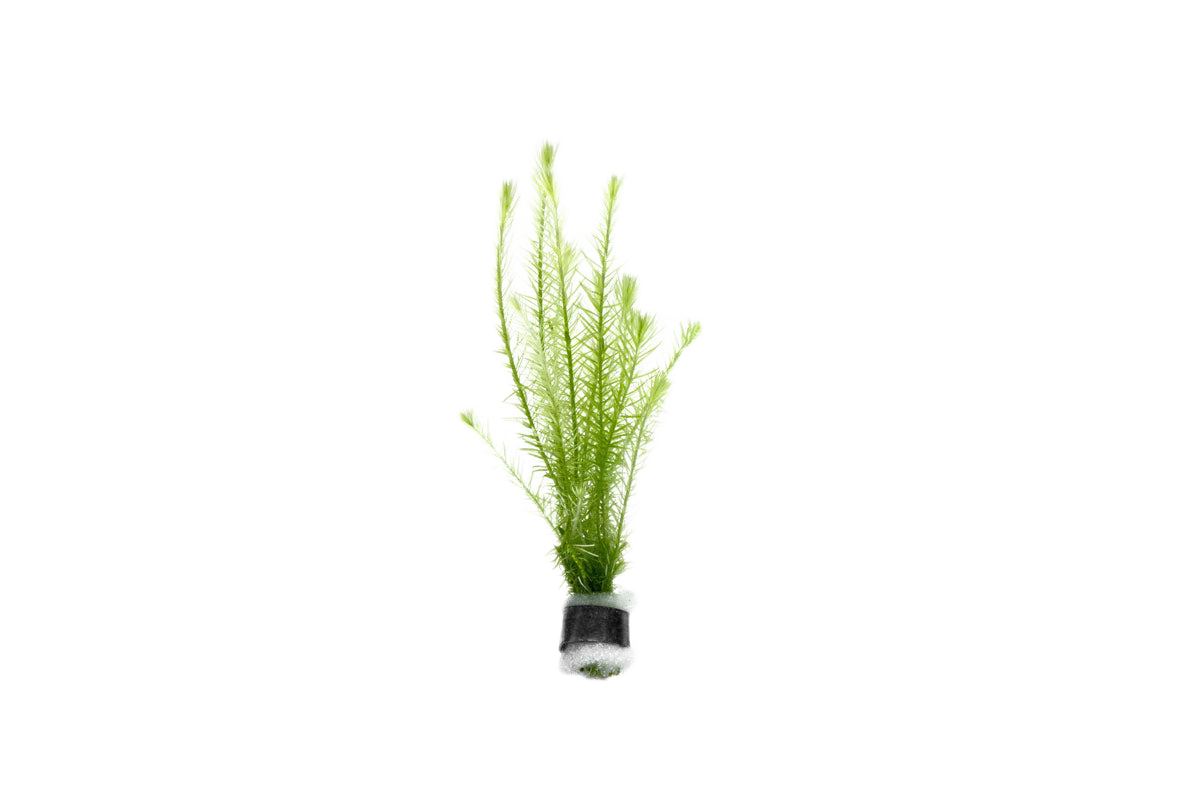
Mayaca Fluviatilis, native to the swamps of the Southern US and South America, is a delicate, bushy aquatic stem plant with needle-thin, bright green leaves flowing like tiny pine plumes. Highly adaptable and beginner-friendly, large groups create a stunning, lush background centerpiece with remarkable visual depth.
Quick facts
Identity
- Also known as
- Stream bogmoss; Bogmoss
- Synonyms
- Mayaca vandellii
- Environment
- Freshwater
- Native to
- Southeastern United States, Central America, South America (including Argentina)
- Habitat
- Shallow, slow-moving streams, swamps, and blackwater rivulet margins in subtropical and tropical wetlands
- Sourcing
- Aquacultured
- Conservation
- Not Evaluated
Care
- Care level
- Moderate
- Growth form
- Stem
- Max height
- 4 – 16 in (10 – 41 cm)
- Spread
- 1 in (2.5 cm)
- Growth rate
- Fast
- Placement
- Midground, Background
Water
- Temperature
- 72 – 82 °F (22 – 28 °C)
- pH
- 5.5 – 7.0
- GH
- 2 – 14 dGH
- dKH
- 0 – 6 dKH
- PAR
- 35 – 50 PAR
- Flow
- Low-Moderate
- Light
- Medium
- CO₂
- Beneficial
Planting
- Substrate
- Nutrient-rich preferred
- Feeds from
- Both
- Fertilizer needs
- High
- Colors
- Green
Feeding & breeding
- Propagation
- Cuttings
Something wrong or missing? Submit a correction
Care guide
Overview
Fine, needle-like leaves branch densely along thin stems, forming feathery plumes that fill the background of a planted tank. Growth is fast under medium-to-bright light and CO2 injection, though lower stems thin and yellow if nutrients or light drop off. Regular trimming and replanting of tops keeps clumps full rather than leggy.
Care
Stream bogmoss is a fine-leaved stem plant that does best with moderate to bright lighting and a steady supply of CO2, though it can survive without added gas at a slower pace. It is more demanding than many common stem plants and tends to decline in low-tech setups, with lower leaves yellowing and dropping when light or nutrients fall short. Regular trimming and replanting of the tops keeps the clumps dense and prevents the base of the stems from becoming bare and leggy.
Planting & trimming
Plant thin stem cuttings individually into a fine, nutrient-rich substrate using aquascaping tweezers, spacing them enough to allow water circulation around the bases and reduce the risk of rot. It can also be grown emersed in paludariums or along the damp margins of a tank. Trim the tops periodically and replant them to refresh the display as lower stems thin out over time.
Fertilizing
Growth responds strongly to a nutrient-rich substrate combined with liquid fertilization, since the fine roots and stems both draw in nutrients from the water column and substrate. Iron is particularly important, and a shortage shows up quickly as pale, almost white new growth at the shoot tips. Dosing a comprehensive liquid fertilizer along with root tabs in the planting area helps maintain steady, even coloration.
Propagation
The simplest method is taking stem cuttings from healthy tops and replanting them directly into the substrate. The plant also produces side shoots along the main stem that root on their own and can be separated from the parent once established. Handle cuttings gently, as the fine stems and leaves break easily.
Problems
Melting or thinning at the base is common when light or CO2 is insufficient, and old growth rarely recovers once it yellows, so trimming and replanting fresh tops is the usual remedy. Because the stems and leaves are delicate, rough handling during planting or maintenance can snap them, so cuttings should be planted gently with tweezers. Dense, poorly spaced plantings in compact substrate are prone to rot at the base from restricted water flow.
Sources
More Stem plants
Something wrong or missing? Submit a correction
In the community
Popular tanks using Mayaca Fluviatilis
No public tanks are showcasing Mayaca Fluviatilis yet.