
Aquatic Plant
Ludwigia Palustris Red
Ludwigia palustris 'Red'OnagraceaeStem plants
Price: $6.99 USD
Add from My tanks →1 photos
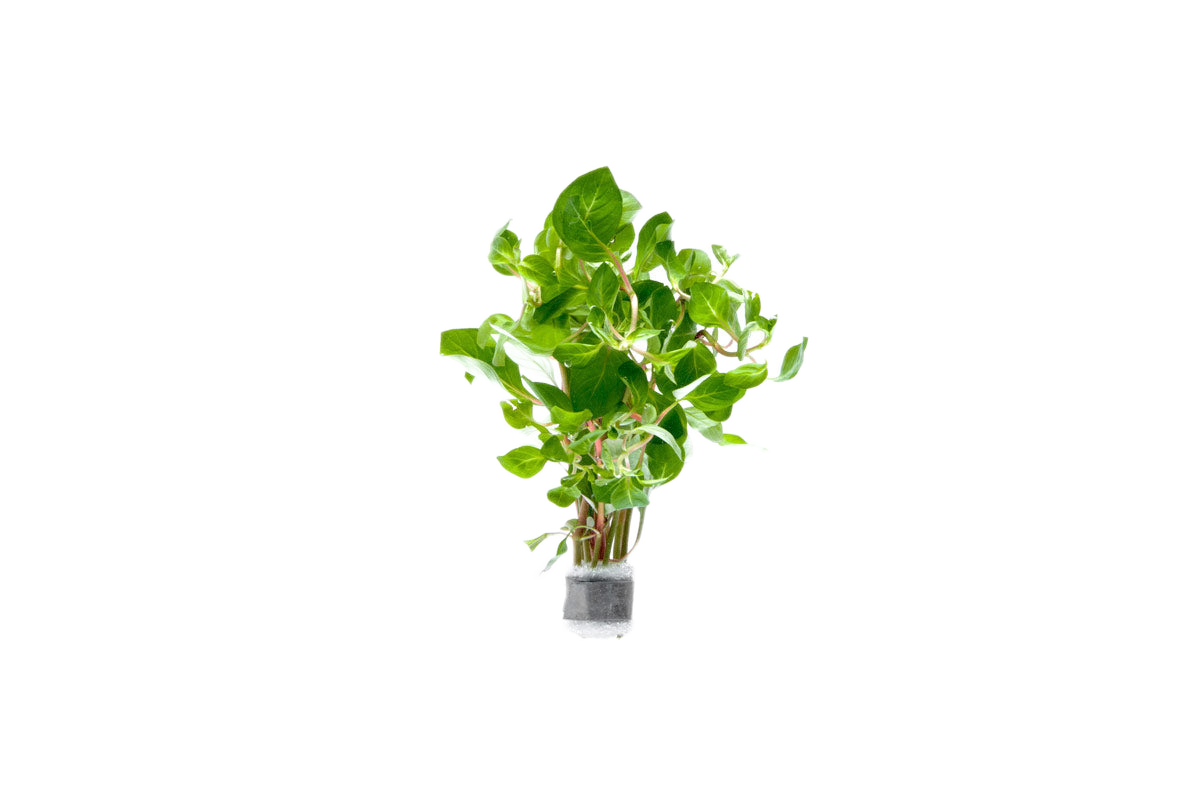
Ludwigia Palustris Red is a stem plant with pale red, oval-edged leaves that adds a pop of color to aquariums, especially when grown in bunches of 10-12 stems. It demands high lighting and strong nutrient levels to achieve deep red coloration, tolerates a range of water parameters, and propagates easily by replanting stem cuttings.
Quick facts
Identity
- Also known as
- Marsh ludwigia; Red ludwigia; Marsh seedbox; Hampshire purslane
- Synonyms
- Ludwigia palustris 'Red'
- Environment
- Freshwater
- Native to
- North America, Central America, South America, Europe, Africa
- Habitat
- Marshes, pond margins, slow-moving streams and wet meadows, growing emersed and submersed in nutrient-rich substrates under direct sunlight
- Sourcing
- Aquacultured
- Conservation
- Not Evaluated
Care
- Care level
- Easy
- Growth form
- Stem
- Max height
- 4 – 16 in (10 – 41 cm)
- Spread
- 6 in (15 cm)
- Growth rate
- Fast
- Placement
- Midground, Background
Water
- Temperature
- 64 – 82 °F (18 – 28 °C)
- pH
- 5.5 – 7.5
- GH
- 2 – 20 dGH
- PAR
- 30 – 80 PAR
- Flow
- Low-Moderate
- Light
- Medium
- CO₂
- Beneficial
Planting
- Substrate
- Nutrient-rich preferred
- Feeds from
- Both
- Fertilizer needs
- High
- Colors
- Red, Green
Feeding & breeding
- Propagation
- Cuttings
Something wrong or missing? Submit a correction
Care guide
Overview
Suited to planted community tanks where a keeper wants a manageable red-toned stem plant without demanding CO2 setups. Sold in bunches of 10-12 stems, its pale red, oval-edged leaves deepen with stronger light and nutrients. Tolerant of varied water chemistry, it roots quickly from cuttings for ongoing propagation.
Care
A tolerant stem plant that adapts to a wide range of water chemistry and lighting, making it a good candidate for both beginner and planted community tanks. Red coloration is only reliable under moderate to high light with good nutrient availability, particularly iron and nitrogen; under weak light the foliage stays green or dull and internode spacing increases. Regular trimming of the growing tips keeps the plant bushy and encourages new side shoots, and CO2 injection is not mandatory but noticeably improves density and color saturation.
Planting & trimming
Rinse away any rockwool or cotton from the base before planting, then insert individual stems or small bunches directly into the substrate with aquascaping tweezers, spacing them a couple of inches apart to allow for bushy growth. It roots readily from cuttings, so as the plant grows tall, top portions can be cut and replanted while the leggy lower stem is discarded or trimmed back hard. Aerial roots may form along the stem and can be left in place or trimmed off without harming the plant.
Fertilizing
Ludwigia palustris is a heavy nitrogen and iron consumer when grown under strong light, so regular liquid fertilization or root tabs in a nutrient-rich substrate are recommended to sustain growth and color. Iron deficiency shows up as pale or yellowing new growth, while a shortage of nitrogen can cause thin stems and weak red pigmentation. It feeds from both the water column and its roots, so dosing a complete liquid fertilizer alongside a nutrient substrate gives the most consistent results.
Propagation
Propagation is simply done by cutting healthy stem tips and replanting them into the substrate, where they root within days to a couple of weeks. Regular trimming of the main stems promotes branching and side shoot production, effectively multiplying the number of cuttings available over time. This cycle of trim-and-replant can be repeated indefinitely to keep a continuous supply of new plants.
Problems
Stems can be fragile and prone to snapping during handling or replanting, and sudden shifts in water parameters or lighting often trigger melt or rotting of lower leaves. Insufficient light commonly causes leggy growth with sparse, pale foliage and leaf drop on the lower stem. Algae can become an issue on the leaves if lighting is pushed high without matching nutrient and CO2 supply.
Sources
More Stem plants
Something wrong or missing? Submit a correction
In the community
Popular tanks using Ludwigia Palustris Red
No public tanks are showcasing Ludwigia Palustris Red yet.