
Aquatic Plant
Ludwigia Inclinata
Ludwigia inclinataOnagraceaeStem plants
Price: $20.97 USD
Add from My tanks →1 photos
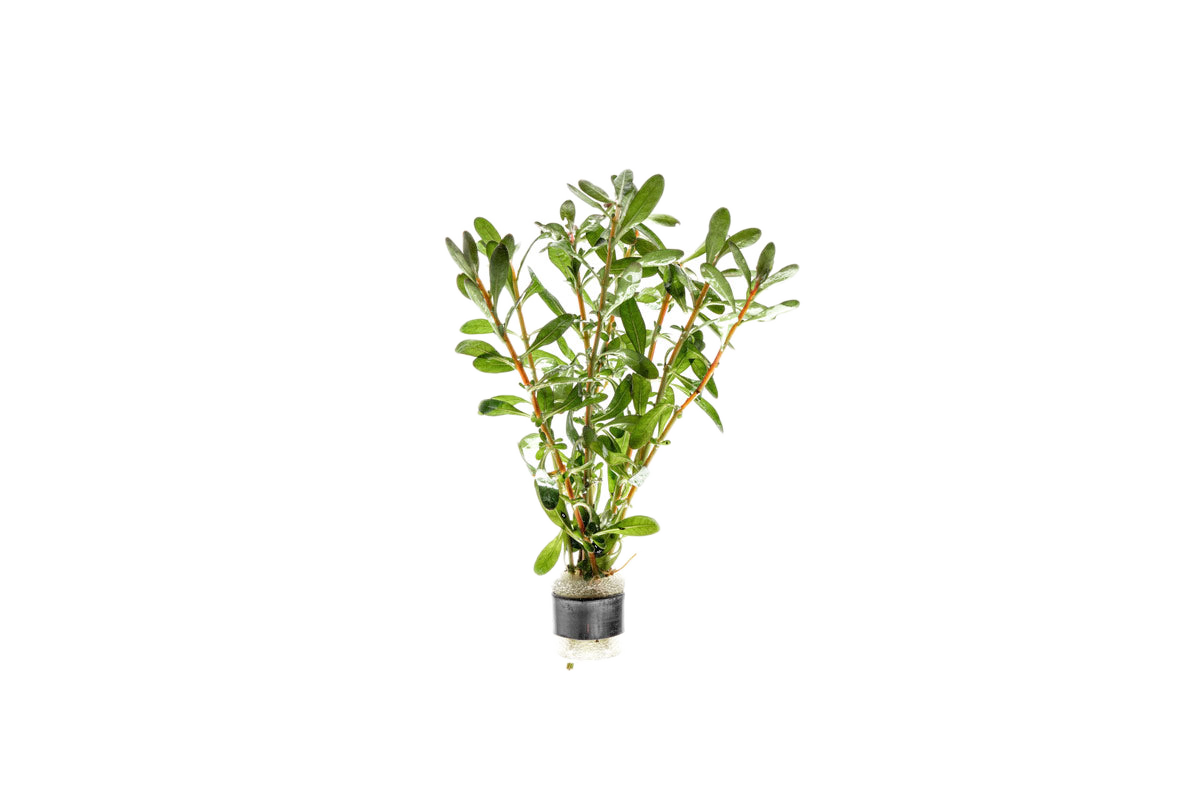
Ludwigia Inclinata is a high-tech aquatic stem plant from the tropical wetlands and river margins of Central and South America. Its submerged foliage displays vivid gold, warm orange, and fiery red hues; fast-growing to 6–20 inches, it forms a showstopping midground/background centerpiece for experienced aquascapers.
Quick facts
Identity
- Also known as
- Red Ludwigia
- Synonyms
- Ludwigia inclinata 'Meta'
- Environment
- Freshwater
- Native to
- Colombia (Departamento del Meta)
- Habitat
- Shallow, soft, acidic tropical streams and river margins of the llanos region, growing submersed with fine whorled leaves and emersed on wet mud where it flowers
- Sourcing
- Aquacultured
- Conservation
- Not Evaluated
Care
- Care level
- Difficult
- Growth form
- Stem
- Max height
- 4 – 20 in (10 – 51 cm)
- Spread
- 3 in (7.6 cm)
- Growth rate
- Fast
- Placement
- Midground, Background
Water
- Temperature
- 72 – 82 °F (22 – 28 °C)
- pH
- 5.0 – 7.0
- GH
- 0 – 8 dGH
- dKH
- 0 – 4 dKH
- PAR
- 60 – 100 PAR
- Flow
- Moderate
- Light
- High
- CO₂
- Required
Planting
- Substrate
- Nutrient-rich preferred
- Feeds from
- Both
- Fertilizer needs
- High
- Colors
- Green, Orange, Red, Yellow
Feeding & breeding
- Propagation
- Cuttings
Something wrong or missing? Submit a correction
Care guide
Overview
Fine, needle-like foliage arranged in tight whorls colors from gold through orange to red depending on light intensity and nutrient supply, growing fast enough to reach the surface within weeks if left untrimmed. It demands high-tech conditions, including strong lighting, injected CO2 and complete fertilization, with cuttings used to maintain density in the midground or background.
Care
This locality form of Ludwigia inclinata var. verticillata is somewhat more forgiving than the closely related 'Pantanal', though it still asks for strong lighting, injected CO2 and soft, acidic water to hold its color. Fine whorls of narrow, needle-like leaves branch little on their own, so density comes from repeated topping and replanting of cuttings rather than natural bushiness. Nutrient shortfalls show up quickly as pale, stunted growing tips, making it a useful indicator plant for overall tank health. It reads best as a red accent against a backdrop of light green plants.
Planting & trimming
Plant stems in small groups spaced roughly an inch apart to build a bushy hedge of whorled foliage from the start. Trim tops before they reach the surface and replant them, since this species branches poorly on its own and relies on repeated cutting back to stay dense. Left untrimmed, stems will reach the surface and grow emersed, producing broader alternate leaves and yellow flowers.
Fertilizing
Growth depends on complete macro and micronutrient dosing, with iron in particular helping deepen the orange-red tones. Root tabs in the substrate support the root-feeding side of this plant, but regular liquid fertilization of the water column is equally important for the fine emergent shoots. Skimping on nutrients or light quickly produces pale, shrunken new growth at the tips rather than the desired red coloration.
Propagation
Propagated exclusively by stem cuttings. Healthy tops are cut and replanted directly into the substrate, and the remaining lower nodes on the original stem typically sprout new side shoots within a week or two.
Problems
Poor lighting, insufficient CO2 or gaps in fertilization cause the foliage to revert to washed-out yellow-green and the growing tips to shrink and weaken. Because it branches little on its own, neglected stems become leggy and bare at the base, requiring more frequent trimming to keep a full appearance. Algae can settle on the fine leaves if flow or nutrient balance is poor, so stable conditions matter more than for coarser-leaved stems.
Sources
Varieties in the catalog
More Stem plants
Something wrong or missing? Submit a correction
In the community
Popular tanks using Ludwigia Inclinata
No public tanks are showcasing Ludwigia Inclinata yet.