
Aquatic Plant
Ludwigia Arcuata
Ludwigia arcuataOnagraceaeStem plants
Price: $20.97 USD
Add from My tanks →1 photos
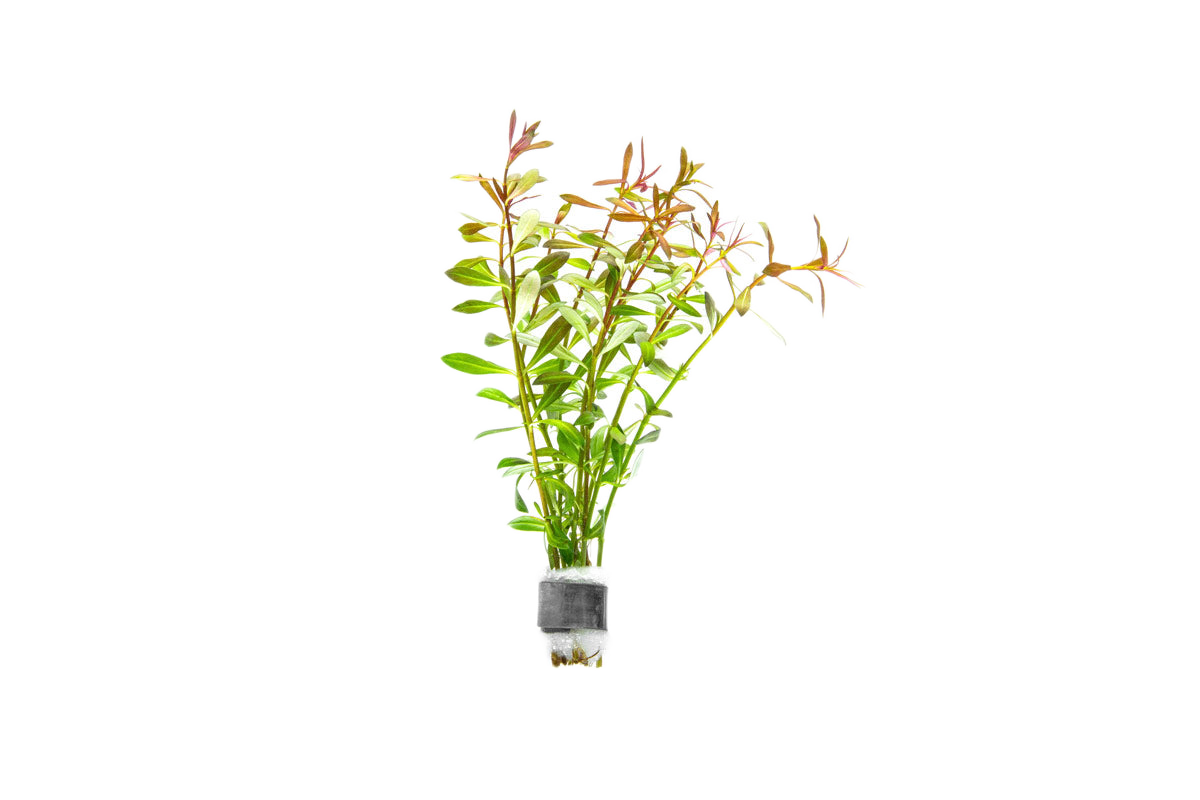
Ludwigia Arcuata (Needle Leaf Ludwigia) is an easy-going stem plant with delicate, needle-thin leaves in pairs shifting from soft olive-green to deep bronze and rich reds. With frequent pruning, it branches into a dense, bushy filler adding fine texture and movement to midground or background.
Quick facts
Identity
- Also known as
- Needle Leaf Ludwigia; Narrow Leaf Ludwigia
- Synonyms
- Ludwigia pedunculosa
- Environment
- Freshwater
- Native to
- United States (Alabama, Florida, Georgia, South Carolina)
- Habitat
- Swampy wetlands, wet meadows, pond edges and slow rivers in soft, acidic water, growing both emersed and submersed
- Sourcing
- Aquacultured
- Conservation
- Not Evaluated
Care
- Care level
- Moderate
- Growth form
- Stem
- Max height
- 5 – 20 in (13 – 51 cm)
- Spread
- 6 in (15 cm)
- Growth rate
- Moderate
- Placement
- Midground, Background
Water
- Temperature
- 68 – 82 °F (20 – 28 °C)
- pH
- 5.5 – 7.5
- GH
- 2 – 15 dGH
- dKH
- 3 – 8 dKH
- PAR
- 50 – 100 PAR
- Flow
- Low-Moderate
- Light
- High
- CO₂
- Beneficial
Planting
- Substrate
- Nutrient-rich preferred
- Feeds from
- Both
- Fertilizer needs
- High
- Colors
- Green, Orange, Red, Brown
Feeding & breeding
- Propagation
- Cuttings, Seeds
Something wrong or missing? Submit a correction
Care guide
Overview
Wetland margins and slow, acidic rivers of the southeastern United States are the origin of this fine-leaved stem plant, cultivated commercially for aquarium use. Its paired needle-thin leaves shift from olive-green to bronze and red under strong light and lean nitrate. Regular trimming keeps it branching densely for midground or background planting.
Care
Needle Leaf Ludwigia is a fine-textured stem plant that does best in medium to high light with a nutrient-rich substrate and regular liquid fertilization. It grows both emersed and submersed, but the submersed form with its narrow needle leaves is more delicate and can melt after being transplanted or exposed to sudden parameter swings. Stable water chemistry, consistent dosing, and steady lighting help it settle in and hold its color rather than dropping leaves.
Planting & trimming
Plant individual stems about an inch apart directly into a nutrient-rich substrate, stripping the lower leaves near the cut end to encourage rooting. Trim the tops once stems approach the surface and replant the cuttings, which also encourages branching at the cut point for a bushier habit. Regular trimming every two to three weeks in a high-tech setup keeps the plant dense rather than leggy.
Fertilizing
This species is a moderately heavy root feeder, so root tabs pushed near the base of the stems support strong growth alongside a nutrient-rich substrate. A comprehensive liquid fertilizer with iron and trace elements is also recommended, since iron availability strongly affects how deeply red the foliage turns. Keeping nitrate on the lean side, roughly 5 ppm or lower, combined with bright light tends to intensify the orange-to-red coloration further.
Propagation
Propagation is done by cutting the stem tops or side branches and replanting them directly into the substrate after removing the lowest leaves. Under favorable conditions mature plants can also flower and set seed above the waterline, though vegetative cuttings are the standard and far more reliable method in aquarium culture.
Problems
The submersed form is prone to melting after planting, pruning shocks, or abrupt changes in water parameters, so newly added stems should be given stable conditions while they root in. Low light or excess nitrate causes the plant to lose its red coloration and become leggy and green. Insufficient iron or trace elements can also show up as pale or washed-out new growth near the tips.
Sources
More Stem plants
Something wrong or missing? Submit a correction
In the community
Popular tanks using Ludwigia Arcuata
No public tanks are showcasing Ludwigia Arcuata yet.