
Aquatic Plant
Limnophila Heterophylla
Limnophila heterophyllaPlantaginaceaeStem plants
Price: $6.99 USD
Add from My tanks →1 photos
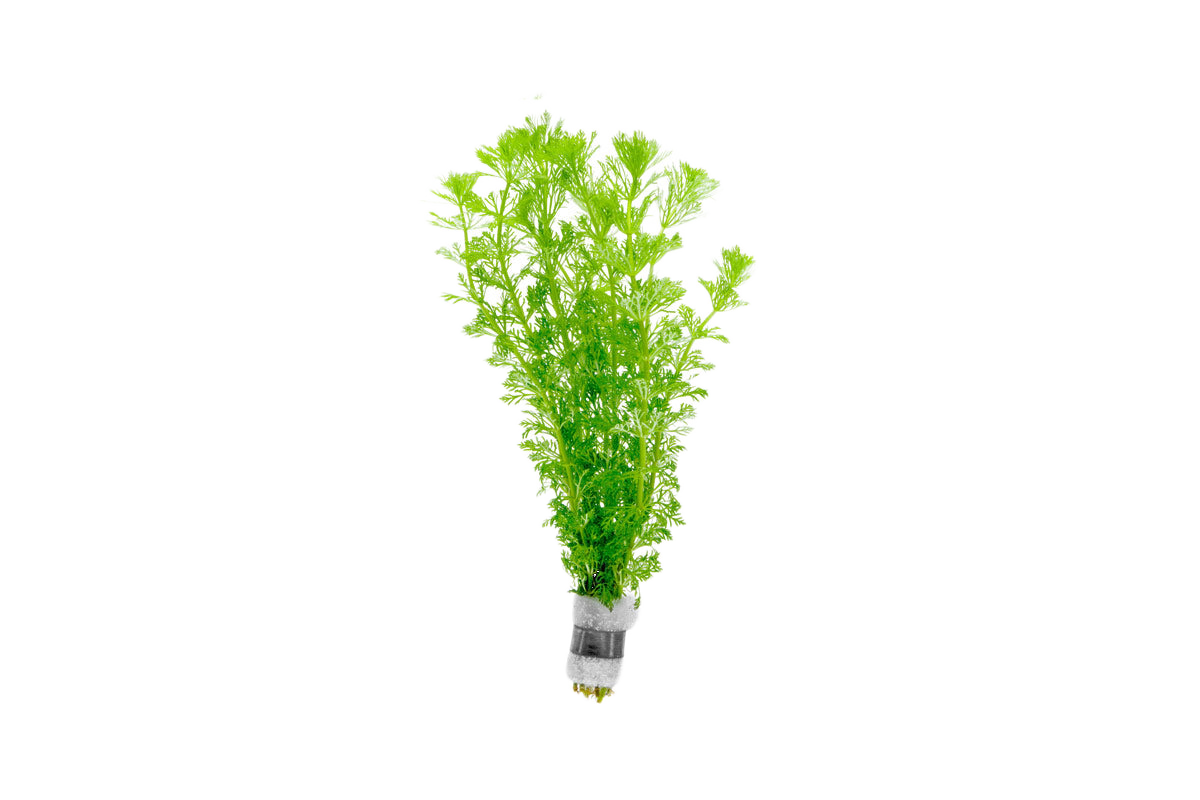
Limnophila Heterophylla is an easy-to-grow, highly adaptable aquatic stem plant with finely divided, fan-like whorls of bright green foliage. Fast-growing and resilient, it serves as an exceptional background filler or midground accent, producing dense, feathery green forests even in low-tech tanks.
Quick facts
Identity
- Also known as
- Dwarf Ambulia; Diverse-leaved Ambulia
- Synonyms
- Limnophila gratissima; Ambulia heterophylla
- Environment
- Freshwater
- Native to
- Pakistan, India, China, Southeast Asia, Borneo
- Habitat
- Rivulets, rice paddies, ponds and wet margins across the Asian tropics and subtropics, in both soft and hard water
- Sourcing
- Aquacultured
- Conservation
- Not Evaluated
Care
- Care level
- Easy
- Growth form
- Stem
- Max height
- 3 – 19.7 in (7.6 – 50 cm)
- Spread
- 3 in (7.6 cm)
- Growth rate
- Fast
- Placement
- Midground, Background
Water
- Temperature
- 72 – 82 °F (22 – 28 °C)
- pH
- 5.5 – 7.5
- GH
- 2 – 12 dGH
- dKH
- 2 – 21 dKH
- Flow
- Low-Moderate
- Light
- Medium
- CO₂
- Beneficial
Planting
- Substrate
- Nutrient-rich preferred
- Feeds from
- Both
- Fertilizer needs
- High
- Colors
- Green
Feeding & breeding
- Propagation
- Cuttings
Something wrong or missing? Submit a correction
Care guide
Overview
Also known as Dwarf Ambulia, this stem plant forms finely divided, feathery whorls of green foliage along upright stems. It grows quickly in medium light and adapts to both soft and hard water, making it suited to background or midground planting in low-tech to CO2-enriched setups alike. Regular topping keeps growth dense rather than leggy.
Care
This fast-growing bunch plant tolerates a wide range of water chemistry, from soft acidic tanks to harder alkaline ones, and copes with a broad temperature span thanks to its subtropical range. Medium to medium-high light keeps the fine, feathery whorls dense from top to bottom, while low light causes the lower leaves to drop and the stems to become leggy. CO2 injection is not mandatory but noticeably increases growth speed and foliage density. Weekly trimming is needed once stems approach the surface, as this species grows quickly and will otherwise shade itself out.
Planting & trimming
Plant stems singly with a little space between them so light can still reach the lower whorls rather than tying them into a single dense bunch. As it grows quickly and can reach or exceed the surface within weeks, top the stems and replant the cuttings regularly to maintain a full, bushy appearance. It can also be grown emersed along damp margins, where the foliage becomes simpler and undivided.
Fertilizing
Ambulia draws nutrients through both roots and the water column, so it benefits from a nutrient-rich substrate combined with regular liquid fertilizer dosing. It is a notably heavy feeder on nitrate and potassium, and thin, pale, or dropping lower leaves usually indicate a nutrient shortfall rather than a lighting problem. Root tabs pushed near the base of a bunch can help support the heavier feeding demand in barren substrates.
Propagation
Propagation is by stem cuttings: trim a healthy top section, remove the lowest leaves, and replant the cutting directly into the substrate. Rooting is quick, often within three to five days under good conditions, and lateral side shoots can also be separated and replanted the same way.
Problems
New stems can suffer melt for a week or two after planting or after a change in water chemistry, particularly when moved between emersed and submersed conditions. Once established, the plant is fairly resistant to algae if light and CO2 are balanced, since its fast growth outcompetes algae for available nutrients. Leggy stems with wide gaps between whorls typically point to insufficient light rather than a nutrient issue.
Sources
More Stem plants
Something wrong or missing? Submit a correction
In the community
Popular tanks using Limnophila Heterophylla
No public tanks are showcasing Limnophila Heterophylla yet.