
Aquatic Plant
Limnophila Belem
Limnophila sp. 'Belem'PlantaginaceaeStem plants
Price: $5.99 USD
Add from My tanks →1 photos
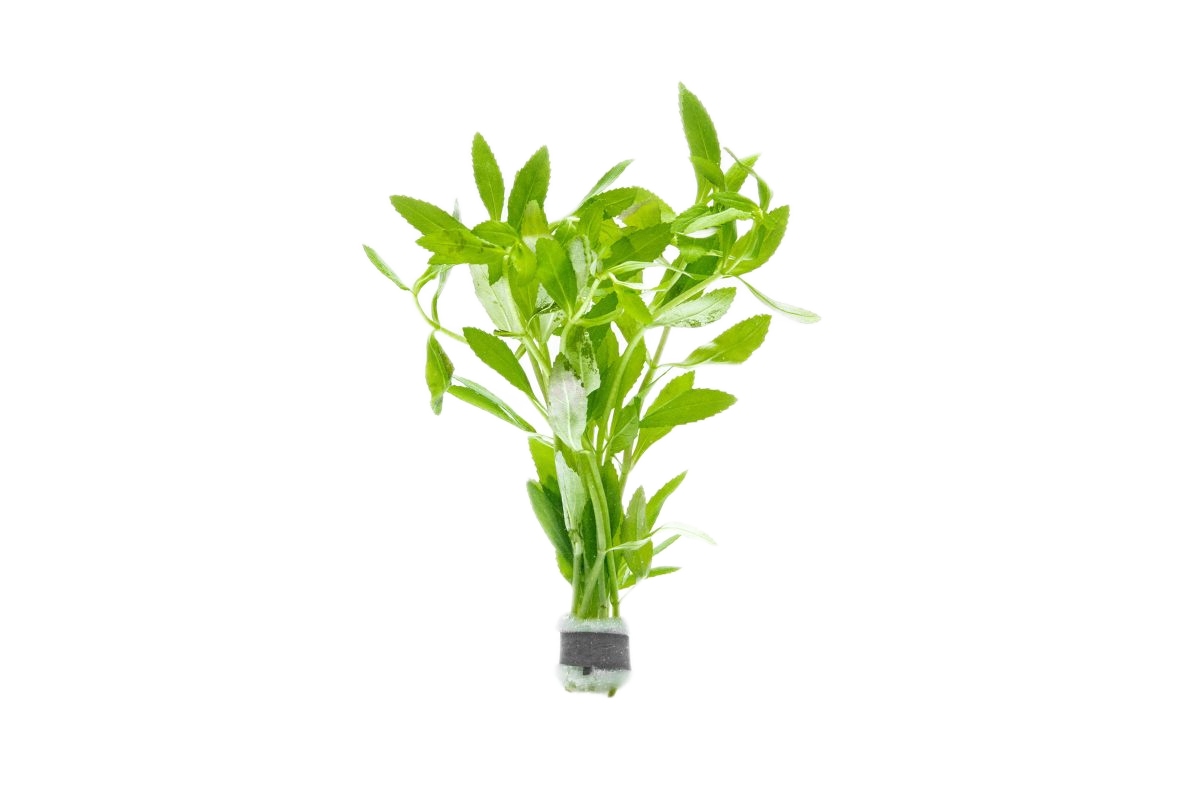
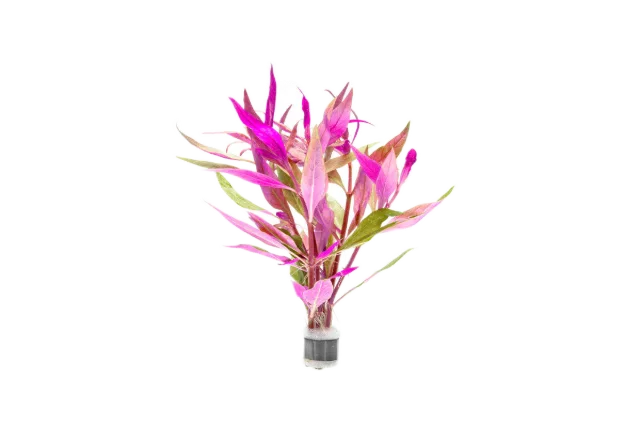
Limnophila Belem is a striking aquatic stem plant native to Asia with narrow, paired leaves with fine serrated margins. Under high-tech conditions, it develops intense purple and deep pink coloration across its growing tips; upright, ideal for midground or background placement.
Quick facts
Identity
- Also known as
- Belem Limnophila
- Synonyms
- Possibly a form of Limnophila aromatica
- Environment
- Freshwater
- Native to
- Tropical Asia
- Habitat
- Shallow tropical freshwater streams and wetlands in Southeast Asia, growing both submersed and emergent along muddy banks
- Sourcing
- Aquacultured
- Conservation
- Not Evaluated
Care
- Care level
- Moderate
- Growth form
- Stem
- Max height
- 4 – 12 in (10 – 30 cm)
- Spread
- 4 in (10 cm)
- Growth rate
- Fast
- Placement
- Midground, Background
Water
- Temperature
- 72 – 82 °F (22 – 28 °C)
- pH
- 6.0 – 7.5
- GH
- 2 – 10 dGH
- Flow
- Low-Moderate
- Light
- High
- CO₂
- Beneficial
Planting
- Substrate
- Nutrient-rich preferred
- Feeds from
- Both
- Fertilizer needs
- High
- Colors
- Green, Pink, Purple
Feeding & breeding
- Propagation
- Cuttings
Something wrong or missing? Submit a correction
Care guide
Overview
Branches densely and pushes upward once trimmed, forming a full midground or background stand of paired, finely serrated leaves. Under weaker light it stays plain green, but strong lighting, CO2, and steady micronutrient dosing flush the growing tips deep pink to purple. Stable parameters and regular fertilizing keep the color from fading back to green.
Care
This stem plant grows as a plain green background filler under modest light, but the paired, finely serrated leaves flush deep pink to purple at the growing tips when given strong lighting, CO2, and consistent micronutrient dosing. It is an upright grower suited to midground or background placement, and it branches densely once trimmed, making it useful for filling in a scape over time. Stable water parameters matter more than any single number, since sudden shifts often trigger leaf drop or melt on the lower stem.
Planting & trimming
Plant stems directly into the substrate with a few inches of spacing so light reaches the lower leaves, and press root tabs nearby to help new plantings establish. Trim the tops regularly once the plant fills in, replanting the cuttings to build a denser stand and keep the coloration concentrated near the growing tips. It can be grown emersed in a paludarium setting, though a transition period is needed when moving between emersed and submersed forms.
Fertilizing
Regular liquid fertilizing with a complete micro and macro nutrient mix supports strong coloration, and iron-rich dosing in particular helps bring out the pink and purple tones at the tips. Root tabs pushed into a nutrient-rich substrate give the root system a boost, especially useful when the plant is first settling in. Yellowing leaves, holes, or stalled growth usually point to a nutrient shortfall rather than disease.
Propagation
Propagation is done by simple stem cuttings: snip several centimeters from a healthy growing tip and push the cut end into the substrate, where it will root and branch on its own. Side shoots that form after topping can also be separated and replanted. This makes it easy to multiply a single healthy stem into a full stand over a few months.
Problems
New plantings often drop a few lower leaves or show melt as they adjust to submersed life, which is normal as long as light, CO2, and fertilizer stay consistent afterward. Algae on the leaves is the most common ongoing complaint, and it typically traces back to excess light relative to available nutrients or weak flow rather than any fault of the plant itself. Removing dead or rotting leaf tissue promptly helps prevent it from fouling water quality nearby.
Sources
More Stem plants
Something wrong or missing? Submit a correction
In the community
Popular tanks using Limnophila Belem
No public tanks are showcasing Limnophila Belem yet.