
Aquatic Plant
Limnophila Aromatica Mini
Limnophila aromatica 'Mini'PlantaginaceaeStem plants
Price: $6.99 USD
Add from My tanks →1 photos
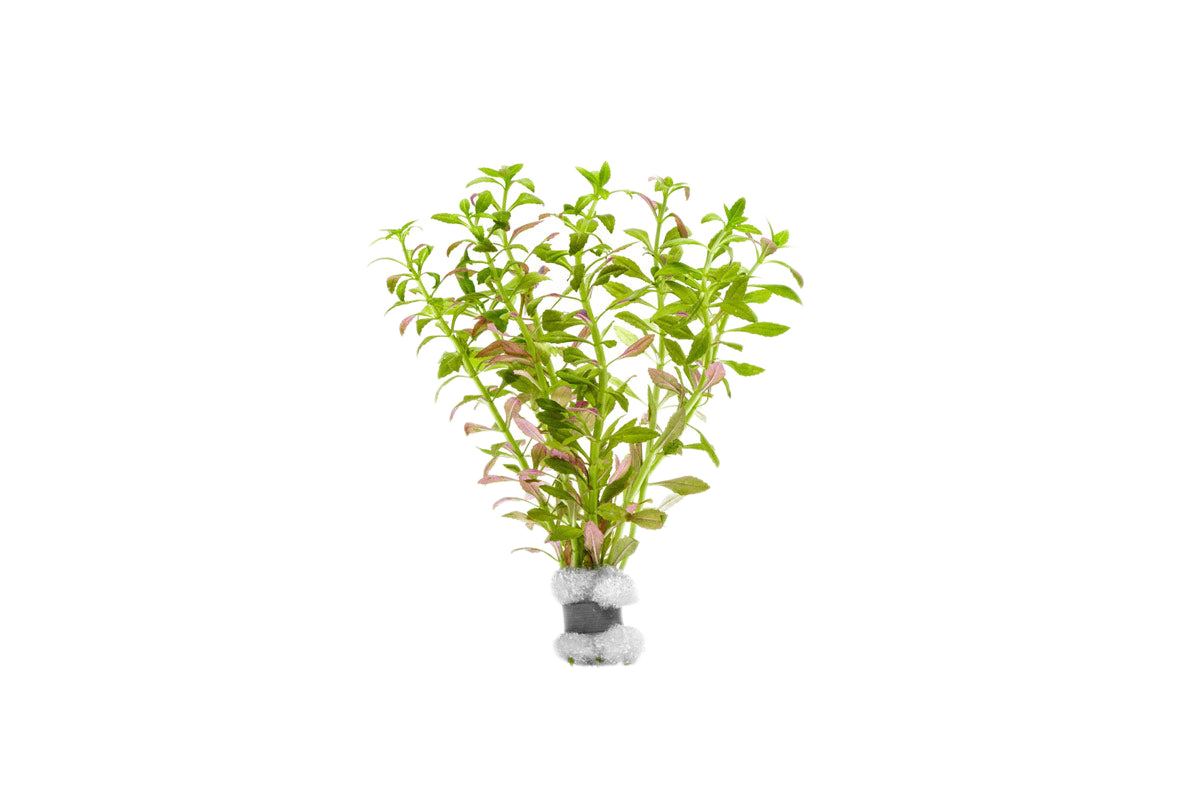
Limnophila aromatica 'Mini' is a compact variant of the Southeast Asian Rice Paddy Herb, with serrated star-like whorls of foliage shifting from olive-green to pink, magenta and ruby red with purple undersides under high-tech conditions. Easy to moderate, it needs moderate to high light, CO2 and iron dosing for maximum color and propagates from stem cuttings.
Quick facts
Identity
- Also known as
- Dwarf Rice Paddy Herb; Limno Mini Vietnam
- Synonyms
- Limnophila sp. 'Kalimantan Mini'
- Environment
- Freshwater
- Native to
- Captive-bred variety
- Habitat
- Wild parent species grows emersed and semi-submerged in rice paddies, marshes, muddy canals and riverbanks across Southeast Asia; the 'Mini' form itself is a selected cultivar not documented in the wild
- Sourcing
- Both
- Conservation
- Not Evaluated
Care
- Care level
- Moderate
- Growth form
- Stem
- Max height
- 2 – 8 in (5.1 – 20 cm)
- Spread
- 3 in (7.6 cm)
- Growth rate
- Fast
- Placement
- Midground, Foreground
Water
- Temperature
- 72 – 82 °F (22 – 28 °C)
- pH
- 6.0 – 7.5
- dKH
- 2 – 8 dKH
- PAR
- 40 – 80 PAR
- Flow
- Low-Moderate
- Light
- High
- CO₂
- Required
Planting
- Substrate
- Nutrient-rich preferred
- Feeds from
- Both
- Fertilizer needs
- High
- Colors
- Green, Pink, Red, Purple, Brown
Feeding & breeding
- Propagation
- Cuttings
Something wrong or missing? Submit a correction
Care guide
Overview
Serrated, star-shaped whorls of foliage stay tightly stacked along short internodes, shifting from olive-green to pink, magenta and ruby with purple undersides when light and iron are plentiful. This dwarf cultivar of the Rice Paddy Herb needs high light and CO2 to hold its compact shape rather than stretching out. Group planting with spacing prevents self-shading and lower-leaf drop.
Care
This dwarf stem plant holds a tight, compact whorled habit only under fairly strong light paired with pressurized CO2 and consistent nutrient dosing; without those inputs the internodes stretch and the foliage stays pale green rather than developing the coloration it is grown for. It tolerates a fairly broad temperature span but does best kept in the low-to-mid seventies to mid seventies Fahrenheit range, in soft, slightly acidic water. Regular trimming keeps the stems bushy and prevents the lower leaves from shading out and dropping.
Planting & trimming
Plant stems in small groups with a bit of space between each shoot to avoid self-shading, pushing the lower portion of the stem into the substrate. Once established, trim the tops regularly to encourage lateral branching and replant the cut tops to thicken the group. It also grows well emersed in paludariums or as a marginal plant, where the leaves turn coarser and medium green and release a citrus-herbal scent when bruised.
Fertilizing
Grow it in a nutrient-rich substrate supplemented with root tabs, and dose a complete liquid fertilizer that includes chelated iron and micronutrients on a regular schedule. Iron and potassium in particular drive the red and purple pigmentation in the upper leaves, so plants kept in lean water columns tend to stay olive-green. Pale new growth, stunted internodes, or a loss of color are typical signs the fertilizing routine needs to be stepped up.
Propagation
Propagate by cutting healthy stem tops once they have developed enough length, then replanting the cuttings directly into the substrate where they root readily. Side shoots that form after topping can also be separated and replanted to multiply a group quickly.
Problems
Poor lighting or inconsistent CO2 causes leggy, elongated growth with washed-out color, effectively losing the compact "mini" form the plant is prized for. Lower leaves can be shed if the plant is shaded by neighboring stems planted too densely, so spacing matters more than with many other stem plants. It is not particularly prone to melt when transitioning from emersed to submerged growth, though new tissue-cultured starts may shed some older emersed leaves during acclimation.
Sources
More Stem plants
Something wrong or missing? Submit a correction
In the community
Popular tanks using Limnophila Aromatica Mini
No public tanks are showcasing Limnophila Aromatica Mini yet.