
Aquatic Plant
Hygrophila Lancea 'Araguaia' Sp Chai
Hygrophila lancea 'Araguaia'AcanthaceaeStem plants
Price: $34.99 USD
Add from My tanks →1 photos
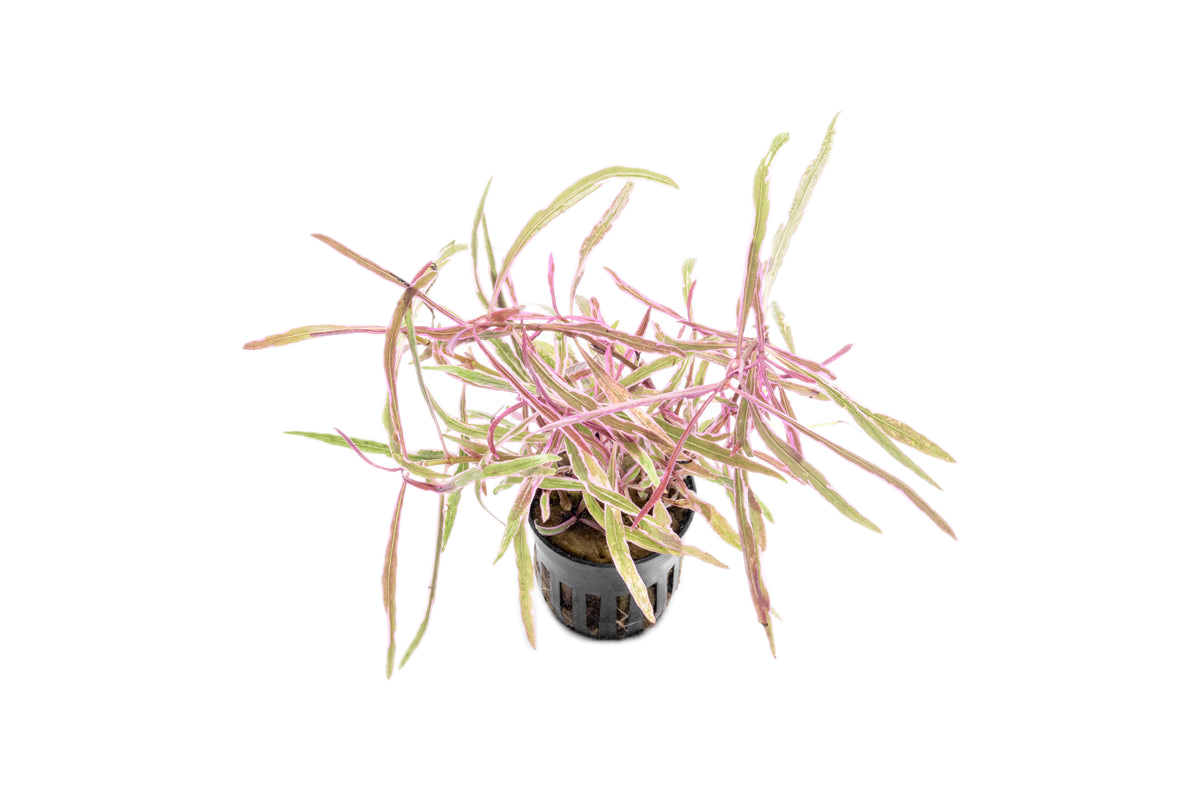
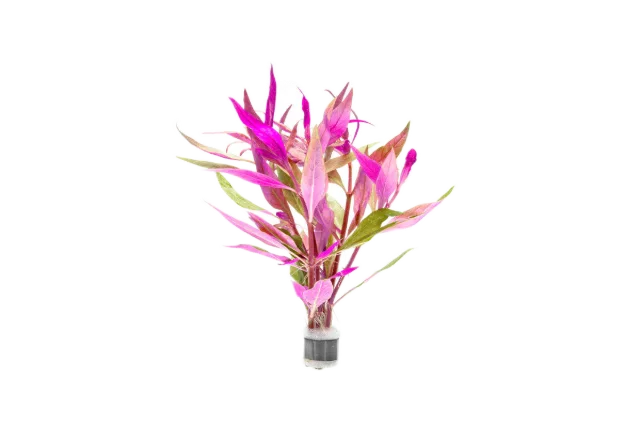
Hygrophila Lancea 'Araguaia' Sp. Chai is an extremely rare pink mutation of Hygrophila lancea 'Araguaia', originating as a specialized tissue-culture mutation in Singapore. It features narrow, elongated leaves with striking olive-red bases and intense pastel pink margins and tips; high-tech care (high light, CO2, iron) required.
Quick facts
Identity
- Also known as
- Pink Chai; Hygrophila Chai
- Synonyms
- Hygrophila sp. Chai; Hygrophila sp. Pink Chai; Hygrophila lancea 'Araguaia' 'Chai'; Hygrophila Araguaia Chai
- Environment
- Freshwater
- Native to
- Captive-bred variety
- Habitat
- Cultivated variegated selection with no wild habitat; parent species Hygrophila lancea grows emersed along ditches and wet stream margins in East Asia, submersing seasonally when water levels rise.
- Sourcing
- Tissue culture
- Conservation
- Not Evaluated
Care
- Care level
- Difficult
- Growth form
- Stem
- Max height
- 2 – 4 in (5.1 – 10 cm)
- Spread
- 4 in (10 cm)
- Growth rate
- Slow
- Placement
- Midground, Foreground
Water
- Temperature
- 72 – 82 °F (22 – 28 °C)
- pH
- 6.0 – 7.0
- GH
- 2 – 8 dGH
- PAR
- 60 – 80 PAR
- Flow
- Low-Moderate
- Light
- High
- CO₂
- Required
Planting
- Substrate
- Nutrient-rich preferred
- Feeds from
- Both
- Fertilizer needs
- High
- Colors
- Green, Red, Pink, Cream, Variegated
Feeding & breeding
- Propagation
- Cuttings
Something wrong or missing? Submit a correction
Care guide
Overview
High-tech planted tanks with dialed-in CO2, strong lighting, and disciplined dosing suit this tissue-culture pink mutation best. Narrow leaves show olive-red bases fading into pastel pink margins, a coloration that fades quickly without iron and micronutrient support. Growth is slow and melt-prone during acclimation, so stable parameters matter more than with typical stems.
Care
This cultivar demands more attention than typical stem plants because the variegated margins carry little chlorophyll, leaving most photosynthesis to the narrow green-to-olive center of the leaf. Strong lighting in the 60-80 PAR range, injected CO2, and consistent micronutrient dosing (especially iron) are needed to hold the pink coloration and keep growth from stalling. Even under ideal conditions growth stays slow, so it pairs poorly with fast-growing neighbors that can shade or overrun it, and a clean, low-organic-load tank helps prevent melt.
Planting & trimming
Strip the lower leaves from each stem before inserting it one to two inches into the substrate, spacing stems apart so light reaches the lower foliage, and handle the delicate tissue gently to avoid crushing it. It can also be grown unrooted and tied or wedged onto wood or rock as a quasi-epiphyte, though this requires extra liquid fertilization to replace nutrients normally drawn through the roots. Regular trimming of shoot tips keeps the growth low, bushy, and compact rather than leggy.
Fertilizing
Plant in a nutrient-rich aqua soil substrate and supplement weekly with a comprehensive liquid fertilizer, paying particular attention to iron and other micronutrients since these directly influence the intensity of the pink and red tones. Inert substrates such as plain sand or gravel will need heavier liquid dosing to compensate for the lack of root-zone nutrition. Fading to pale green or stalled growth usually signals a fertilization or CO2 shortfall rather than a lighting problem.
Propagation
Propagate by cutting healthy stem tips and replanting them directly into the substrate; the parent stem will branch out from the cut point. Routine trimming doubles as a propagation method, since the trimmed tops can be replanted to build up a fuller group over time.
Problems
Freshly transitioned emersed-grown stock commonly melts back as it converts to submersed leaf form, dropping older foliage before new growth appears, so patience is needed during this adjustment period. Algae fouling the leaves typically points to lighting or CO2 running ahead of nutrient uptake and maintenance, and can be managed by trimming the photoperiod slightly or adding algae-grazing shrimp. Because the variegated tissue is fragile and slow-growing, unstable water parameters or rough handling during planting can trigger stem rot or further melt.
Sources
- Hygrophila lancea 'Araguaia' sp. Chai – Garden Aquaria
- Hygrophila Chai care: light, CO2 and placement · TankBud
- Hygrophila Araguaia (Hygrophila lancea 'Araguaia'): Care Guide - Fish Laboratory
- How to Grow Hygrophila sp. 'Chai': The Ultimate Care Guide for This Rare Aquatic Plant – Aquarium Plants Factory
Varieties in the catalog
More Stem plants
Something wrong or missing? Submit a correction
In the community
Popular tanks using Hygrophila Lancea 'Araguaia' Sp Chai
No public tanks are showcasing Hygrophila Lancea 'Araguaia' Sp Chai yet.