
Aquatic Plant
Hygrophila Angustifolia
Hygrophila angustifoliaAcanthaceaeStem plants
Price: $20.97 USD
Add from My tanks →1 photos
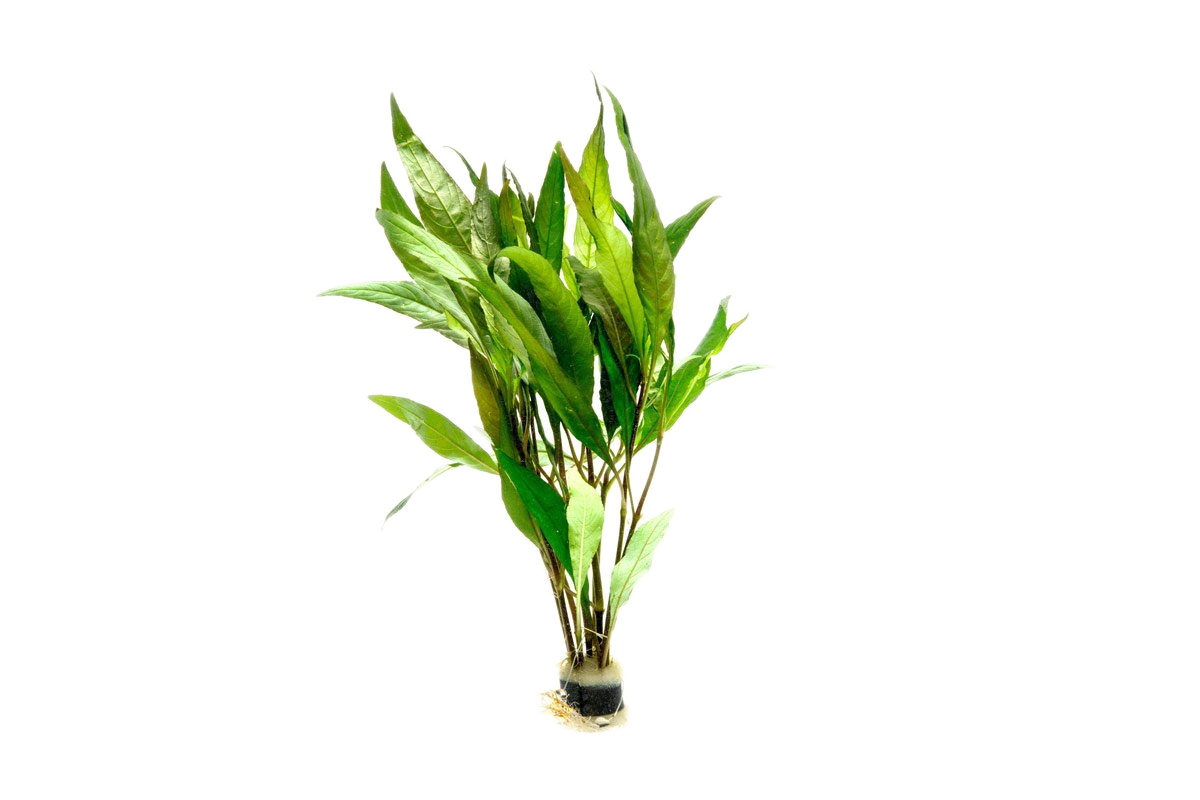
Hygrophila angustifolia, aka Willow Hygro, is a fast-growing, adaptable aquatic stem plant native to tropical wetlands and riverbanks of Southeast Asia. Named for its long, narrow, willow-like leaves, it is an ideal background filler or midground hedge and a natural filter, absorbing excess nitrates and phosphates.
Quick facts
Identity
- Also known as
- Willow Hygro; Red Willow Hygrophila
- Synonyms
- Hygrophila corymbosa 'Angustifolia Rubra'
- Environment
- Freshwater
- Native to
- Southeast Asia, India, Sri Lanka
- Habitat
- Tropical wetlands, marshes, and slow-moving riverbanks, growing partially emersed along muddy banks
- Sourcing
- Aquacultured
- Conservation
- Not Evaluated
Care
- Care level
- Easy
- Growth form
- Stem
- Max height
- 6 – 18 in (15 – 46 cm)
- Spread
- 6 in (15 cm)
- Growth rate
- Fast
- Placement
- Midground, Background
Water
- Temperature
- 72 – 82 °F (22 – 28 °C)
- pH
- 6.0 – 7.5
- GH
- 4 – 18 dGH
- dKH
- 2 – 12 dKH
- PAR
- 50 – 100 PAR
- Flow
- Moderate
- Light
- Medium
- CO₂
- Beneficial
Planting
- Substrate
- Nutrient-rich preferred
- Feeds from
- Both
- Fertilizer needs
- Medium
- Colors
- Green, Red, Brown
Feeding & breeding
- Propagation
- Cuttings
Something wrong or missing? Submit a correction
Care guide
Overview
Narrow, willow-shaped leaves take on a copper-red hue under moderate to high light, fading to olive-green in dimmer setups. This fast-growing background stem plant forms dense hedges when trimmed regularly and roots aggressively, so root tabs and iron-rich fertilizer help sustain its color and vigor over time.
Care
Willow hygro is an easy, forgiving stem plant that adapts to a wide range of water conditions and lighting setups. It grows tall quickly and is best reserved for the back of the tank where its narrow, willow-like leaves can fan out without shading shorter plants. Under moderate to high light the foliage develops a reddish-copper cast, while lower light keeps growth more olive-green; regular trimming every few weeks keeps the stems dense rather than leggy.
Planting & trimming
Plant individual stems directly into the substrate, spacing them a couple of inches apart to allow the dense root network room to establish. Because it is usually grown emersed for sale, expect some initial melt or leaf drop as it transitions to submersed growth over a few weeks. Trim the tops as the plant reaches the desired height and replant the cuttings to create denser background hedges.
Fertilizing
Root tabs pushed into the substrate near the base support the extensive, aggressive root system this plant develops once established. Regular dosing of a liquid fertilizer containing iron and micronutrients helps maintain the reddish coloration in the upper leaves. Pale or yellowing new growth usually signals a lack of iron or nitrogen, while stunted tips point to insufficient CO2 or overall nutrient levels.
Propagation
Propagation is done by cutting healthy sections of stem and replanting them directly into the substrate. Cuttings root within three to five days under good conditions, making this one of the easier stem plants to multiply for filling out a layout.
Problems
Lower leaves can drop or become shaded and decay if the plant is not trimmed regularly, especially under strong light where the canopy thickens quickly. Poor CO2 or nutrient supply can cause slowed growth and pale coloration, while algae may colonize older, slower-growing leaves in low-flow areas. New submersed growth often looks noticeably different from the emersed form the plant is shipped in, and this is normal rather than a health problem.
Sources
More Stem plants
Something wrong or missing? Submit a correction
In the community
Popular tanks using Hygrophila Angustifolia
No public tanks are showcasing Hygrophila Angustifolia yet.