
Aquatic Plant
Heteranthera Zosterifolia
Heteranthera zosterifoliaPontederiaceaeStem plants
Price: $4.99 USD
Add from My tanks →1 photos
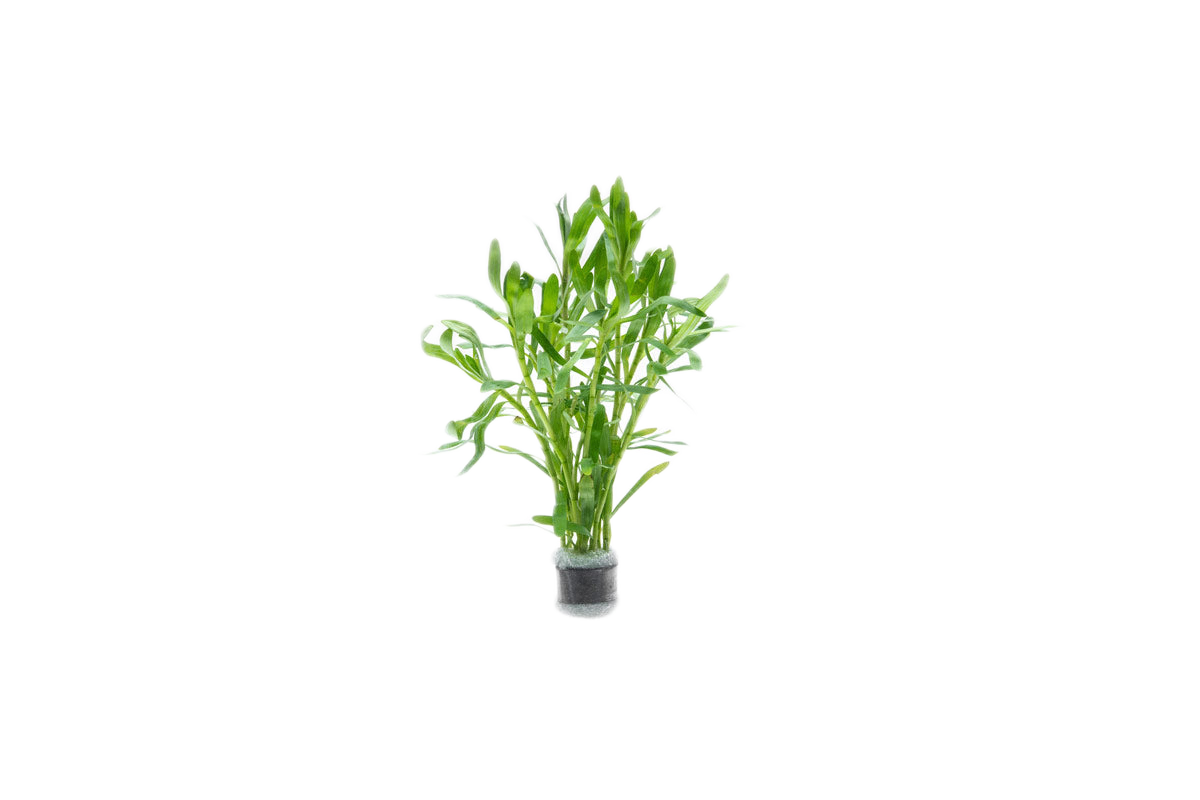
Heteranthera zosterifolia, known as Stargrass, is a popular fast-growing aquatic stem plant native to the tropical marshes, ponds, and slow-moving streams of Brazil and South America. Named for its bright green, star-like leaf whorls radiating from central stems, it brings soft texture and dynamic visual energy; easy for beginners, adaptable without CO2.
Quick facts
Identity
- Also known as
- Stargrass; Star grass
- Environment
- Freshwater
- Native to
- Brazil, Argentina, Amazon basin, South America
- Habitat
- Slow-moving streams, flooded ditches, muddy swamps, and stagnant ponds in tropical South America, often seasonally transitioning between submerged and emersed growth.
- Sourcing
- Aquacultured
- Conservation
- Not Evaluated
Care
- Care level
- Easy
- Growth form
- Stem
- Max height
- 4 – 16 in (10 – 41 cm)
- Spread
- 6 in (15 cm)
- Growth rate
- Fast
- Placement
- Midground, Background
Water
- Temperature
- 68 – 82 °F (20 – 28 °C)
- pH
- 6.0 – 7.5
- GH
- 3 – 15 dGH
- PAR
- 40 – 80 PAR
- Flow
- Moderate
- Light
- Medium
- CO₂
- Beneficial
Planting
- Substrate
- Nutrient-rich preferred
- Feeds from
- Both
- Fertilizer needs
- High
- Colors
- Green
Feeding & breeding
- Propagation
- Cuttings
Something wrong or missing? Submit a correction
Care guide
Overview
Reaching up to 16 inches tall with fine stems spreading around 6 inches, Stargrass grows quickly under medium to strong light, sending up narrow leaves whorled into star-shaped clusters at each tip. It roots easily from cuttings and serves as a reliable nutrient indicator, paling when nitrate runs low. Regular trimming keeps stems dense rather than leggy and stretched.
Care
Stargrass is an upright stem plant with narrow leaves arranged in whorls that fan out into a star pattern at the growing tip. It adapts to a range of light levels but stays compact and full-colored only under medium to strong lighting, stretching and thinning out with visible gaps between nodes when kept too dim. CO2 injection is not strictly required but noticeably improves density and leaf size, and the stems benefit from regular pruning to prevent them from reaching the surface and shading out neighboring plants.
Planting & trimming
Plant stem cuttings a couple of centimeters apart directly into the substrate, burying the lower nodes where adventitious roots typically form. Trim the tops regularly once stems approach the surface, replanting the cut sections to thicken and fill out the group. It can also be grown emersed in paludariums, where it may produce small blue flowers rarely seen in fully submerged setups.
Fertilizing
This species feeds heavily from the water column and is considered a useful indicator plant for nutrient levels. Insufficient nitrate causes the leaves to turn pale or transparent before they die back, while a lack of phosphate dulls the bright green coloration to a darker shade. A steady dosing routine of liquid fertilizer, including iron and trace elements, keeps growth dense and the foliage a healthy color, while root tabs in the substrate provide supplemental support for the fine root system.
Propagation
Propagation is done through stem cuttings, trimming a healthy shoot, removing the lower leaves, and replanting it into the substrate where it roots quickly. Accidental breakages from handling can also be replanted successfully since the stems root readily from nodes. Regular trimming of the mother plants provides a continuous supply of cuttings for expanding the group.
Problems
Etiolation is the most common issue, showing up as elongated internodes, leggy stems, and dropped lower leaves when light is inadequate. Nutrient deficiencies quickly show as pale, transparent, or blackened foliage, particularly at the base of older stems. The brittle stems snap easily during handling or maintenance, though broken pieces root readily when replanted.
Sources
More Stem plants
Something wrong or missing? Submit a correction
In the community
Popular tanks using Heteranthera Zosterifolia
No public tanks are showcasing Heteranthera Zosterifolia yet.