
Aquatic Plant
Hemianthus Micranthemoides (Pearl Weed)
Hemianthus micranthemoidesPlantaginaceaeStem plants
Price: $23.97 USD
Add from My tanks →1 photos
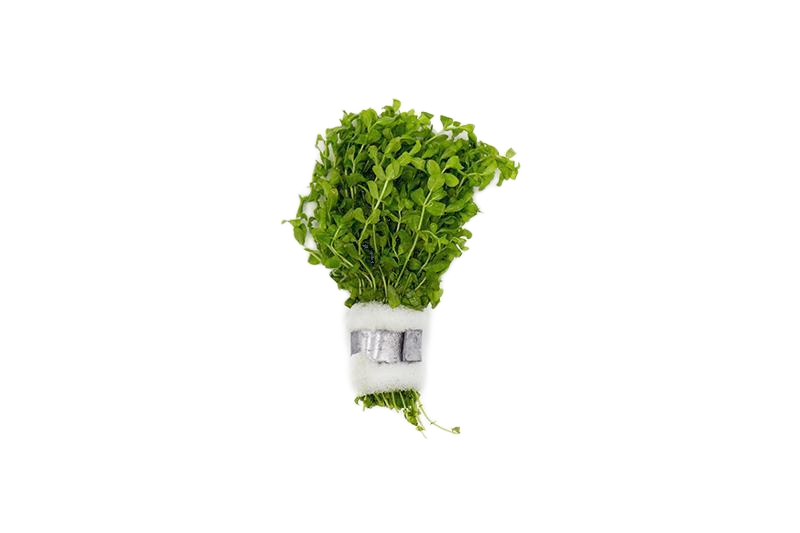
Pearl Weed (Hemianthus micranthemoides), also known as Pearl Grass, is a versatile bright green stem plant favored for exceptional adaptability. Depending on pruning, it can serve as a dense foreground carpet, bushy midground accent, or lush background group; under bright light with frequent trimming it creeps horizontally, offering a low-maintenance carpet alternative.
Quick facts
Identity
- Also known as
- Baby Tears; Pearl Grass; Pearl Weed
- Synonyms
- Hemianthus glomeratus; Micranthemum micranthemoides
- Environment
- Freshwater
- Native to
- United States (Florida, Mid-Atlantic region)
- Habitat
- Shallow wetlands, small stagnant pools, and slow-moving freshwater bodies, often forming dense creeping mats
- Sourcing
- Aquacultured
- Conservation
- Not Evaluated
Care
- Care level
- Easy
- Growth form
- Stem
- Max height
- 2 – 8 in (5.1 – 20 cm)
- Spread
- 6 in (15 cm)
- Growth rate
- Fast
- Placement
- Foreground, Midground, Background, Carpet
Water
- Temperature
- 64 – 82 °F (18 – 28 °C)
- pH
- 6.0 – 7.5
- GH
- 2 – 15 dGH
- dKH
- 0 – 15 dKH
- PAR
- 35 – 50 PAR
- Flow
- Moderate
- Light
- Medium
- CO₂
- Beneficial
Planting
- Substrate
- Any
- Feeds from
- Both
- Fertilizer needs
- Medium
- Colors
- Green
Feeding & breeding
- Propagation
- Cuttings, Plantlets
Something wrong or missing? Submit a correction
Care guide
Overview
Wetlands and slow-moving streams of Florida and the Mid-Atlantic are the wild source of this small-leaved stem plant, now grown commercially for aquariums. Fine bright green leaves grow upright when lightly pruned or creep into a dense mat under strong light and regular trimming, making it equally suited to foreground carpets or bushier midground clumps. Easy care and fast growth mean frequent maintenance is needed to prevent it from overtaking neighboring plants.
Care
Pearl Weed adapts to a wide range of setups, growing upright in low light or spreading into a dense creeping mat when kept under stronger light with frequent trimming. It tolerates a broad temperature and pH range, making it forgiving for beginners, though its fast growth means it needs regular pruning to avoid shading out neighboring plants. CO2 injection is not mandatory but noticeably improves density and coloration.
Planting & trimming
Plant small stem cuttings directly into the substrate in tight groups so they knit together into a mat over time, taking care not to bury too much of the lower stem. Trim tops regularly to encourage lateral branching and denser, lower growth, replanting healthy cuttings elsewhere in the layout. It can also be tied or wedged onto driftwood or hardscape as an epiphytic accent.
Fertilizing
A liquid fertilizer supplying nitrate, phosphate, and iron supports steady growth since the plant feeds through both leaves and roots. Root tabs placed beneath the stems help in nutrient-poor substrates, particularly for the developing root system. Yellowing or pale new growth usually points to iron or micronutrient deficiency rather than disease, and can be corrected with more consistent dosing.
Propagation
Propagation is simply done by cutting the stem tops and replanting them in the substrate, where they root quickly under stable conditions. Side shoots that form along mature stems can also be separated and replanted. Frequent trimming both propagates the plant and keeps the display looking dense and tidy.
Problems
New plantings often melt back briefly after the transition from emersed nursery growth to fully submersed conditions, which is normal and followed by fresh growth if parameters stay stable. Without adequate CO2, leaves can develop a greyish-white lime crust from biogenic decalcification, which is cosmetic rather than harmful. Algae film on the leaves usually signals excess light or insufficient nutrient uptake rather than a fault with the plant itself.
Sources
More Stem plants
Something wrong or missing? Submit a correction
In the community
Popular tanks using Hemianthus Micranthemoides (Pearl Weed)
No public tanks are showcasing Hemianthus Micranthemoides (Pearl Weed) yet.