
LPS Corals
Gold Donut Coral (Large)
Acanthophyllia deshayesianaLobophylliidaeLPS corals
Price: $133.95 USD
Add from My tanks →1 photos
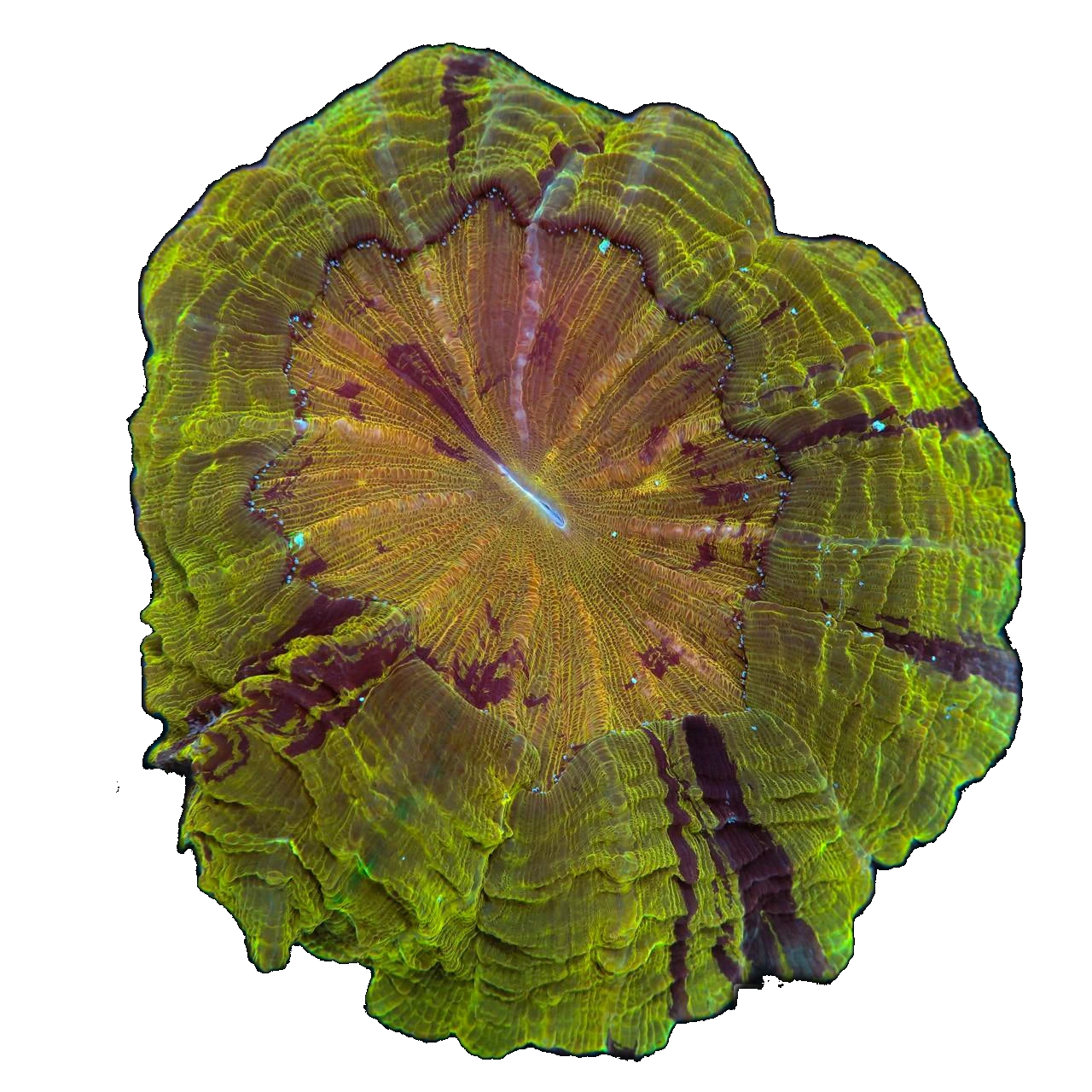
The Donut Coral (Acanthophyllia deshayesiana), also called the Button Coral, is a rounded meaty LPS hard coral with a crater-like central depression that can inflate to twice its size during the day. It is semi-aggressive and can sting when touched at its center, needs low water flow, moderate lighting, supplemental calcium and trace elements, level placement to avoid flesh tears, and benefits from occasional broadcast feeding with micro-plankton.
Quick facts
Handling caution: Sharp spiked skeleton beneath the flesh can cut bare hands or the coral's own tissue if mishandled
Identity
- Also known as
- Button Coral
- Synonyms
- Pectinia deshayesiana
- Environment
- Saltwater
- Native to
- Australia, Indonesia
- Habitat
- Deep inter-reef sand and rubble zones where a single free-living polyp rests loose on soft substrate rather than cementing to rock
- Sourcing
- Wild-caught
- Conservation
- Not Evaluated
Care
- Care level
- Moderate
- Coral type
- LPS
- Temperament
- Semi-Aggressive
- Growth form
- Solitary
- Adult size
- 3 – 6 in (7.6 – 15 cm)
- Spread
- 8 in (20 cm)
- Growth rate
- Slow
- Placement
- Sand bed
Water
- Temperature
- 75 – 81 °F (24 – 27 °C)
- pH
- 8.1 – 8.4
- dKH
- 8 – 12 dKH
- Salinity
- 1.023 – 1.025 SG
- PAR
- 30 – 100 PAR
- Flow
- Low
- Light
- Low
Reef care
- Nutrient preference
- Medium
- Alk/Ca uptake
- Medium
- Target feeding
- Beneficial
- Give it room
- 4 in (10 cm)
- Colors
- Multicolor
Feeding & breeding
- Diet
- Carnivore
- Foods
- Frozen, Pellets, Freeze-dried, Coral food, Zooplankton
Something wrong or missing? Submit a correction
Care guide
Overview
Reaching roughly 3 to 6 inches across, this large specimen carries a gold-toned oral disc surrounding the deep central crater typical of the species. Sold as a single free-living polyp rather than a mounted frag, it should rest loose on sand with generous clearance from tankmates. Expect slow growth, nocturnal feeding tentacles, and a preference for dim, low-flow placement.
Care
This solitary meat coral does best resting directly on a soft sand bed rather than wedged against rock, since its underlying skeleton is sharply spiked and can tear through the fleshy tissue if it settles against something hard. Low, gentle and ideally variable flow suits it better than steady laminar current, which can expose the skeleton over time. Lighting should stay on the dim side, as excess intensity tends to cause bleaching or tissue recession rather than better color. Give it generous clearance from neighbors, because the polyp can inflate to several times its resting size during the day.
Placement & acclimation
Acclimate to light gradually after arrival, starting in a shaded lower position and only increasing exposure if the coral shows no stress. Set the polyp loose on a soft sand bed rather than mounting or gluing it, and choose a spot clear of sharp rubble or rockwork it could settle against. When repositioning, scoop it up along with some sand underneath instead of pulling it directly to avoid tearing the flesh on its own skeleton.
Feeding
Acanthophyllia feeds eagerly and will wrap its oral disc around almost any meaty item that fits, including mysis, krill, silversides, and LPS pellets. Target feeding once or twice a week noticeably speeds growth and improves coloration compared to relying on photosynthesis alone. Turning off flow briefly during feeding helps the coral hold food rather than having it swept away before it can close over the item.
Neighbors
Feeder tentacles extend mostly at night and can deliver a mild sting to corals that drift too close, so leave a few inches of open space around the polyp. It is generally considered peaceful to only mildly aggressive and pairs fine with typical reef fish and invertebrates. Because it can double in size when inflated, avoid placing faster growing or encroaching corals within its expansion radius.
Fragging
Acanthophyllia is a single free-living polyp and is not fragged in the hobby, so essentially all specimens in the trade are wild collected rather than propagated.
Pests & problems
Tissue recession or bleaching usually points to too much light or unstable alkalinity and calcium, both of which this species is somewhat sensitive to compared with tougher LPS. Strong or constant unidirectional flow can gradually expose the skeleton at high points on the polyp, so watch for thinning flesh over ridges. Rough handling or placement against rock is the most common cause of physical tears, which can take weeks to heal.
Sources
More LPS corals
Something wrong or missing? Submit a correction
In the community
Popular tanks using Gold Donut Coral (Large)
No public tanks are showcasing Gold Donut Coral (Large) yet.