
Aquatic Plant
Egeria Densa
Egeria densaHydrocharitaceaeStem plants
Price: $20.97 USD
Add from My tanks →1 photos
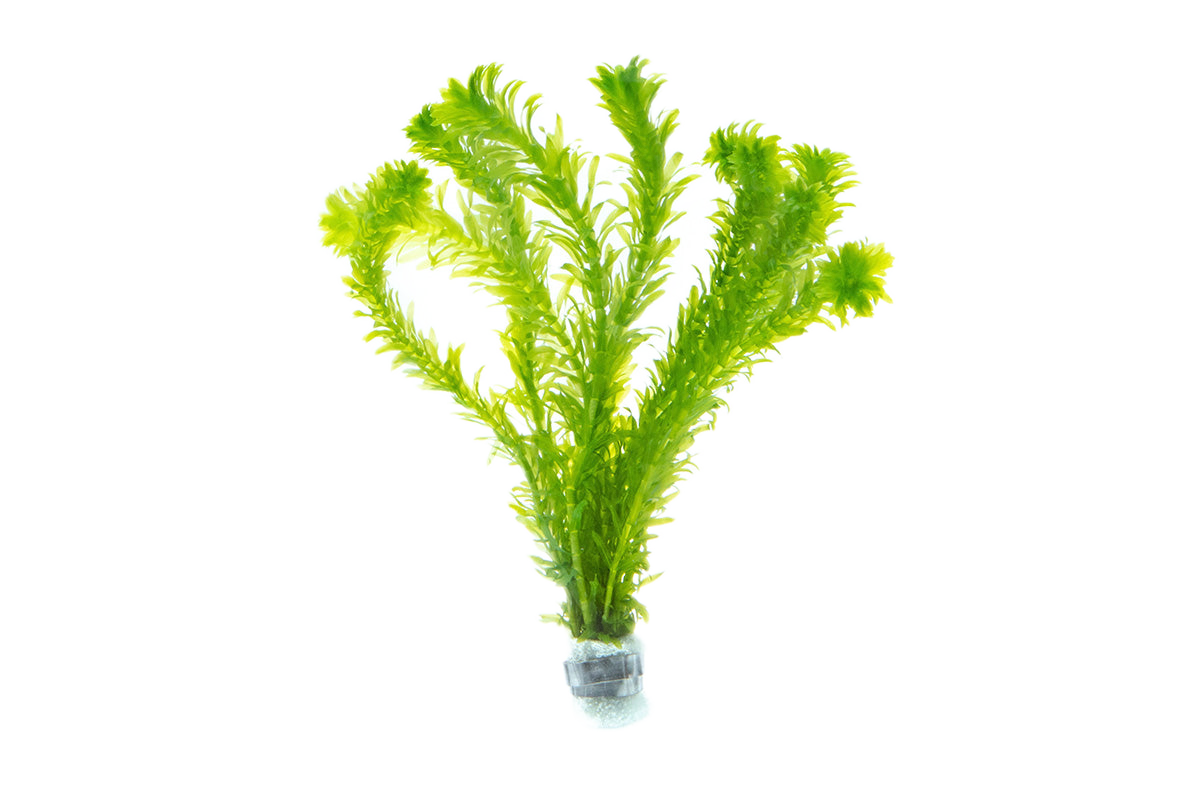
Egeria Densa (Anacharis) is one of the easiest, fast-growing green stem plants, ideal for beginners and low-tech aquariums, with dense whorls of vibrant green leaves on flexible upright stems. It adapts to a wide range of water parameters, can be anchored in substrate or left floating to absorb nitrates and suppress algae, and needs only low to medium light.
Quick facts
Identity
- Also known as
- Anacharis; Brazilian waterweed; Brazilian elodea; Large-flowered waterweed; Oxygen weed
- Synonyms
- Elodea densa; Anacharis densa; Philotria densa; Udora densa
- Environment
- Freshwater
- Native to
- Brazil, Argentina, Uruguay, Chile
- Habitat
- Submerged in slow-moving rivers, lakes, and ponds in warm temperate South America, rooting in mud and growing toward the surface
- Sourcing
- Captive-bred
- Conservation
- Not Evaluated
Care
- Care level
- Easy
- Growth form
- Stem
- Max height
- 6 – 40 in (15 – 102 cm)
- Spread
- 12 in (30 cm)
- Growth rate
- Fast
- Placement
- Background, Floating
Water
- Temperature
- 60 – 82 °F (16 – 28 °C)
- pH
- 6.0 – 7.5
- GH
- 3 – 15 dGH
- Flow
- Low-Moderate
- Light
- Low
- CO₂
- Not needed
Planting
- Substrate
- Any
- Feeds from
- Both
- Fertilizer needs
- Low
- Colors
- Green
Feeding & breeding
- Propagation
- Cuttings
Something wrong or missing? Submit a correction
Care guide
Overview
South American rivers and ponds from Brazil to Argentina and Chile are the origin of this fast-growing stem plant, long naturalized in temperate waters worldwide. Whorls of narrow green leaves crowd brittle upright stems that root in substrate or simply float. It suits low-tech setups, tolerating wide swings in hardness and light while pulling nutrients straight from the water.
Care
Anacharis is one of the more forgiving stem plants and tolerates a broad range of temperatures, hardness, and lighting, making it a common choice for new fishkeepers and pond owners alike. It grows readily under low to moderate light without added CO2, though more light produces denser, less leggy growth. Because stems are brittle and snap easily when handled, it is best planted or repositioned with gentle movements rather than firm tugging.
Planting & trimming
Strip the leaves from the bottom inch or two of each stem and bury that bare section about an inch into the substrate, spacing stems an inch or two apart so the bases do not shade each other and rot. A planting weight or tweezers helps hold the buoyant stems down until roots form, which usually takes one to two weeks. The plant can also simply be left floating on the surface, where it grows faster but will shade anything planted beneath it.
Fertilizing
Fertilizer is optional since the plant draws much of what it needs directly from the water column, but a basic liquid all-in-one fertilizer helps growth in lean, low-nutrient tanks. Root tabs are not required given its column feeding habit, though a nutrient-rich substrate does no harm. Pale, thin growth under otherwise adequate light usually points to a lack of dissolved nutrients rather than a lighting problem.
Propagation
Propagation is done entirely by stem cuttings: cut a healthy top section a few inches long, remove the lowest leaves, and either replant the cutting or let it float until it roots. Every trim of an established plant effectively produces new starts, and cuttings root readily with no special treatment.
Problems
Sudden transfers between very soft and very hard water can trigger melt or leaf drop, though the reverse direction (hard to soft) tends to be tolerated better. Stems left untrimmed will reach the surface and spread into a shading canopy, so dense mats should be thinned periodically to keep light reaching plants below. Yellowing or thinning tendrils under stable conditions often signal insufficient nutrients rather than disease.
Sources
More Stem plants
Something wrong or missing? Submit a correction
In the community
Popular tanks using Egeria Densa
No public tanks are showcasing Egeria Densa yet.