
Coral
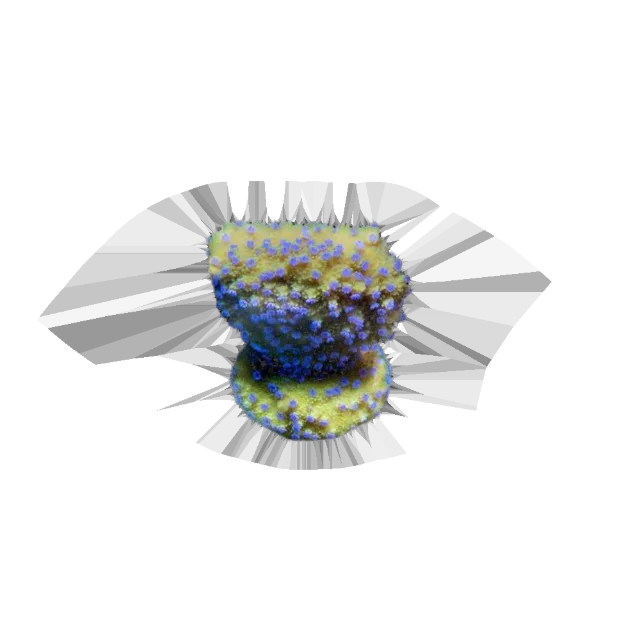
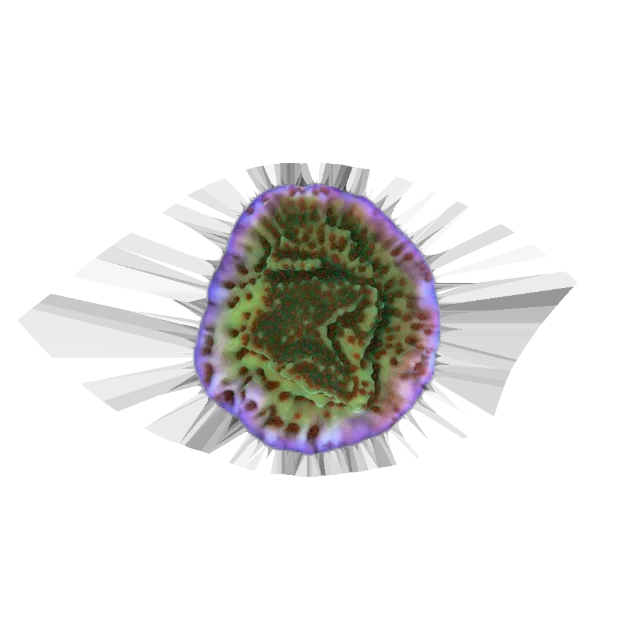
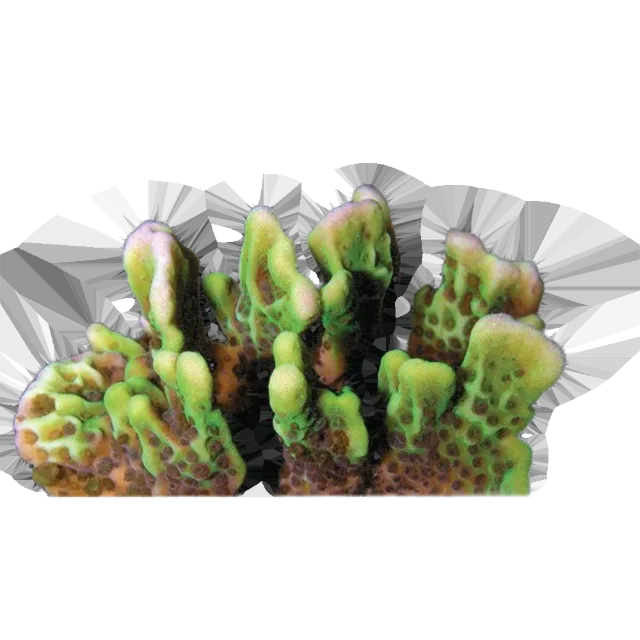
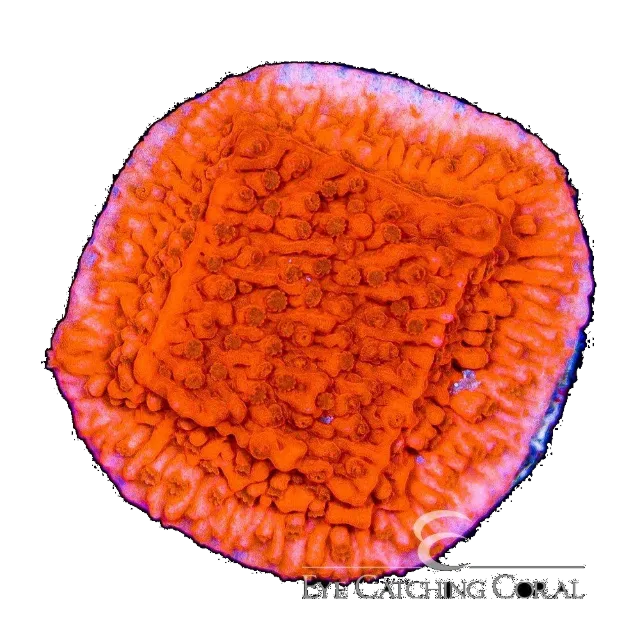
ECC Sunset Montipora
Montipora sp.AcroporidaeMontipora corals
Add from My tanks →1 photos
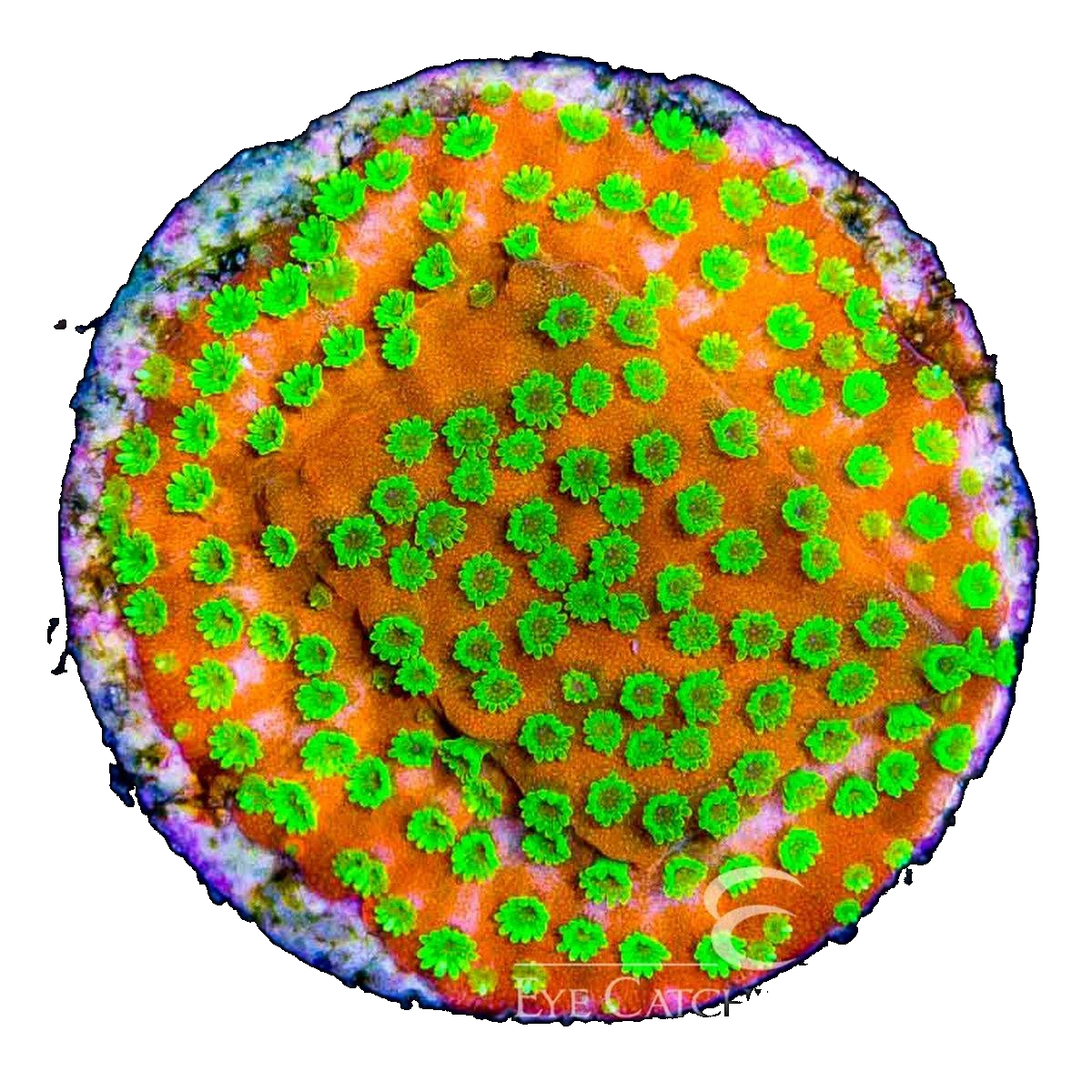
The ECC Sunset Montipora is a classic encrusting SPS coral that grows well in stable reef systems, ideal for covering rockwork and filling flat or awkward spaces in the aquascape. It does best in moderate lighting (150-250 PAR) and flow; give it room to expand so it does not overtake more delicate neighbors.
Quick facts
Identity
- Also known as
- Velvet coral; Encrusting montipora; Vice coral
- Environment
- Saltwater
- Native to
- Indo-Pacific
- Habitat
- Shallow reef flats and slopes with strong water movement and bright light, where colonies encrust, plate, or branch over available substrate
- Sourcing
- Aquacultured
- Conservation
- Not Evaluated
Care
- Care level
- Easy
- Coral type
- SPS
- Temperament
- Peaceful
- Growth form
- Encrusting
- Adult size
- 1 – 12 in (2.5 – 30 cm)
- Spread
- 12 in (30 cm)
- Growth rate
- Fast
- Placement
- Low, Middle, High
Water
- Temperature
- 76 – 80 °F (24 – 27 °C)
- pH
- 8.1 – 8.4
- dKH
- 8 – 10 dKH
- Salinity
- 1.025 – 1.026 SG
- PAR
- 150 – 300 PAR
- Flow
- Moderate-High
- Light
- Medium
Reef care
- Nutrient preference
- Low
- Alk/Ca uptake
- High
- Target feeding
- Beneficial
- Give it room
- 3 in (7.6 cm)
- Colors
- Green, Red, Orange, Yellow, Purple, Blue, Teal, Brown, Multicolor
Feeding & breeding
- Diet
- Photosynthetic
- Foods
- Frozen, Coral food, Zooplankton, Phytoplankton
- Propagation
- Fragging
Something wrong or missing? Submit a correction
Care guide
Overview
ECC Sunset Montipora is an encrusting Montipora sp. colony suited to filling flat or irregular rockwork in a stable reef system. It grows steadily under moderate lighting and flow, and needs open space around it so its spread does not shade or overtake slower neighbors.
Care
Montipora is among the more forgiving small-polyp stony corals, tolerating a wider range of light and flow than Acropora while still rewarding stable, mature reef systems with steady growth and strong coloration. New frags should be acclimated to light gradually over a couple of weeks, since a sudden jump in intensity causes bleaching that starts at the growing edge before spreading across the colony. Moderate to high flow across the surface helps prevent detritus and film algae from settling on encrusting and plating forms, and leaving room around the colony avoids stinging conflicts with neighboring corals as it spreads.
Placement & acclimation
Mount frags with cyanoacrylate gel glue or reef putty onto exposed rock or a dedicated frag plug, positioning the piece where it will receive direct flow and light appropriate to its growth form. Encrusting and plating varieties are often placed on a small, removable grow-out rock to keep their spread manageable and easy to relocate or frag later. New arrivals should start lower in the tank at reduced PAR and be moved upward gradually over several weeks rather than placed immediately under intense lighting.
Feeding
Most of its nutrition comes from photosynthetic zooxanthellae, so lighting quality matters more than direct feeding for day-to-day energy needs. Occasional target feeding with fine zooplankton, coral food, or amino acid supplements can boost growth rate and intensify coloration, especially in nutrient-poor systems. Feeding is a supplement rather than a requirement, and overfeeding tends to raise nutrient levels faster than it benefits the coral.
Neighbors
Montipora lacks strong sweeper tentacles or aggressive chemical defenses, so it should be kept a few inches from other stony corals to avoid being overgrown or stung by more aggressive neighbors. Soft corals such as leathers and mushrooms release chemical compounds that can irritate nearby SPS, so some distance from these is advisable. Because encrusting and plating forms spread outward over time, plan spacing with future growth in mind rather than just the frag's current footprint.
Fragging
Montipora frags easily by cutting or snapping branches, or by removing plated sections with bone cutters or a band saw, then mounting the fragments on plugs or rubble until they attach. Encrusting forms can also be propagated by cutting a piece of rock bearing live tissue, since the coral will continue spreading from any retained living edge. Growth is generally fast enough that a single healthy colony can supply repeated frags over a year without setting back the parent piece.
Pests & problems
Montipora-eating nudibranchs are a well-known and persistent pest, often arriving unnoticed on new frags and capable of stripping tissue from an entire colony before being detected. Flatworms, vermetid snails, and so-called gorilla crabs can also cause localized damage, so dipping and inspecting new colonies before introduction is standard practice. Sudden browning usually signals excess nutrients or insufficient light, while tissue paling or edge whitening points to light stress or early bleaching.
Sources
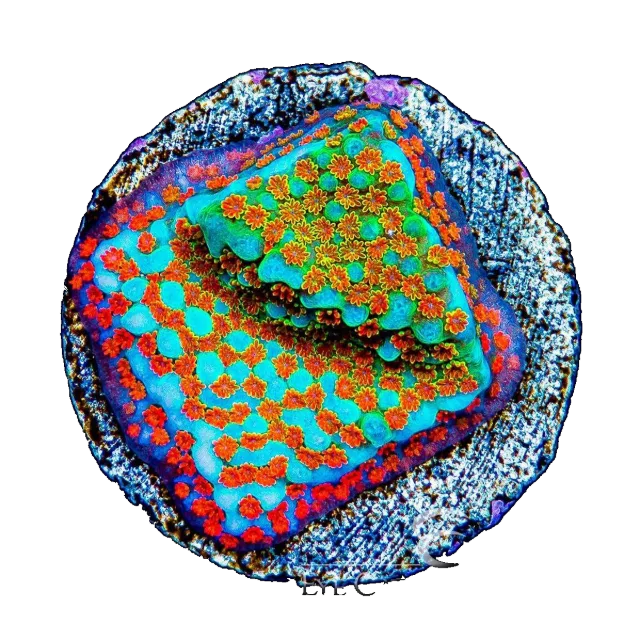
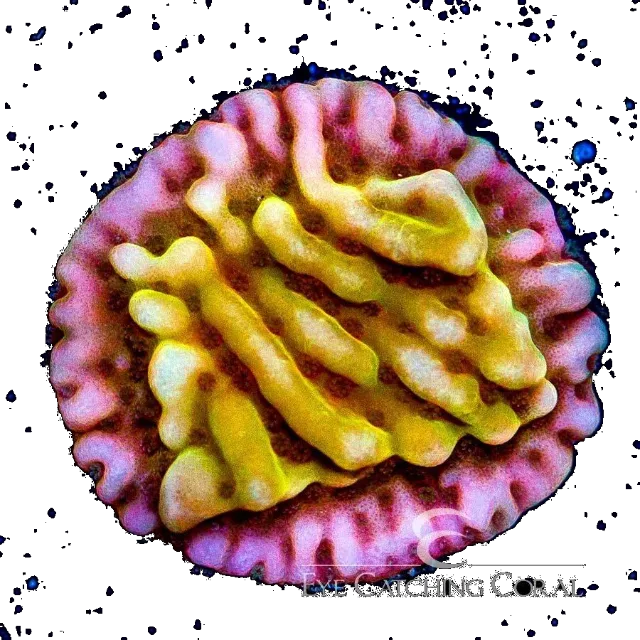
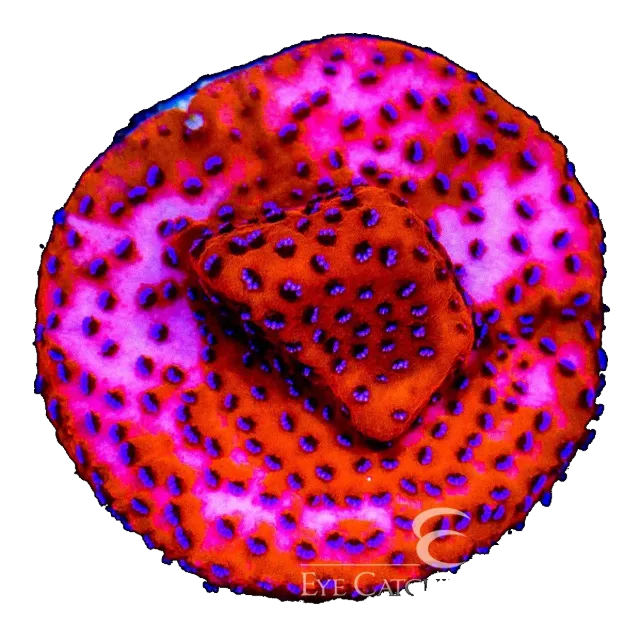
Varieties in the catalog
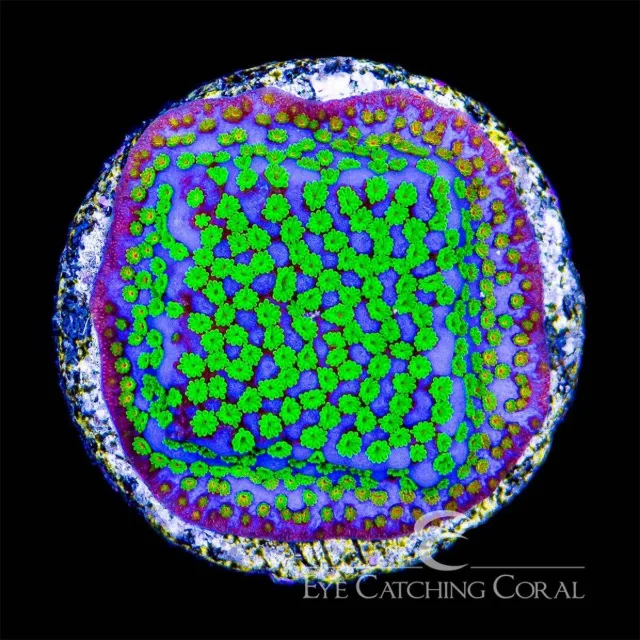
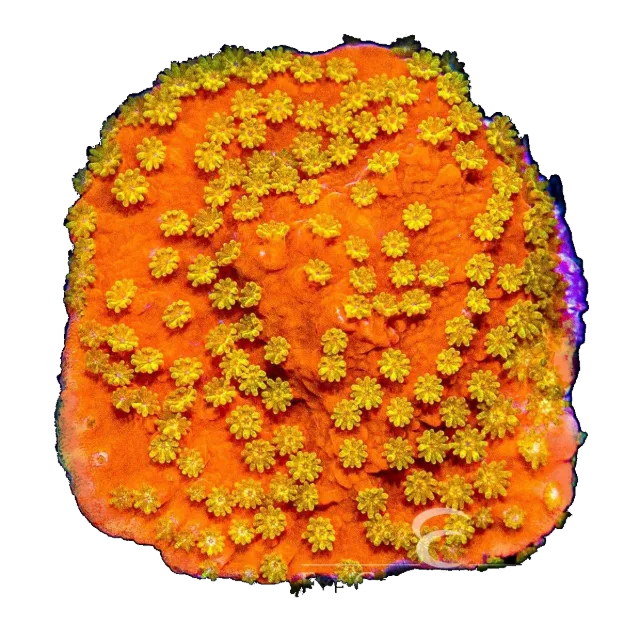
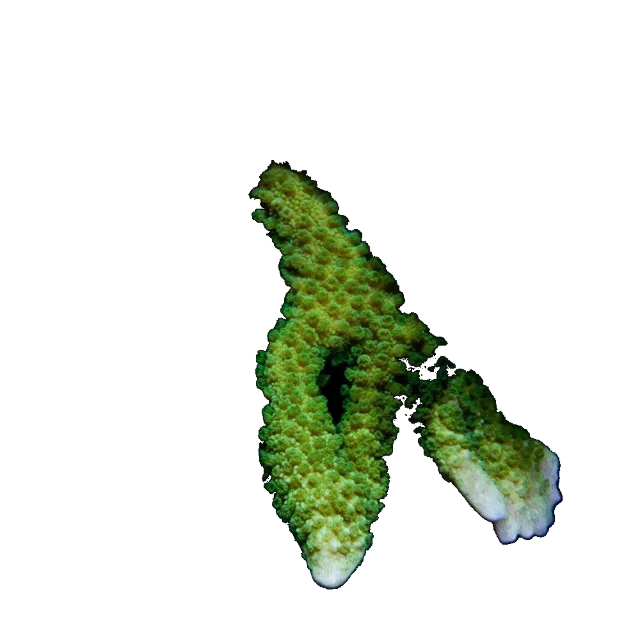
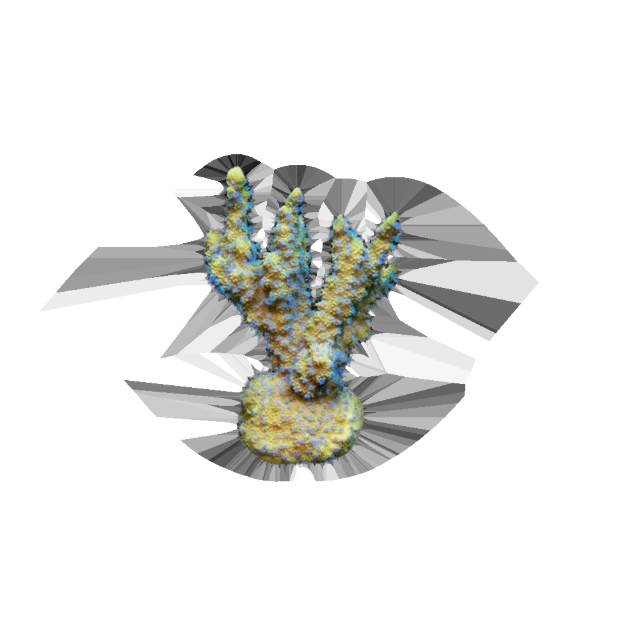
More Montipora corals
Something wrong or missing? Submit a correction
In the community
Popular tanks using ECC Sunset Montipora
No public tanks are showcasing ECC Sunset Montipora yet.