
Coral
ORA Pink Polyp Capricornis Coral
Montipora capricornisAcroporidaeMontipora corals
Add from My tanks →1 photos
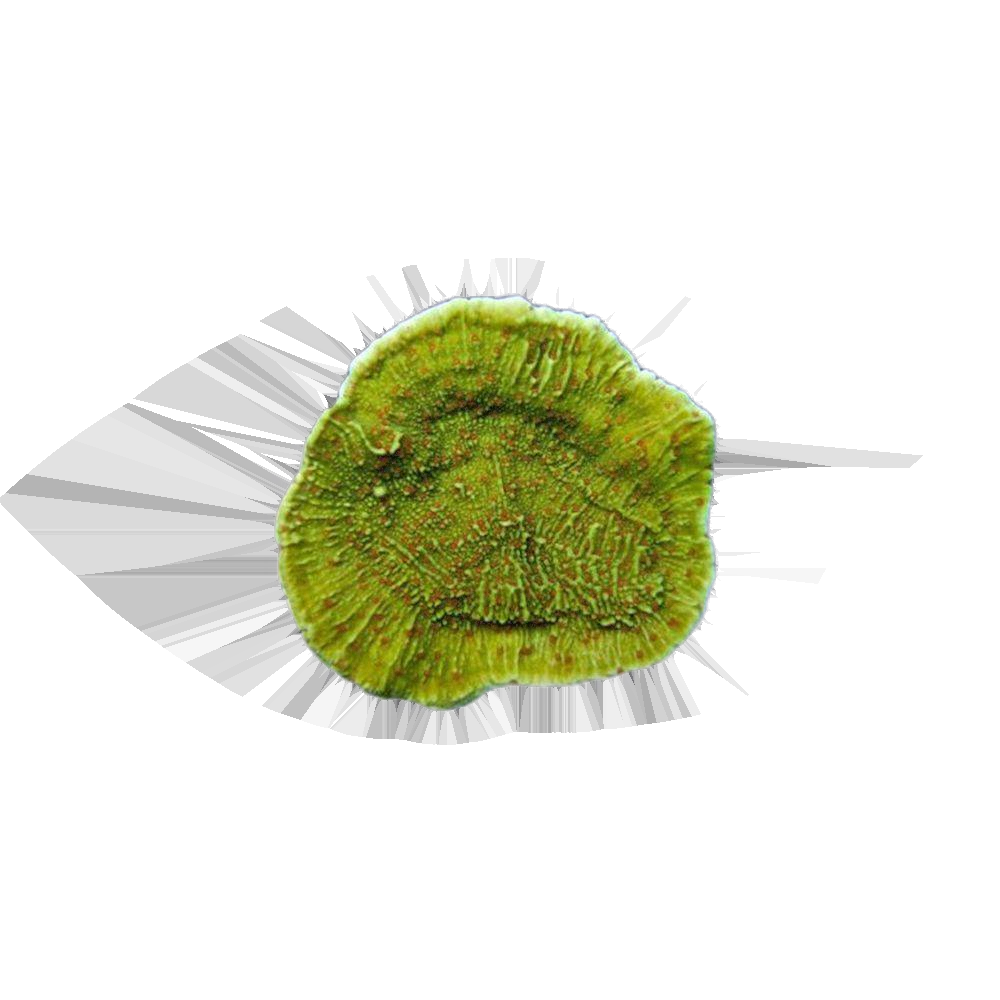
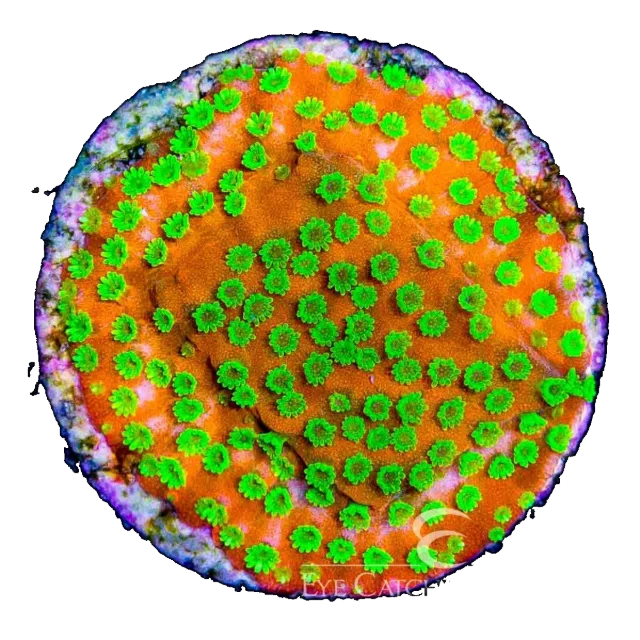
The ORA Pink Polyp Capricornis Coral is an SPS coral with a green base and dark pink polyps. It grows in flat, plate-like layers under medium lighting, grows relatively quickly, and adds solid color contrast to an SPS-dominant reef tank.
Quick facts
Identity
- Also known as
- Pink Polyp Cap Montipora; Pink Polyp Plating Montipora
- Synonyms
- Montipora tuberculosa
- Environment
- Saltwater
- Native to
- Indo-Pacific, Red Sea, Great Barrier Reef, Indonesia, Philippines
- Habitat
- Shallow reef flats, slopes, and lagoons with moderate to strong water movement and bright light
- Sourcing
- Aquacultured
- Conservation
- Not Evaluated
Care
- Care level
- Easy
- Coral type
- SPS
- Temperament
- Peaceful
- Growth form
- Plating
- Adult size
- 1 – 12 in (2.5 – 30 cm)
- Spread
- 12 in (30 cm)
- Growth rate
- Fast
- Placement
- Low, Middle
Water
- Temperature
- 76 – 80 °F (24 – 27 °C)
- pH
- 8.1 – 8.4
- dKH
- 8 – 12 dKH
- Salinity
- 1.024 – 1.026 SG
- PAR
- 150 – 250 PAR
- Flow
- Moderate-High
- Light
- Medium
Reef care
- Nutrient preference
- Medium
- Alk/Ca uptake
- Medium
- Target feeding
- Beneficial
- Give it room
- 4 in (10 cm)
- Colors
- Green, Blue, Pink, Orange, Red, Purple, Multicolor
Feeding & breeding
- Diet
- Photosynthetic
- Foods
- Coral food, Zooplankton, Phytoplankton
- Propagation
- Fragging
Something wrong or missing? Submit a correction
Care guide
Overview
A green base contrasts with dark pink polyps across each thin, overlapping plate as the colony spreads outward. Growth is quick under medium-intensity lighting, and a keeper should site fragments low with room to expand, since the flattened form is prone to shading slower corals positioned beneath it.
Care
This species forms thin, overlapping plates or shelves that expand outward over the rockwork, adding a horizontal element that contrasts with branching SPS. It tolerates a fairly wide light range but colors and growth are most consistent under medium intensity, roughly 150 to 250 PAR, with moderate to strong flow to keep detritus from settling on the flattened surfaces. New frags should be introduced to lower, shadier spots and moved upward gradually, since sudden jumps in light intensity often bleach the growing edge before the rest of the colony pales.
Placement & acclimation
Acclimate new frags slowly, starting in a low to middle position under reduced light for one to two weeks before stepping up intensity, since this species is prone to bleaching from sudden light increases. Mount plugs by wedging between rocks, gluing with epoxy, or inserting into a drilled socket, leaving space around the frag for the plate to expand outward without contacting neighboring corals.
Feeding
Most of its nutrition comes from zooxanthellae under aquarium lighting, but it also captures fine particulates and zooplankton with its polyps at night. Occasional target feeding with small-particle coral foods or phytoplankton can boost growth rate and coloration, especially in nutrient-poor systems. Stable, moderate nitrate and phosphate levels support tissue health better than starvation conditions.
Neighbors
Give this coral generous clearance from neighboring corals since its plates spread quickly and can overgrow or shade slower-growing species beneath it. It lacks strong sweeper tentacles but should still be kept apart from aggressive stinging corals such as torches or hammers that can reach over and damage its tissue. Placement low in the aquascape works well as long as nothing light-demanding is positioned directly underneath.
Fragging
Fragging is done by cutting or snapping off sections of the plate margin with bone cutters or a saw, then mounting the pieces on plugs or rubble with cyanoacrylate gel. Cut edges typically heal and begin encrusting within one to two weeks under stable, moderate lighting.
Pests & problems
Montipora-eating nudibranchs and flatworms are among the most persistent pests, often going unnoticed until a colony shows patchy tissue loss or a receding edge. Rapid loss of color to solid brown usually signals insufficient light, while a spreading white or bleached margin points to a light or flow change that was too abrupt. Dipping new frags before introduction and inspecting the underside of plates regularly help catch problems early.
Sources
Varieties in the catalog
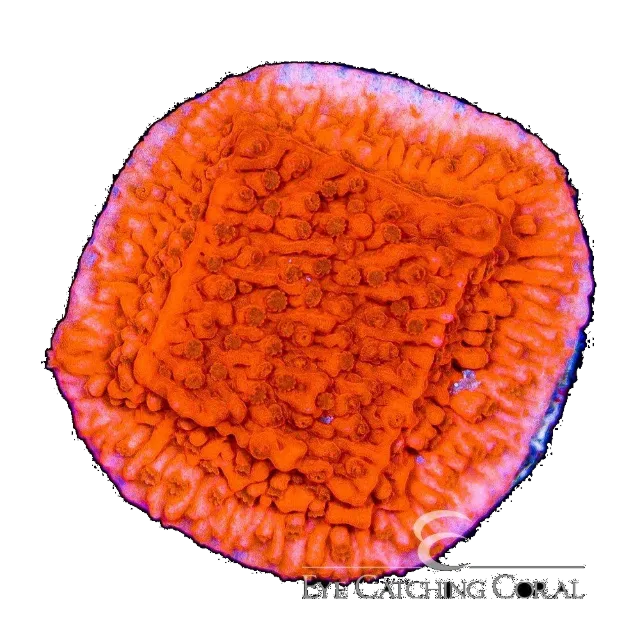
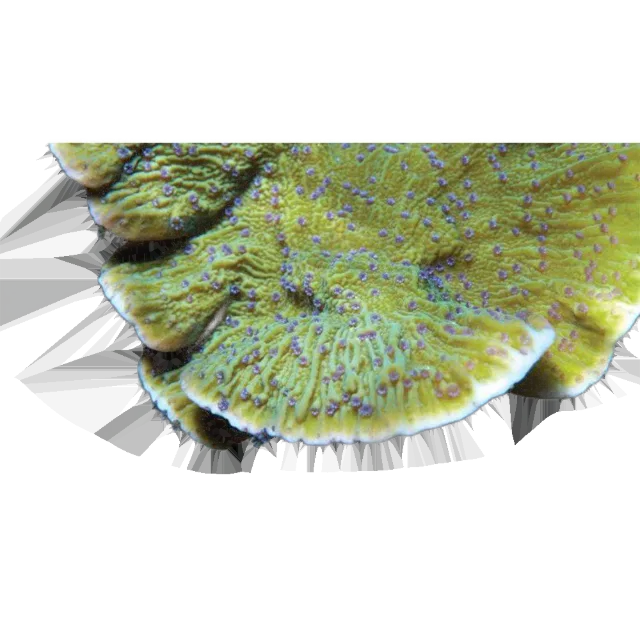
More Montipora corals
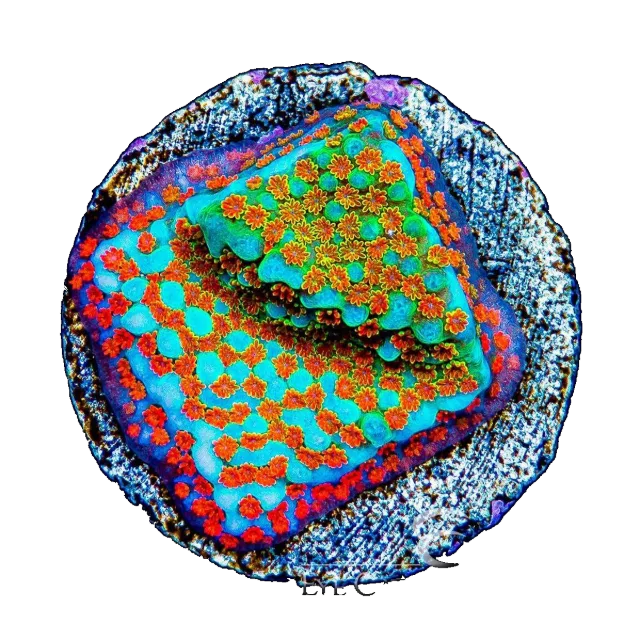
Something wrong or missing? Submit a correction
In the community
Popular tanks using ORA Pink Polyp Capricornis Coral
No public tanks are showcasing ORA Pink Polyp Capricornis Coral yet.