
Coral
ORA Confusa Montipora Coral
Montipora confusaAcroporidaeMontipora corals
Add from My tanks →1 photos
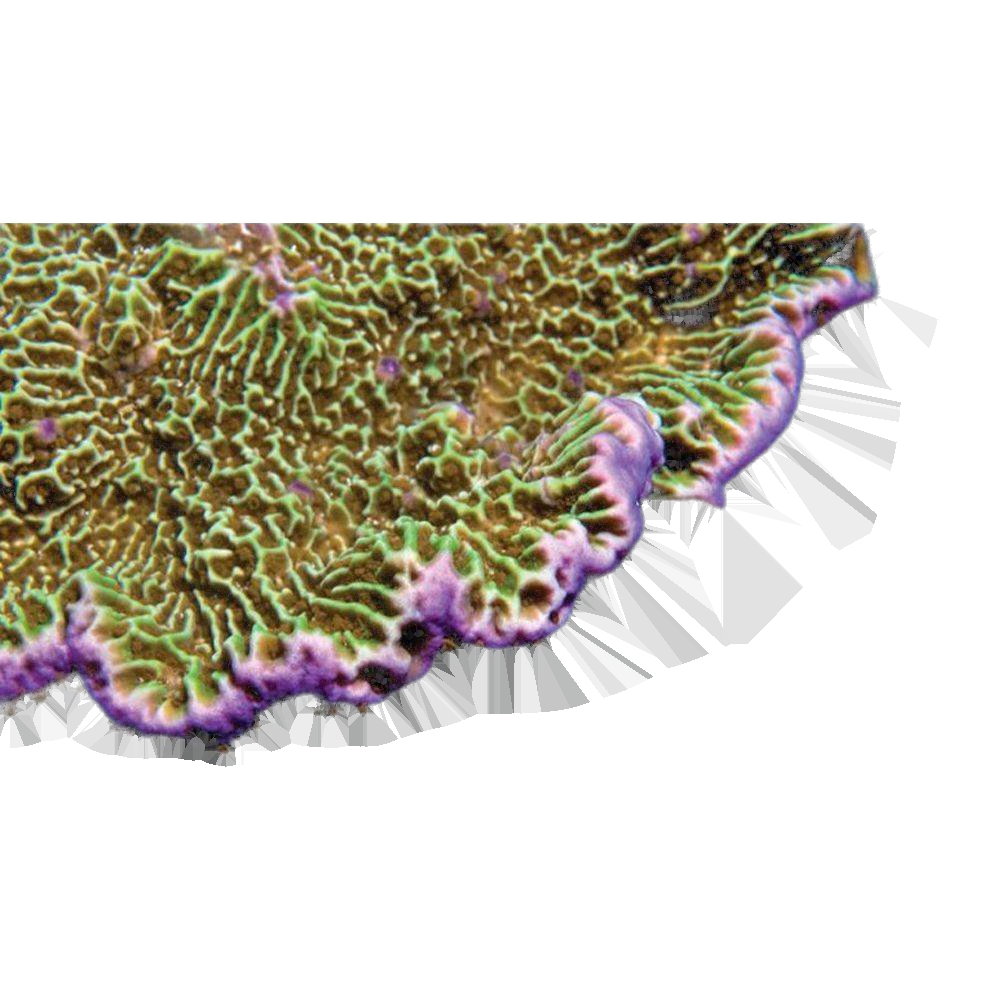
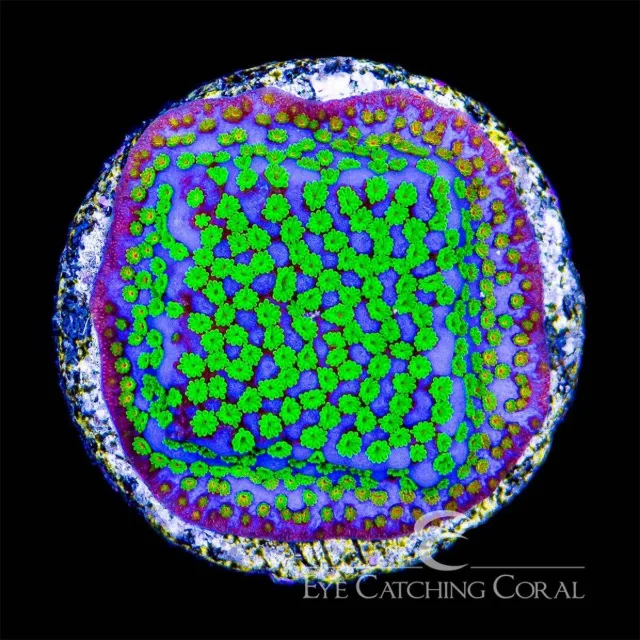
The ORA Confusa is an aquacultured plating Montipora with raised ridges across its surface, a green base with small brown polyps, and bright purple edges on new growth. It grows slowly, may occasionally form short upright branches, and shows its best color under strong lighting with medium to high flow.
Quick facts
Identity
- Also known as
- Purple Edge Montipora; Confusa Montipora; Midare-ami-me Coral
- Environment
- Saltwater
- Native to
- Indo-Pacific
- Habitat
- Shallow lagoons and reef slopes at depths of roughly 3 to 100 feet, growing as encrusting sheets or plates over rock and rubble.
- Sourcing
- Aquacultured
- Conservation
- Not Evaluated
Care
- Care level
- Moderate
- Coral type
- SPS
- Temperament
- Peaceful
- Growth form
- Plating
- Adult size
- 2 – 12 in (5.1 – 30 cm)
- Spread
- 18 in (46 cm)
- Growth rate
- Fast
- Placement
- Low, Middle
Water
- Temperature
- 75 – 81 °F (24 – 27 °C)
- pH
- 8.1 – 8.4
- dKH
- 8 – 12 dKH
- Salinity
- 1.023 – 1.025 SG
- PAR
- 150 – 300 PAR
- Flow
- Moderate
- Light
- Medium
Reef care
- Nutrient preference
- Low
- Alk/Ca uptake
- Medium
- Target feeding
- Beneficial
- Give it room
- 4 in (10 cm)
- Colors
- Green, Brown, Purple
Feeding & breeding
- Diet
- Photosynthetic
- Foods
- Coral food, Phytoplankton, Zooplankton
- Propagation
- Fragging
Something wrong or missing? Submit a correction
Care guide
Overview
A green base studded with small brown polyps carries bright purple margins along each newly encrusted ridge, deepening as the colony matures. This aquacultured plating Montipora builds irregular ridged sheets over rock, occasionally throwing up short branches, and colors up brightest under moderate to strong lighting with steady, randomized flow.
Care
This is a fast-growing plating Montipora that starts as a low encrusting mat and gradually raises irregular ridged columns as the colony matures. It tolerates a fairly wide light range but colors up best under moderate to strong lighting, so new frags should be acclimated slowly starting low in the tank before moving them toward brighter spots. Moderate, somewhat randomized flow helps keep detritus from settling in the grooves between the raised ridges. It has almost no defense against stinging neighbors, so give it clearance from more aggressive corals.
Placement & acclimation
Mount frags on a stable base rock or plug in a low to middle position with moderate light to start, then step up lighting gradually over several weeks once growth and color response are confirmed. Give the piece open space to spread outward and eventually upward, since crowded placement leads to shading and tissue dieback in the shaded interior. Acclimate new arrivals to flow and light gradually rather than placing directly under strong lighting.
Feeding
Most nutrition comes from zooxanthellae, so lighting quality matters more than direct feeding for day-to-day health. Occasional dosing of phytoplankton or fine coral foods once or twice a week can speed growth and support coloration, especially in a well-skimmed system where plankton is scarce. Target feeding is optional rather than necessary for survival.
Neighbors
Keep this coral away from aggressive stinging corals such as certain LPS and euphyllids, since it has essentially no chemical or physical defenses. As the colony spreads and throws up columns, leave extra room around it so encroaching branches don't crowd or shade slower-growing neighbors. It pairs well with other soft-touch SPS and encrusting montiporas that share similar light and flow needs.
Fragging
Frag by cutting healthy branch tips or plating edges with a coral saw or bone cutters, then mount the fragments on plugs or rubble until they encrust and attach. Encrusting base tissue can also be cut away in sheets and reattached to new rock to seed additional colonies.
Pests & problems
Montipora-eating nudibranchs and flatworms can appear seemingly overnight and strip tissue from a colony quickly, so new frags should be dipped and inspected closely before introduction. Rapid tissue necrosis can set in within days if alkalinity or calcium swings sharply, making stable dosing more important than chasing exact target numbers. Bleaching at the tips or pale edges usually signals too much light too soon, while an overall brown cast points to insufficient light.
Sources
More Montipora corals
Something wrong or missing? Submit a correction
In the community
Popular tanks using ORA Confusa Montipora Coral
No public tanks are showcasing ORA Confusa Montipora Coral yet.