
Coral
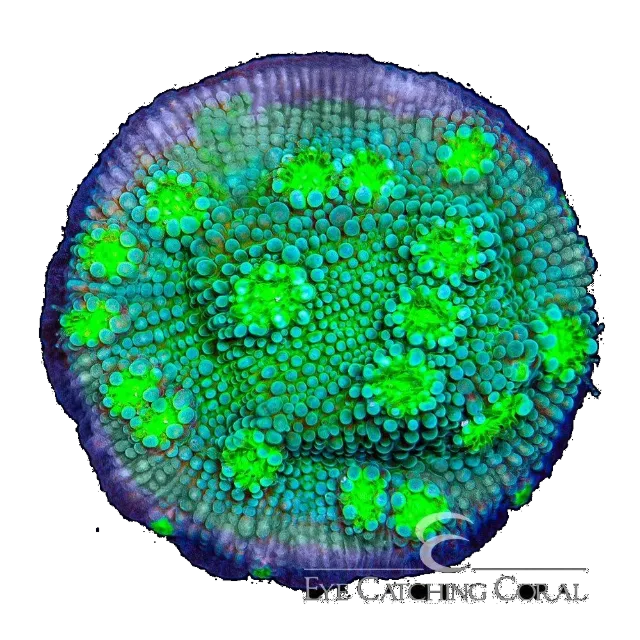
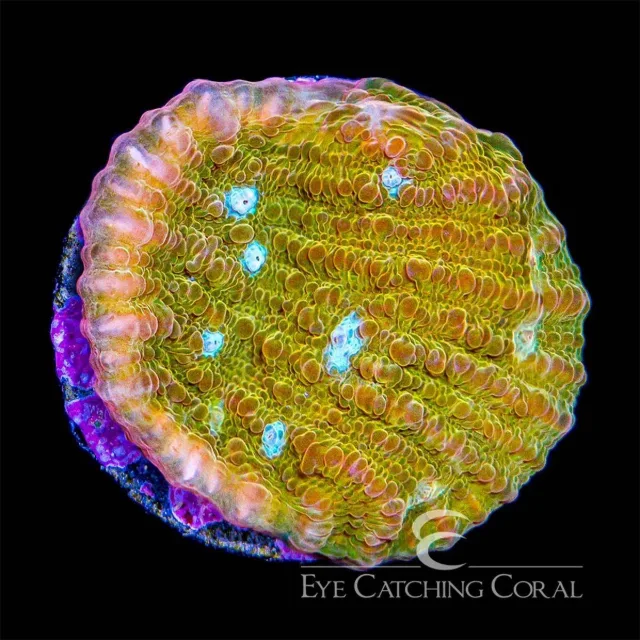
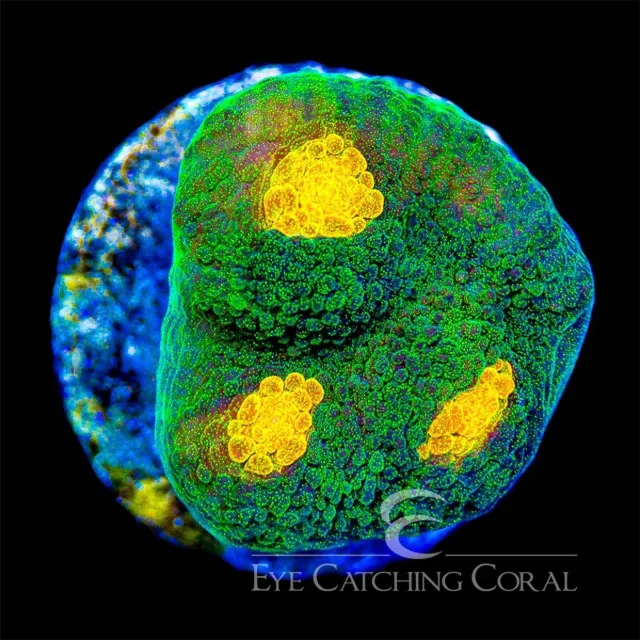
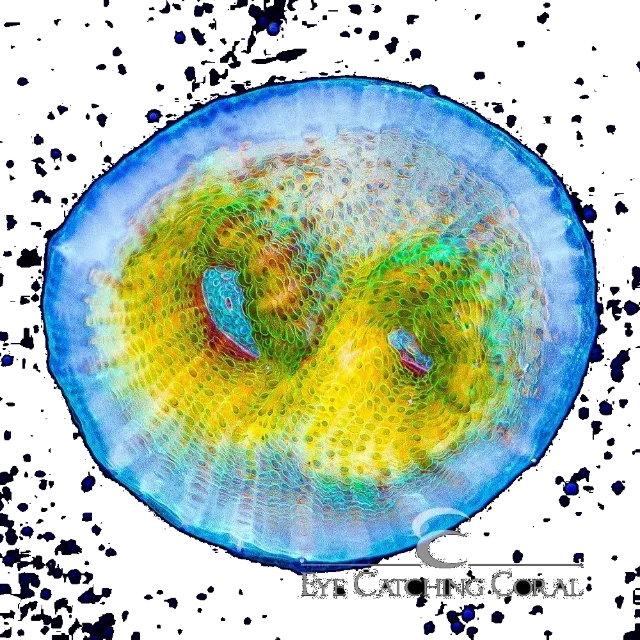
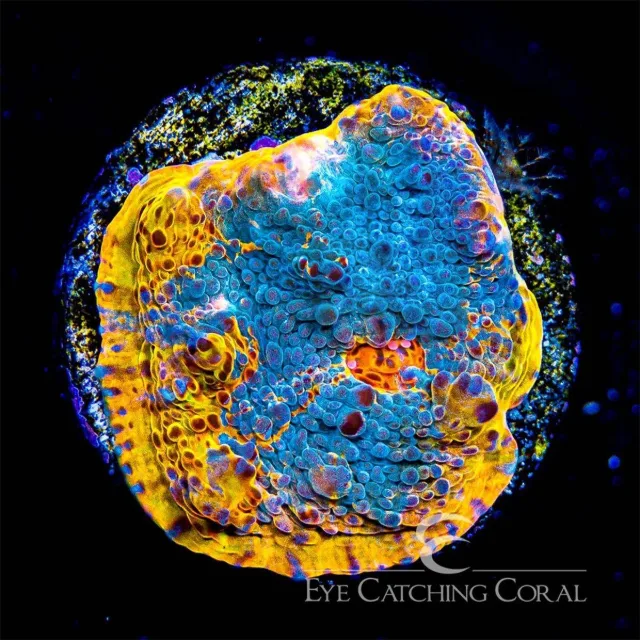
ECC Frost Fire Chalice
Echinophyllia sp.LobophylliidaeChalice corals
Add from My tanks →1 photos
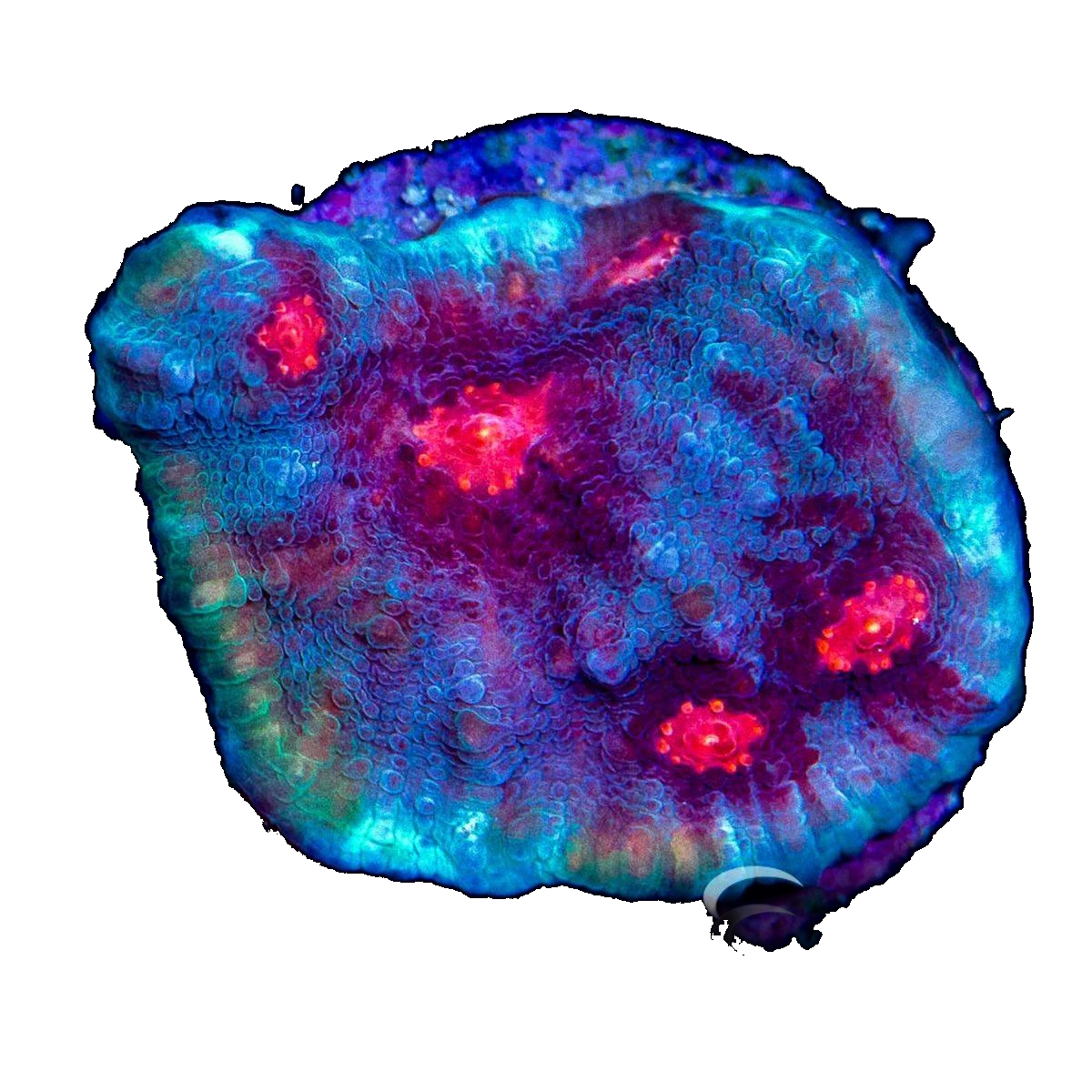
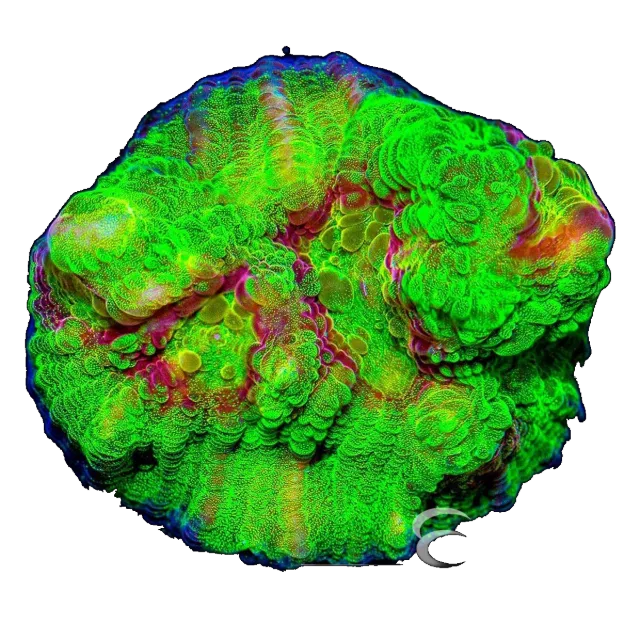
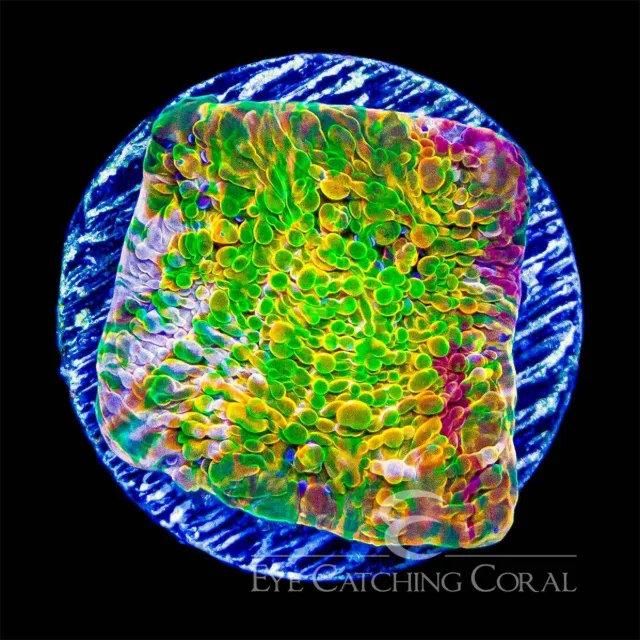
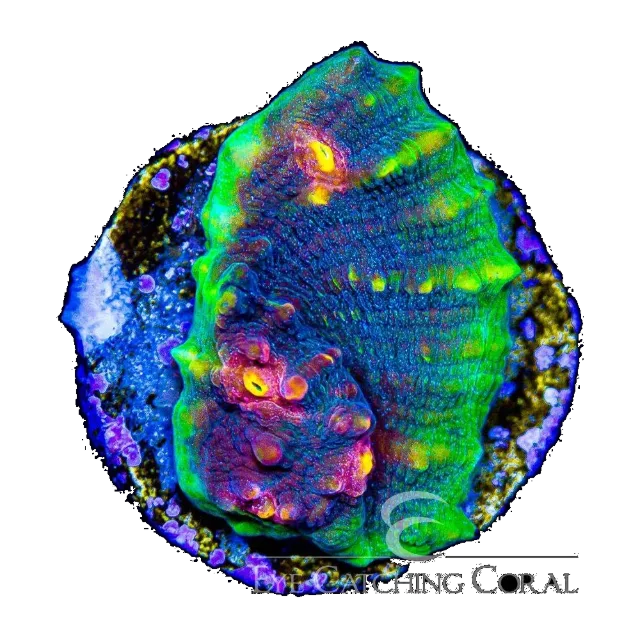
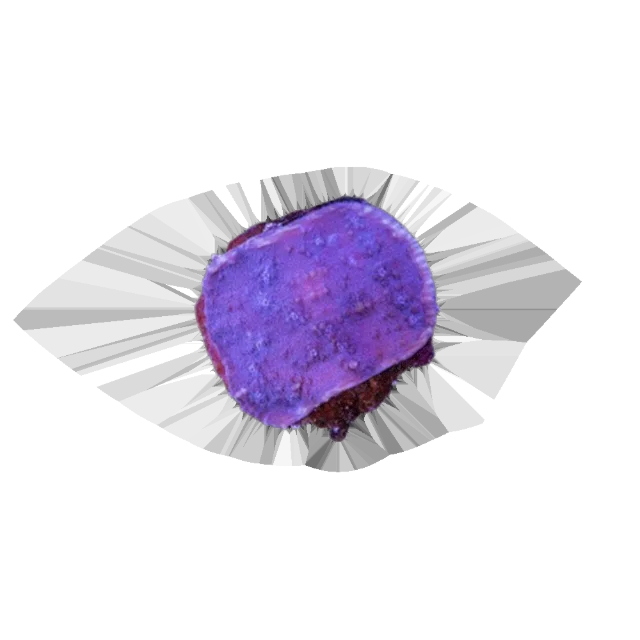
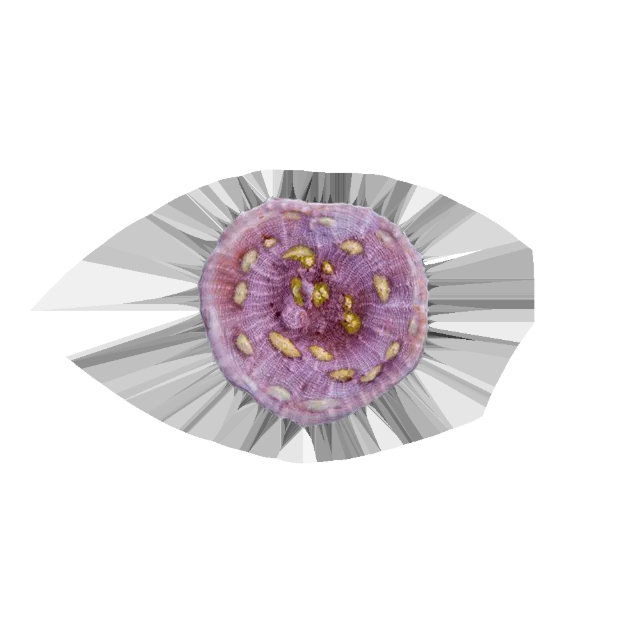
The ECC Frost Fire Chalice is a chalice coral with a teal to blue base and red to orange eyes scattered across its bumpy surface. It is a slow to moderate-growing encrusting LPS coral that prefers low light (75-150 PAR) with low to moderate flow, and is semi-aggressive with night-extending sweeper tentacles.
Quick facts
Handling caution: Sweeper tentacles can deliver chemical stings; handle by the base or plug, not the flesh
Identity
- Also known as
- Chalice coral; Chalice LPS
- Environment
- Saltwater
- Native to
- Indo-Pacific, Red Sea, East Africa, French Polynesia
- Habitat
- Lagoon slopes, reef crests, and deeper reef zones, often in shaded or dimmer water than most LPS
- Sourcing
- Both
- Conservation
- Not Evaluated
Care
- Care level
- Moderate
- Coral type
- LPS
- Temperament
- Aggressive
- Growth form
- Encrusting
- Adult size
- 2 – 8 in (5.1 – 20 cm)
- Spread
- 12 in (30 cm)
- Growth rate
- Slow
- Placement
- Low, Middle
Water
- Temperature
- 75 – 80 °F (24 – 27 °C)
- pH
- 8.1 – 8.4
- dKH
- 8 – 9.5 dKH
- Salinity
- 1.025 – 1.026 SG
- PAR
- 75 – 150 PAR
- Flow
- Low-Moderate
- Light
- Low
Reef care
- Nutrient preference
- Medium
- Alk/Ca uptake
- Medium
- Target feeding
- Beneficial
- Give it room
- 4 in (10 cm)
- Colors
- Green, Red, Orange, Yellow, Blue, Purple, Teal, Multicolor
Feeding & breeding
- Diet
- Carnivore
- Foods
- Frozen, Coral food, Zooplankton, Phytoplankton, Micro-pellets
- Propagation
- Fragging
Something wrong or missing? Submit a correction
Care guide
Overview
Suits a low-light reef tank where PAR stays in the 75-150 range and flow remains gentle to moderate. This chalice pairs a teal to blue base with red to orange eyes across a bumpy encrusting surface, growing slowly to moderately. Semi-aggressive, it extends sweeper tentacles after dark and needs isolated placement.
Care
Echinophyllia does best kept low to mid in the tank where light stays subdued, since PAR much above 150 tends to bleach or wash out its fluorescent colors. Flow should be gentle and indirect, just enough to keep detritus from settling on the fleshy plate without stressing the tissue. It is one of the more territorial LPS corals in the hobby, extending sweeper tentacles at night that can sting anything within several inches, so isolated placement on a ledge or its own rock gives it room to spread without conflict. Stability of alkalinity, calcium, and magnesium matters more than hitting exact target numbers.
Placement & acclimation
Acclimate new frags gradually to light using a screen or by starting them lower in the tank and raising intensity over two to three weeks, since chalices are prone to bleaching from sudden light increases. Mount on a flat rock, ledge, or frag plug low to mid in the tank where it can encrust outward, and dip and inspect for pests before introduction. Drip acclimation of 20 to 30 minutes for the shipping water is a reasonable precaution though not strictly required for this genus.
Feeding
Although photosynthetic and capable of surviving on light alone, this coral colors up and grows faster with regular target feeding. Mysis, chopped krill, reef roids, and other small meaty or coral-specific foods work well when offered directly onto the polyps after lights out, when the feeding tentacles extend. Two to three feedings per week is typical, with flow paused briefly during feeding so food isn't blown away before it's captured.
Neighbors
Give this coral at least 4 to 6 inches of clearance from any neighboring coral, since its night-time sweeper tentacles can reach out and chemically burn adjacent tissue. It is generally compatible with reef-safe fish and invertebrates, which rarely bother it, but should not be placed near other aggressive LPS or fast-encrusting corals that could return the favor. Frag racks or an isolated rock island make good long-term homes since it will encrust outward over time and needs room to do so.
Fragging
Fragging is done by cutting through the skeleton between healthy polyp clusters with a coral saw or bone cutters, then mounting the piece on a plug until it attaches. Colonies that have encrusted onto rock can also be fragged directly off the rockwork when they begin encroaching on neighbors. Allow cut edges to heal in low flow before returning frags to normal tank conditions.
Pests & problems
Excessive light is the most common cause of trouble, leading to bleaching, tissue browning, or burned patches that show up within days of a placement that's too bright. Sudden swings in alkalinity or other parameters can trigger tissue recession, so new pieces are best dosed into stable, mature systems rather than tanks still finding their baseline. Damaged edges can develop bacterial rot if left untreated, and fragging past the dead tissue along with an iodine dip and improved flow usually halts the spread.
Sources
Varieties in the catalog
More Chalice corals
Something wrong or missing? Submit a correction
In the community
Popular tanks using ECC Frost Fire Chalice
No public tanks are showcasing ECC Frost Fire Chalice yet.