
Aquatic Plant
Cyperus Helferi
Cyperus helferiCyperaceaeStem plants
Price: $20.97 USD
Add from My tanks →1 photos
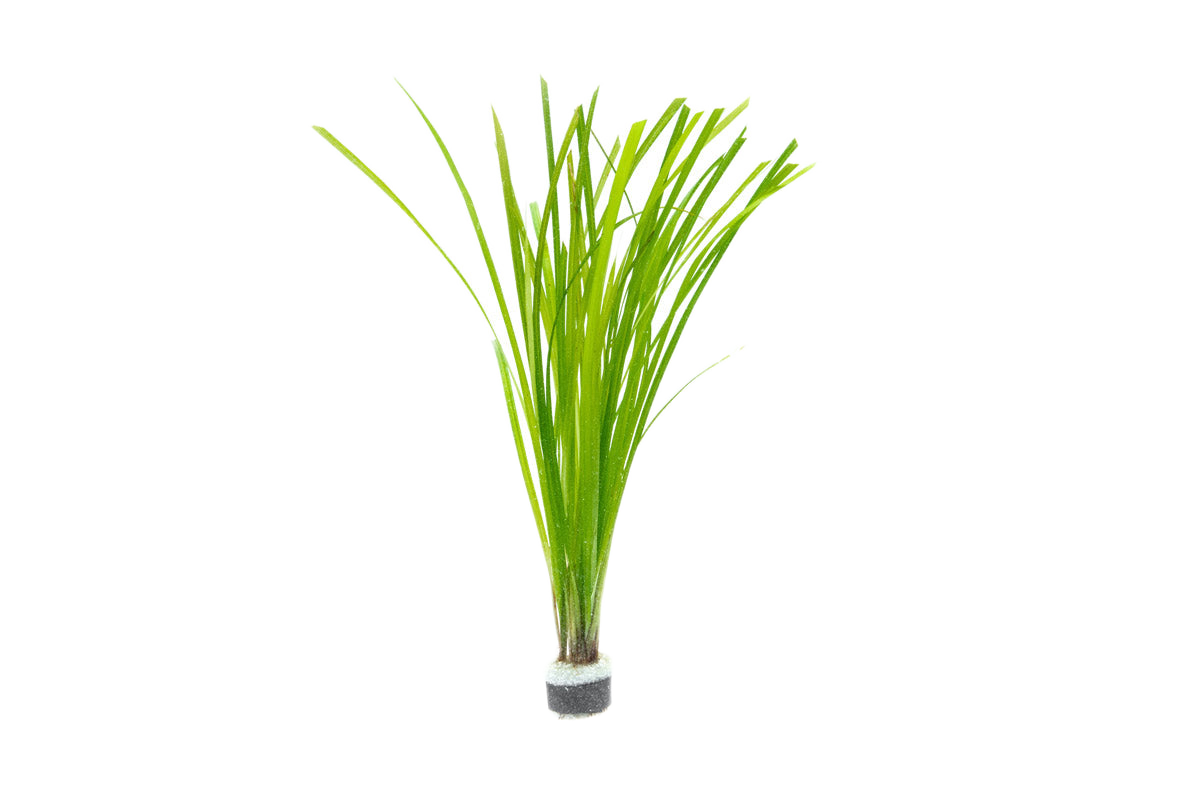
Cyperus Helferi is a striking, grass-like background plant with long, slender green leaves reaching up to 20 inches, swaying gently in the water current. Easy to care for and adaptable to submerged aquariums or emersed paludariums; provide medium to high lighting, CO2 optional.
Quick facts
Identity
- Also known as
- Cyperus Grass; Helferi Grass
- Synonyms
- Cyperus hélferi Boeckeler
- Environment
- Freshwater
- Native to
- Thailand, Southeast Asia
- Habitat
- Slow-flowing streams, forest creeks, pond edges, and muddy or marshy banks in Southeast Asia, growing both submerged and emersed
- Sourcing
- Both
- Conservation
- Not Evaluated
Care
- Care level
- Moderate
- Growth form
- Rosette
- Max height
- 4 – 20 in (10 – 51 cm)
- Spread
- 8 in (20 cm)
- Growth rate
- Slow
- Placement
- Midground, Background
Water
- Temperature
- 68 – 82 °F (20 – 28 °C)
- pH
- 5.5 – 7.0
- dKH
- 0 – 10 dKH
- Flow
- Moderate
- Light
- Medium
- CO₂
- Beneficial
Planting
- Substrate
- Nutrient-rich preferred
- Feeds from
- Both
- Fertilizer needs
- Medium
- Colors
- Green
Feeding & breeding
- Propagation
- Splitting, Adventitious plantlets, Cuttings
Something wrong or missing? Submit a correction
Care guide
Overview
Sways in slow-moving current as its ribbon-like leaves fan out from a central crown, creating a grass-like texture in the midground or background. Leaves can reach up to 20 inches, and growth stays slow and tidy once established. Expect some leaf drop after planting as it converts from emersed nursery growth to submerged form; a nutrient-rich substrate and steady flow keep it healthy long term.
Care
Cyperus helferi forms a grass-like rosette of long, ribbon-shaped leaves that drift in tank currents, making it a favored texture plant for the midground or background. It grows slowly and stays fairly tidy, but demands stable water parameters and consistent light to settle in well. Most specimens are grown emersed by nurseries, so expect a period of leaf loss after planting as the plant converts to submerged growth. Once established it is relatively low-maintenance, needing only occasional removal of older outer leaves.
Planting & trimming
Plant the root crown at the substrate surface rather than burying it, since a buried crown will push itself back up over several days. Space individual rosettes a few inches apart to let light and water reach all the leaves, and position the plant where fast growers will not shade or overtake it. Trimming is mainly limited to removing the oldest, outer leaves to keep the clump neat; a dry-start method can also be used to build a stronger root system before flooding.
Fertilizing
Root tabs pushed near the base support the thick root system that this plant relies on for nutrient uptake, and a rich, nutrient-dense substrate is recommended over inert gravel. Supplementing with a liquid or all-in-one fertilizer containing iron and potassium helps prevent yellowing of older leaves. Yellow or holed leaves without other cause usually point to a nutrient deficiency rather than disease.
Propagation
The mother plant produces small adventitious plantlets at its base over time, which can be separated once they have their own root system. Alternatively, mature plants may send up proliferating inflorescences that form daughter plants, or the crown can be split into sections for replanting. Newly separated plantlets should have visible roots before removal to improve survival.
Problems
New plants commonly melt or drop leaves for two to four weeks after introduction as they shift from emersed nursery growth to fully submerged form; this is normal and not a sign of poor health as long as fresh growth follows. Its shallow, sparse root system makes it vulnerable to being uprooted by burrowing or digging fish. Filamentous and black beard algae can colonize the long leaves if flow or nutrient balance is poor, so steady flow and dosing help keep the foliage clean.
Sources
More Stem plants
Something wrong or missing? Submit a correction
In the community
Popular tanks using Cyperus Helferi
No public tanks are showcasing Cyperus Helferi yet.