
Aquatic Plant
Ceratopteris Siliquosa / Water Sprite
Ceratopteris thalictroidesPteridaceaeStem plants
Price: $8.99 USD
Add from My tanks →1 photos
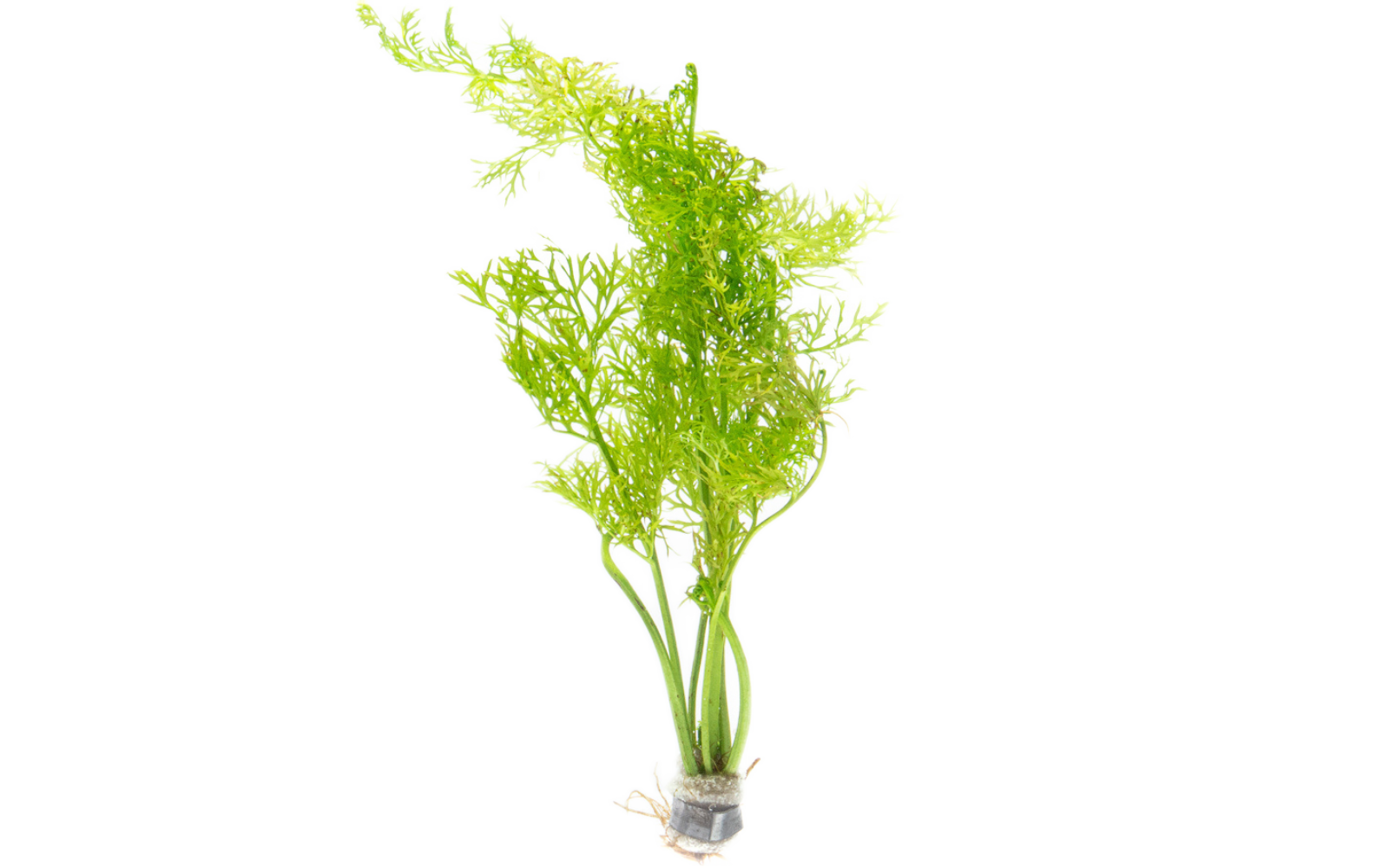
Water Sprite, also known as Indian Fern, is an easy aquatic plant commonly found floating in lakes and ponds worldwide. Fast-growing nutrient absorber that reduces excess waste while providing hiding places for fry and shrimplets; low to medium light, CO2 recommended, weak root system feeding from the water column.
Quick facts
Identity
- Also known as
- Indian Fern; Oriental Water Fern; Water Stag-horn Fern; Water Hornfern; Floating Fern
- Synonyms
- Ceratopteris cornuta; Ceratopteris siliquosa; Acrostichum thalictroides
- Environment
- Freshwater
- Native to
- Tropical Asia, Africa, Australia, Central America
- Habitat
- Slow-moving or stagnant fresh water including ponds, marshes, and gently flowing streams, growing emersed, floating, or fully submersed
- Sourcing
- Aquacultured
- Conservation
- Not Evaluated
Care
- Care level
- Easy
- Growth form
- Rosette
- Max height
- 4 – 16 in (10 – 41 cm)
- Spread
- 16 in (41 cm)
- Growth rate
- Fast
- Placement
- Midground, Background, Floating
Water
- Temperature
- 68 – 82 °F (20 – 28 °C)
- pH
- 6.0 – 7.5
- GH
- 2 – 20 dGH
- PAR
- 20 – 80 PAR
- Flow
- Low
- Light
- Medium
- CO₂
- Beneficial
Planting
- Substrate
- Any
- Feeds from
- Both
- Fertilizer needs
- Medium
- Colors
- Green
Feeding & breeding
- Propagation
- Plantlets, Rhizome division
Something wrong or missing? Submit a correction
Care guide
Overview
Water Sprite is a fast-growing fern of the genus Ceratopteris, sold either rooted or as loose floating specimens with finely divided, bright green fronds. It grows well free-floating or lightly planted with the rhizome crown exposed, and its dense root mass shelters fry and shrimplets while stripping excess nutrients from the water column. Regular trimming keeps it from shading out lower plants.
Care
Water sprite tolerates a wide range of pH and hardness and grows either rooted in substrate or drifting free at the surface. It grows fastest under moderate to high light with some nutrient supplementation, though it survives in lower light at a slower, leggier pace. The crown of the short rhizome should stay above the substrate surface; burying it invites rot, which is why many keepers simply let the plant float instead of planting it. Regular trimming is needed since it can outcompete slower plants for light and nutrients within a few weeks.
Planting & trimming
Plant with the rhizome crown sitting just above the substrate line, never buried, or simply allow the plant to float freely at the surface where it forms a denser canopy. Trim outer fronds regularly to control size and light penetration to plants below, and remove any small plantlets that sprout along leaf margins if you want to limit spread. Floating specimens develop long, fine roots that trail into the water column and should be thinned periodically to avoid tangling with other plants or filter intakes.
Fertilizing
This fern draws nutrients from both the water column and its roots, making it an effective nitrate and phosphate sponge in newly cycling or heavily stocked tanks. Occasional liquid fertilizer or root tabs help sustain the fast growth rate, and iron supplementation keeps new fronds a deeper green rather than pale or yellowish. Yellowing or thin, stretched fronds usually signal insufficient light or a nutrient shortfall rather than disease.
Propagation
New plantlets form spontaneously along the edges and tips of mature fronds and can be separated once they develop a few small leaves and short roots. The parent rhizome can also be divided if it produces multiple crowns. Floating or emersed plants propagate especially readily, often self-seeding across the tank surface without intervention.
Problems
Low light causes pale, stretched growth and eventual melting of older fronds, so a jump to medium or higher light usually resolves the problem. Burying the rhizome crown is the most common planting mistake and leads to basal rot within weeks. Otherwise the species is largely trouble-free and rarely attracts algae once established, since it outcompetes algae for available nutrients.
Sources
More Stem plants
Something wrong or missing? Submit a correction
In the community
Popular tanks using Ceratopteris Siliquosa / Water Sprite
No public tanks are showcasing Ceratopteris Siliquosa / Water Sprite yet.