
Aquatic Plant
Cardamine Lyrata
Cardamine lyrataBrassicaceaeStem plants
Price: $7.99 USD
Add from My tanks →1 photos
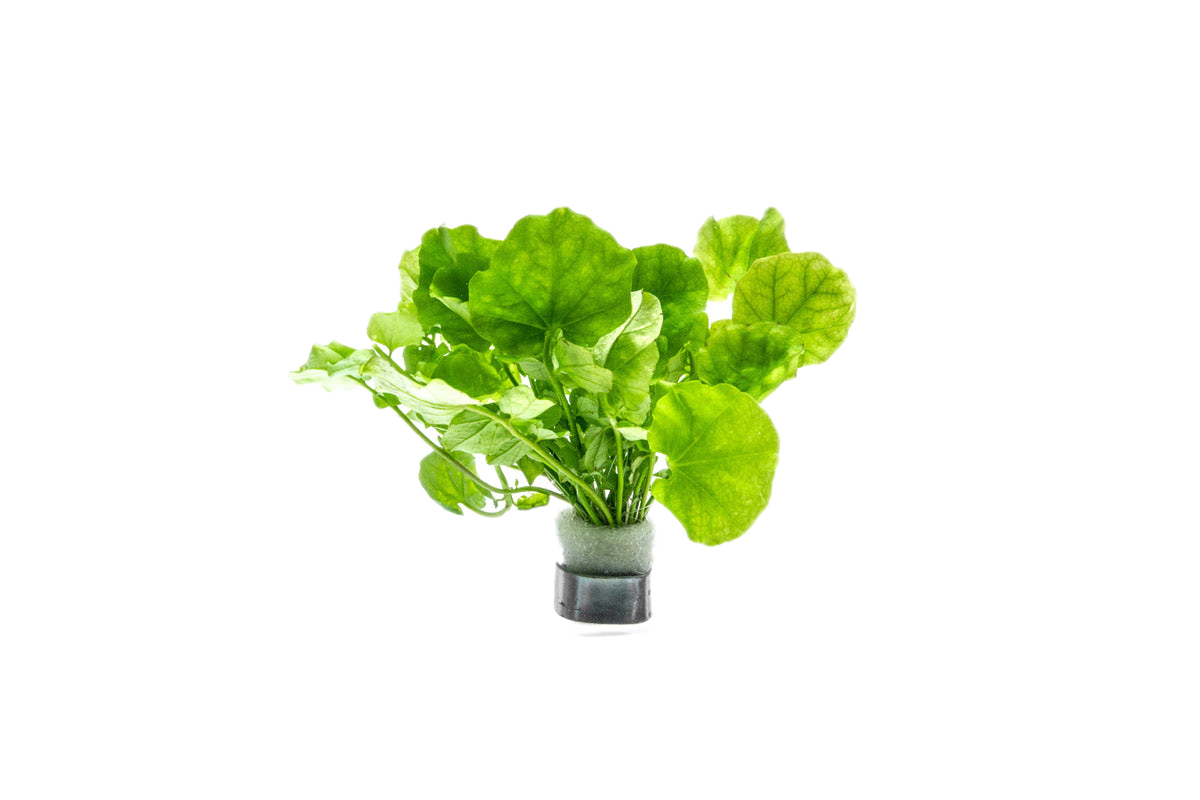
Cardamine lyrata, also known as Japanese Cress or Chinese Ivy, is an expressive East Asian marsh plant with light-green, clover-like leaves trailing along fine, creeping stems. Highly adaptable: lush midground bushes, low foreground carpet under high light and CO2, or floating canopy for fry and shrimp; medium to high light.
Quick facts
Identity
- Also known as
- Japanese Cress
- Environment
- Freshwater
- Native to
- China, Japan, Korea, Russia (Siberia/Far East)
- Habitat
- Marshes, wet ditches, and cool, slow-moving streams and rivulets in East Asia, often growing submerged or scrambling over mud and rocks
- Sourcing
- Captive-bred
- Conservation
- Not Evaluated
Care
- Care level
- Easy
- Growth form
- Stem
- Max height
- 4 – 18 in (10 – 46 cm)
- Spread
- 4 in (10 cm)
- Growth rate
- Fast
- Placement
- Midground, Background, Floating
Water
- Temperature
- 59 – 79 °F (15 – 26 °C)
- pH
- 6.0 – 7.5
- GH
- 3 – 15 dGH
- Flow
- Low
- Light
- Medium
- CO₂
- Beneficial
Planting
- Substrate
- Any
- Feeds from
- Both
- Fertilizer needs
- Low
- Colors
- Green
Feeding & breeding
- Propagation
- Cuttings, Rhizome division
Something wrong or missing? Submit a correction
Care guide
Overview
Reaching up to 18 inches with creeping, brittle stems, this plant spreads via nodal roots along its length rather than a single crown. Its light-green, lyre-shaped leaves stay compact and dense in cooler, sub-75°F water under medium to high light, becoming leggy if kept too warm or dim. Suits midground plantings, driftwood attachment, or free-floating use as a shading canopy.
Care
Japanese cress is a fast-growing creeping stem plant that does best in cooler water than most tropical setups, ideally below the mid-70s Fahrenheit, since heat causes the leaves to shrink and the stems to become leggy. It tolerates a wide light range but produces a denser, bushier habit under medium to high light, and although CO2 is not required it noticeably speeds growth. Because the trailing stems are brittle, place it away from strong filter outflow or powerheads, and give it room to climb over hardscape or trail across the surface.
Planting & trimming
Plant stems in small groups of three to four directly into fine gravel or sand substrate, or tie loose cuttings to driftwood or rock where nodal roots will anchor over time. It can also be left to float, forming a canopy useful for shading fry or shrimp. Trim the trailing stems regularly since the plant grows quickly and can shade out lower-growing neighbors if left unchecked, replanting the healthy cut tops to maintain fullness.
Fertilizing
This plant absorbs nutrients through nodal roots that form along the stem as well as directly from the water column, so it grows well in an unfertilized tank with average bioload. In leaner setups, occasional liquid fertilizer or root tabs near the base help sustain the fast growth rate, and iron supplementation can correct pale new leaves. It is not a heavy feeder compared to many other stem plants, but consistent nutrients keep the foliage full-sized rather than thin and sparse.
Propagation
Propagation is straightforward: cut a length of stem or a lateral side shoot and replant it directly into the substrate, where it roots quickly and resumes growth. The rhizome-like creeping stem can also be divided at the nodes, each section capable of establishing independently once it has developed roots.
Problems
Under weak lighting or in tanks that run too warm, the stems stretch thin and the leaves shrink noticeably, giving the plant a straggly appearance rather than the dense bush seen under better conditions. Herbivorous fish will sometimes graze on the soft foliage, and the fragile stems can snap in strong current or during handling. Regular trimming and replanting of the cut tops keeps growth compact and prevents the lower stems from becoming bare and leggy.
Sources
More Stem plants
Something wrong or missing? Submit a correction
In the community
Popular tanks using Cardamine Lyrata
No public tanks are showcasing Cardamine Lyrata yet.