
Aquatic Plant
Blyxa Japonica
Blyxa japonicaHydrocharitaceaeRosette plants
Price: $44.99 USD
Add from My tanks →1 photos
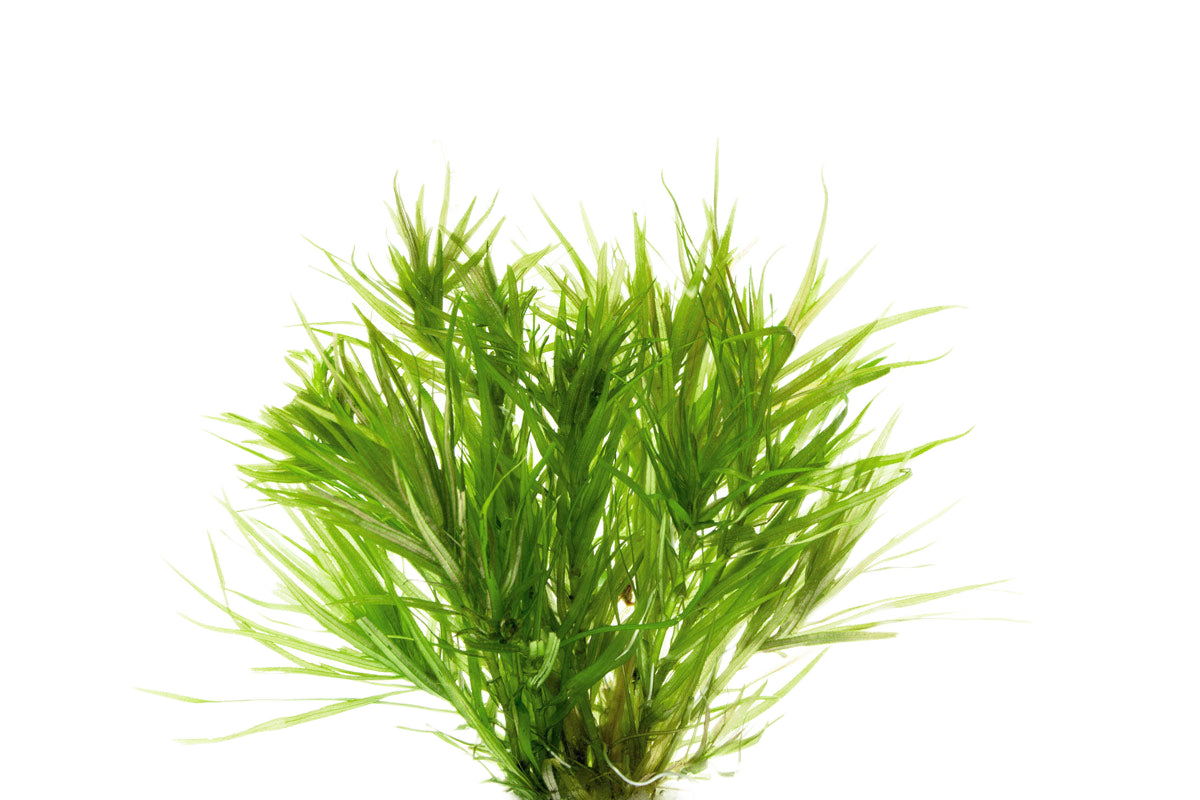
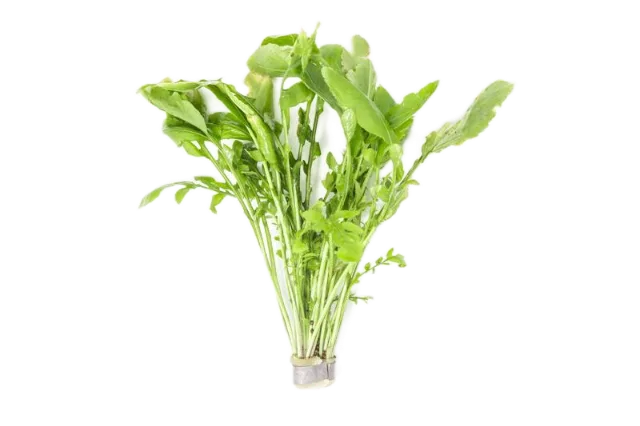
Blyxa japonica (Japanese Bamboo) is a grass-like East Asian rosette plant popularized by Takashi Amano for dense midground thickets. Easy to moderate, it stays green under moderate conditions but blushes gold, bronze and red under high light, CO2 and rich fertilization; it propagates from side shoots.
Quick facts
Identity
- Also known as
- Japanese Bamboo; Japanese Blyxa; Japanese Rush
- Synonyms
- Blyxa japonica var. japonica
- Environment
- Freshwater
- Native to
- China, Taiwan, Japan, Southeast Asia
- Habitat
- Shallow ponds, swamps, rice paddies and slow-flowing streams rich in iron, fully submersed in subtropical and tropical East and Southeast Asia
- Sourcing
- Aquacultured
- Conservation
- Not Evaluated
Care
- Care level
- Moderate
- Growth form
- Rosette
- Max height
- 3 – 8 in (7.6 – 20 cm)
- Spread
- 6 in (15 cm)
- Growth rate
- Moderate
- Placement
- Midground, Foreground
Water
- Temperature
- 68 – 82 °F (20 – 28 °C)
- pH
- 5.5 – 6.8
- dKH
- 0 – 7 dKH
- PAR
- 30 – 60 PAR
- Flow
- Low-Moderate
- Light
- Medium
- CO₂
- Beneficial
Planting
- Substrate
- Nutrient-rich preferred
- Feeds from
- Both
- Fertilizer needs
- High
- Colors
- Green, Orange, Red, Brown
Feeding & breeding
- Propagation
- Rhizome division, Cuttings
Something wrong or missing? Submit a correction
Care guide
Overview
Forms dense, arching rosettes that fill the space between foreground carpets and taller background stems, giving midground plantings a grass-like thicket effect. Leaves stay green under moderate light but shift toward gold, bronze and red with strong light, CO2 injection and rich fertilization. Lacking runners, it stays tidy and multiplies from basal side shoots rather than spreading rhizomes.
Care
Blyxa japonica forms a dense, grass-like rosette of narrow, arching leaves that works well as a bridge between low foreground carpets and taller background stems. Growth stays compact and color develops best under medium to high light with steady CO2 injection and consistent macro and micronutrient dosing. In lower light it survives but tends to grow taller, thinner, and plain green rather than the bronze-red tone hobbyists prize. Older leaves are shed readily when conditions slip, so stable parameters matter more than raw intensity of light.
Planting & trimming
Plant the short rhizome/crown with roots buried but the base sitting at or just above the substrate surface, since burying the crown too deep causes the plant to push itself back up over several days. New plantings are buoyant and may need to be weighted or gently anchored until root growth secures them. Space individual rosettes a few inches apart in small groups to let light reach all the leaves, and trim or remove any flowering stalks and dead leaves as needed to keep the clump tidy.
Fertilizing
This plant develops an extensive root system and draws heavily on a nutrient-rich substrate, so root tabs placed near the base are beneficial in addition to routine liquid fertilization. A weekly all-in-one liquid fertilizer supplies the nitrate, phosphate, potassium, and trace elements it needs for steady growth. Yellowing leaves, leaf holes, or stalled growth usually point to a nutrient deficiency rather than disease, and correcting dosing typically resolves it within a couple of weeks.
Propagation
Every couple of months, mature clumps produce lateral shoots or plantlets at the base that can be separated with scissors once they have a few roots of their own. Leave a small amount of root tissue attached to each division so it does not simply float to the surface before anchoring. Under high phosphate levels the plant may also send up flowering stalks with small white blooms, though vegetative division from side shoots is the standard propagation method in aquaria.
Problems
Newly planted specimens commonly drop some older leaves and take a few weeks to convert from emersed nursery growth to fully submersed form, which is normal rather than a sign of failure. Algae readily colonizes the slow-growing leaves when light is too strong relative to nutrient supply or flow, so dialing back photoperiod or intensity and improving circulation usually clears it. Because it lacks long runners it stays tidy compared to other grass-like plants, but decaying leaves should be trimmed away promptly to avoid fouling the water.
Sources
More Rosette plants
Something wrong or missing? Submit a correction
In the community
Popular tanks using Blyxa Japonica
No public tanks are showcasing Blyxa Japonica yet.