
Aquatic Plant
Bacopa Australis
Bacopa australisPlantaginaceaeStem plants
Price: $20.99 USD
Add from My tanks →1 photos
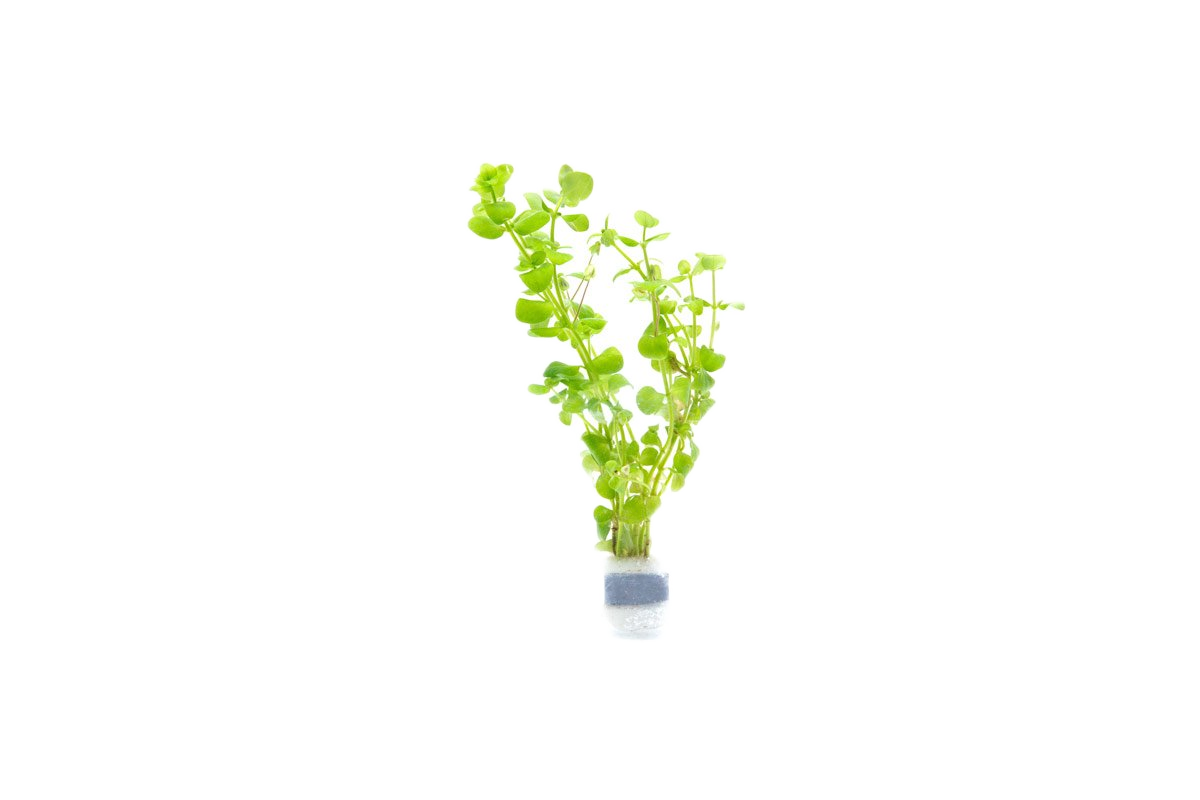
Bacopa australis is a relatively rare, hardy, beginner-friendly aquatic stem plant from Central and South America with bright green, roundish leaves that form soft, dense midground or background bushes. It adapts easily to low-tech tanks and produces delicate pink and white flowers when grown emersed.
Quick facts
Identity
- Also known as
- Southern Bacopa; Creeping Water Hyssop
- Synonyms
- Bacopa sp. 'Australis'
- Environment
- Freshwater
- Native to
- Brazil, Argentina
- Habitat
- Clear freshwater streams, slow-flowing calcareous rivers, and marginal wetlands of southern South America, growing both submerged and emersed along banks
- Sourcing
- Aquacultured
- Conservation
- Not Evaluated
Care
- Care level
- Easy
- Growth form
- Stem
- Max height
- 4 – 16 in (10 – 41 cm)
- Spread
- 1.5 in (3.8 cm)
- Growth rate
- Fast
- Placement
- Midground, Background, Foreground
Water
- Temperature
- 64 – 82 °F (18 – 28 °C)
- pH
- 6.0 – 7.5
- GH
- 2 – 15 dGH
- dKH
- 0 – 21 dKH
- PAR
- 30 – 80 PAR
- Flow
- Low-Moderate
- Light
- Medium
- CO₂
- Beneficial
Planting
- Substrate
- Any
- Feeds from
- Both
- Fertilizer needs
- Medium
- Colors
- Green, Red
Feeding & breeding
- Propagation
- Cuttings
Something wrong or missing? Submit a correction
Care guide
Overview
Rounded, bright green leaves crowd along slender stems that build into a soft, dense bush suited to midground or background placement. Undemanding and tolerant of varied water parameters, it stays compact under medium-high light and can be trimmed repeatedly to bulk up plantings. Grown emersed, mature stems produce small pink and white flowers.
Care
Bacopa australis tolerates a wide swing of temperatures, pH, and hardness, making it forgiving for newcomers to stem plants. It grows fastest and stays most compact under medium to high light, while low light causes leggy stems and leaf drop lower down. Regular trimming keeps the bush dense and prevents the lower stems from shading out and dying back.
Planting & trimming
Plant stem cuttings directly into the substrate in small groups, spacing them an inch or two apart to let them fill in as a bush. Pinch or cut the tops once stems approach the desired height and replant the cuttings to thicken the group. Under strong light the stems will creep horizontally and can be trained into a low carpet-like mat rather than growing upright.
Fertilizing
Growth improves with liquid all-in-one fertilizer dosed once or twice weekly, and root tabs or an enriched substrate help if lower leaves start yellowing. It draws some nutrients through its leaves as well as its roots, so water column dosing alone is usually sufficient in most setups. CO2 injection is not required but noticeably speeds growth and produces denser, more compact stems.
Propagation
Propagation is done by cutting healthy stem tips and replanting them in substrate, where they root readily. The parent stem also branches and sends out new lateral shoots below each cut, so trimmed portions can be reused repeatedly to bulk up a planting.
Problems
Rarely melts compared to many other stem plants, though newly planted or shipped cuttings can occasionally show translucent, mushy leaves before recovering. Thin, weak growth with stretched internodes usually signals insufficient light rather than a nutrient problem. Pale new leaves point to iron or potassium deficiency and respond well to increased micronutrient dosing.
Sources
More Stem plants
Something wrong or missing? Submit a correction
In the community
Popular tanks using Bacopa Australis
No public tanks are showcasing Bacopa Australis yet.